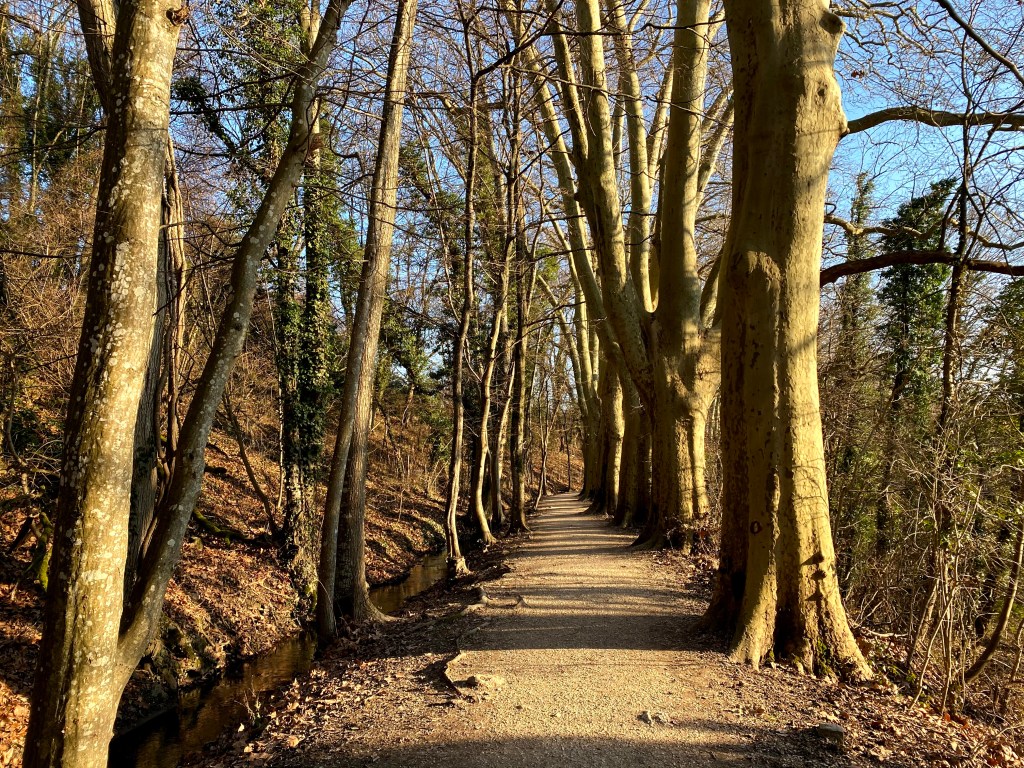
Some walks are perfect whatever the weather and whatever the season. This short walk that I found in Richelien along the Canal de Versoix in the Geneva canton is just that.
It took me less than an hour but can be made longer or shorter as there are many pathways to explore. The pathways are wide enough for a stroller or a small bike, so this walk will be perfect if you have small children with you. It will also be perfect if the only the time and the only energy you have is for a for a short walk.
When walking on the nicely made pathway with eyes resting on the trees and all the beautiful houses and gardens, it is difficult to imagine the busy life that was once the daily life for people living and having their factories and workshops along the river La Versoix.
The Versoix river was an important source for hydropower for a number of establishments in the mid-1900th century. There was a number of wheat mills, factories for tools and iron cutting and paper mills found along the river. On this gentle stroll I did not see any sings of this industrial heritage. I will come back with a longer walk going more into detail about what traces can still be found from this time period.
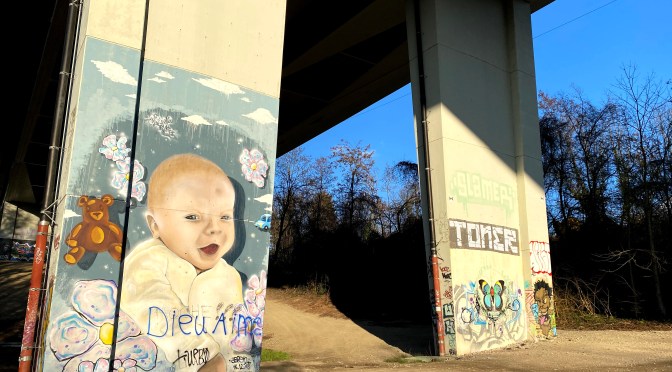
How to get there: There is a small parking literally right under the motorway. For exact coordinates see below in the Google map window. If you don’t have a car and still want to explore this walk and the region, the Richelien bus stop is only a few meters away. This stop is on the 55 bus route going to Chavannes-des-Bois, to check the timetable click here for Tpg.
The Jura mountains offer so many possibilities to spend time outdoors. I have previously written an article about the Domaine La Vattay and the cross country and snowshoeing possibilities that you find there. Yesterday I decided to drive a little bit further and go to Lajoux.
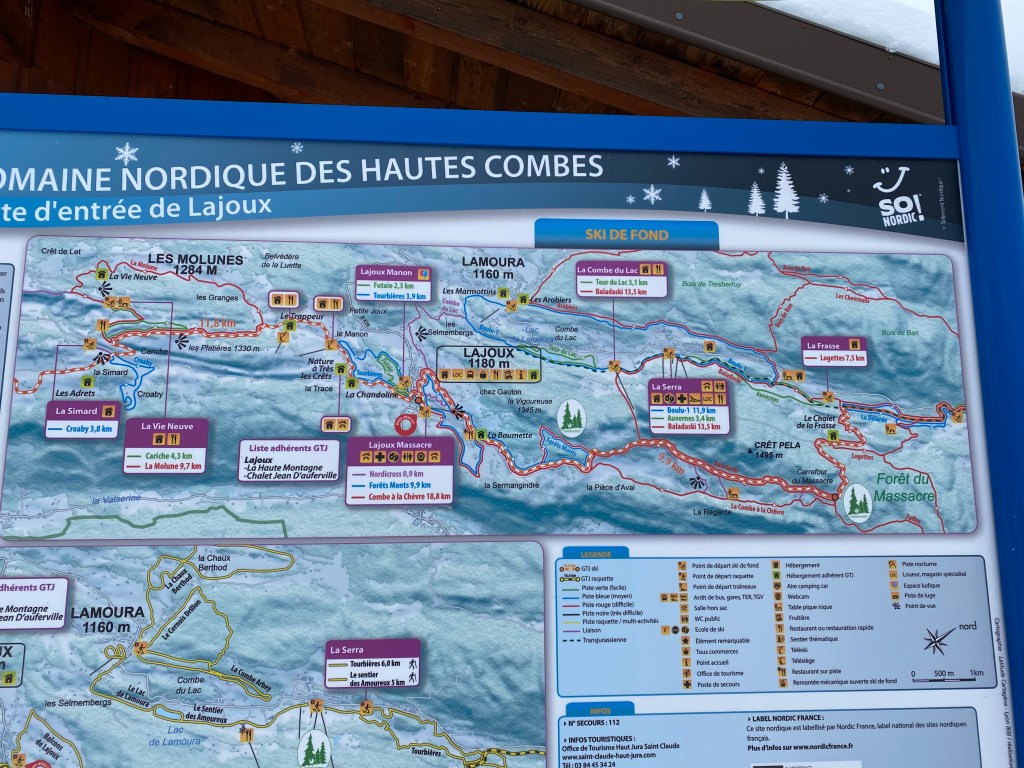
Cross country and snowshoeing maps of the trails
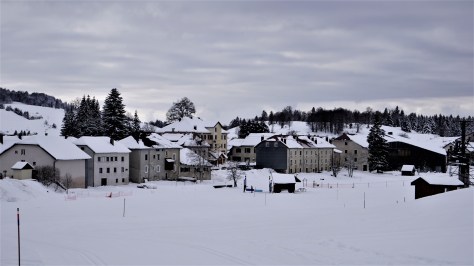
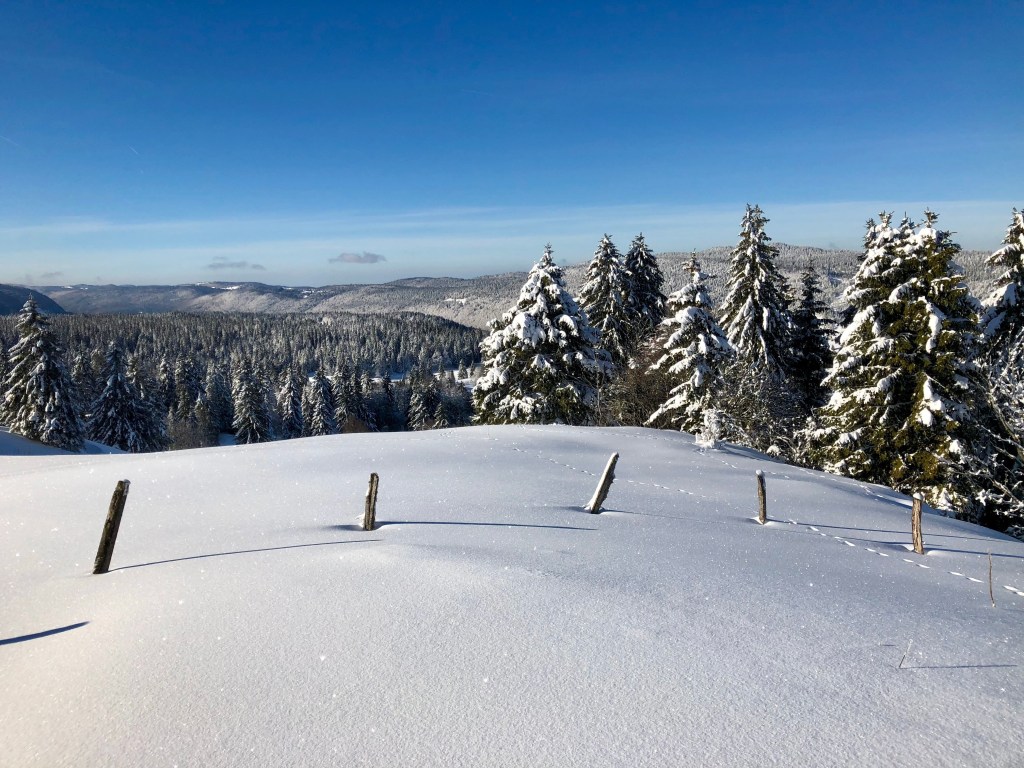
The village of Lajoux is located on a plateau that offers a spectacular view on the Jura mountain range. It is very exposed to the sun, which is great. The downside is that the snow does not stay very long. I think January and beginning of February is the best time for optimal conditions and fresh snow. You should of cause verify here to see if the trails are open before you go. In Lajoux they also have two webcams where you can quickly check the weather before you go. Webcam 1 and webcam 2. When it is grey and cloudy down in Geneva and Pays de Gex it is very often sunny up in the mountains, so I advise you to check the webcams when in doubt about going or not.
In Lajoux you will find 5 trails for cross country skiing and 7 trails for snowshoeing. There are several choices for both beginners and more experienced skiers and snowshoers. Most of the trails are one-way only, but in some areas, you will be crossing skiers coming in the opposite direction so remember to always keep to the right hand side of the trails.
Trails are normally prepared and open from 08.00 in the morning to 17.00 in the afternoon. If you go before or after you need to be equipped with a headlamp to illuminate the trail.
If you’re a dog owner, you should know that you can not take the dog with you on the cross-country trails. This is because they might damage the trails for the other skiers. If you come with your dog and plan to go snowshoeing, however, the dog will be allowed to accompany you.
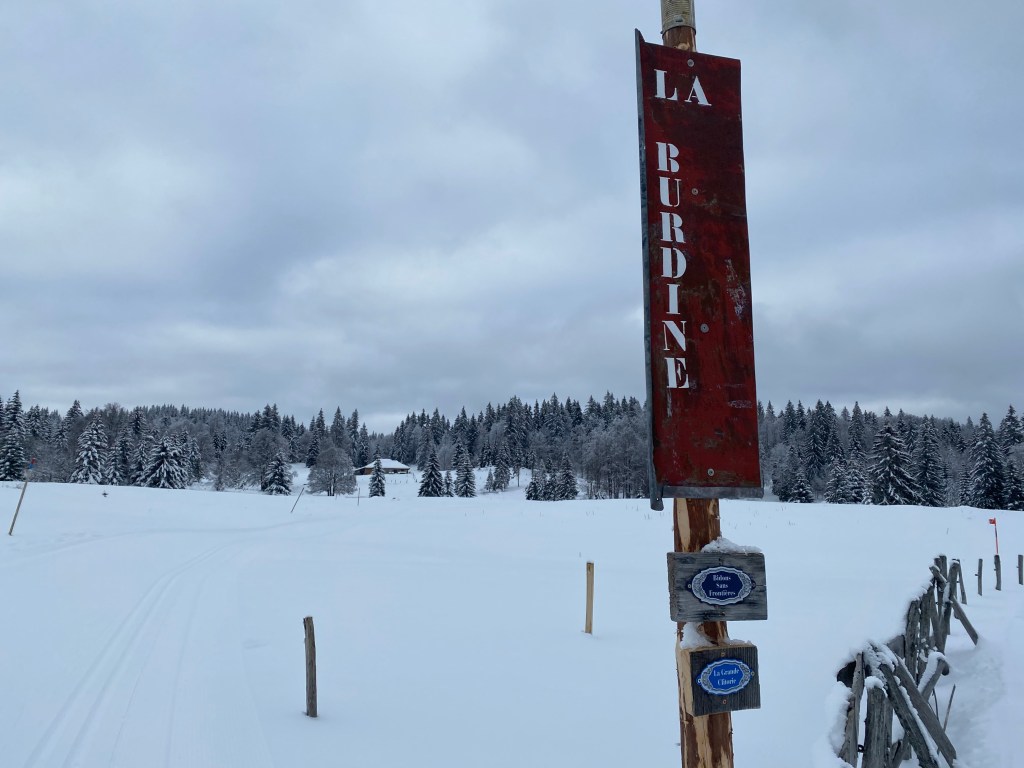
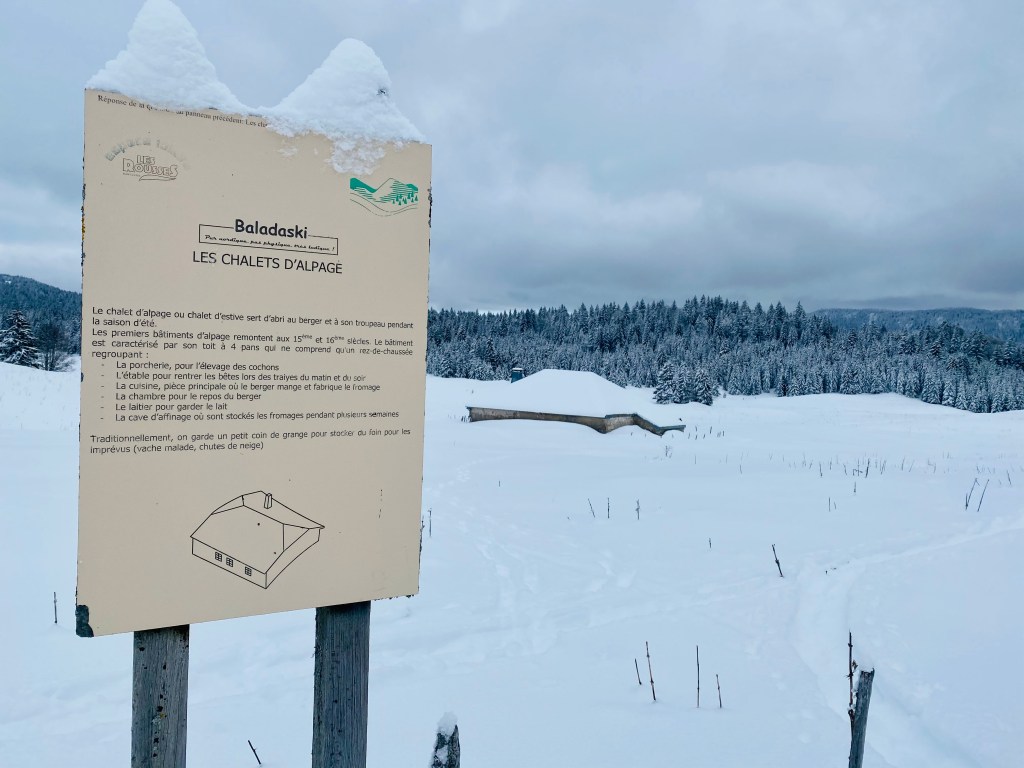
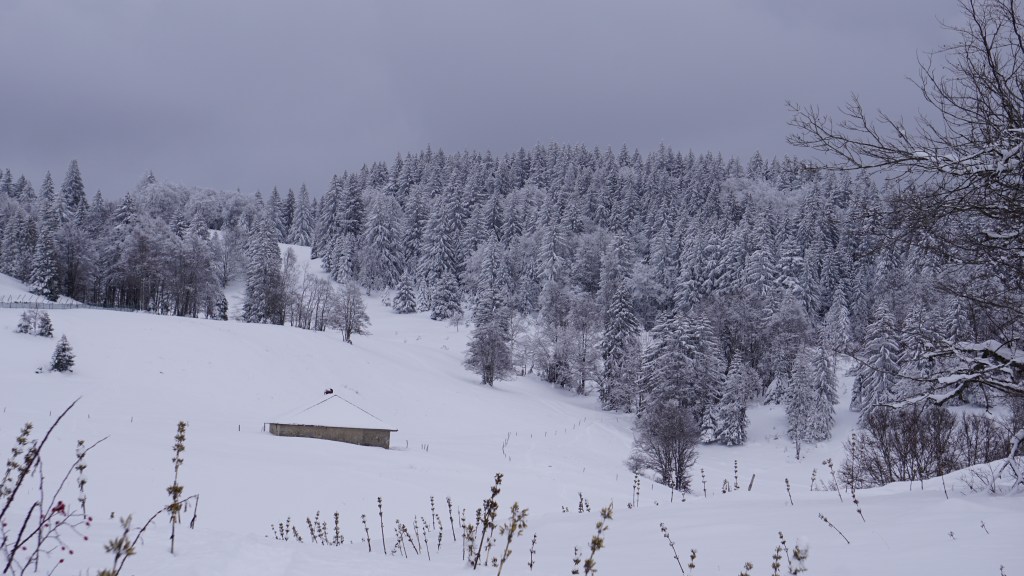
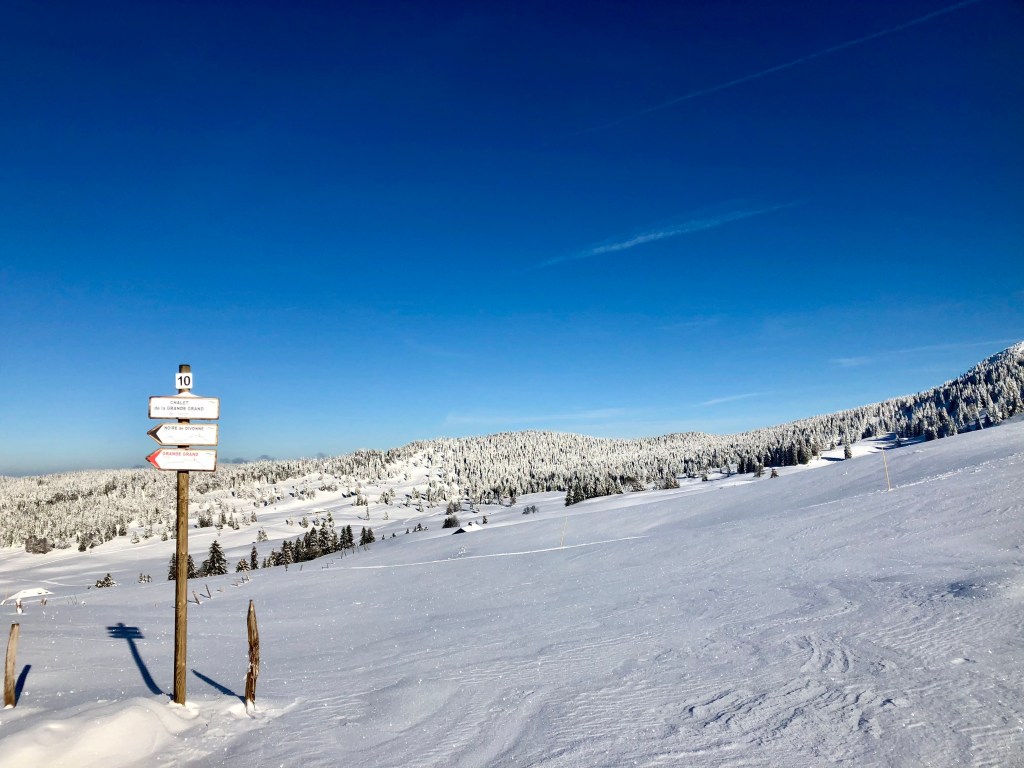
Lajoux is also on the Grande Traversée du Jura (GTJ) trail. This is a 180 km trail for cross country skies and 130 km trail for snowshoes, connecting villages in the Jura together, starting from Villier-le-lac in the Doubs department to Giron in the department of Ain. The scenery is breathtakingly beautiful, especially on a sunny day, so do bring your camera (and some sun screen for yourself!). Out on the trails you will be passing one summer chalet after the other and you will have the Jura mountain range in the background.
If you do not have your own equipment, there are two shops that rents out skis and snowshoes. These are both within walking distance from the staring point of the ski trails. To contact them or check the prices for rented equipment click here for Benoin Jeannin Sport and here for Mermet Equip’Fond.
You can buy your ticket at the Tourist Office or at the starting point for the red and blue trail. If you go for the second option bring cash as i am unsure about the possibility to pay with a card here. The prices for a day ticket and seasonal passes can be found by clicking here: cross-country ski or snowshoeing.
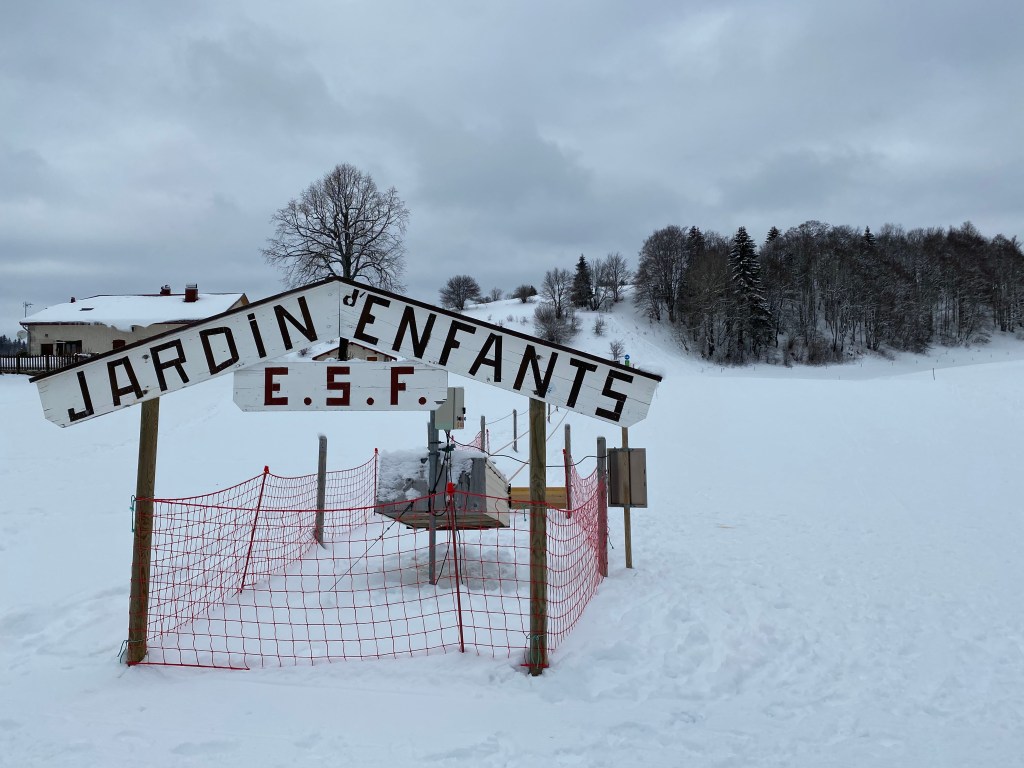
If you think you or your children need ski lessons, the ESF Haut Jura has instructors speaking both French and English.
There is also a little rope lift for children learning to do alpine skiing. This is only open for children enrolled in a ski class trough ESF.
Lajoux is also home to the administration of the High Jura National Parc. In the Maison du Parc you can find a permanent exposition about the life for both animals and humans living in the High Jura mountains. They have activities for kids and offer iPads for English and German translations. At the time of writing, the exposition is closed due to Covid regulations.
At the Fromagerie de Lajoux you can stock up on local cheese, sausages, butter, yoghurt and many other products before heading back home, or to take with you as a picnic to eat out in the nature. The shop is open from 08.30 to 12.00 and 14.00 to 19.00 on most days in the high winter and summer season. Friendly staff and great products make this little shop a must when in Lajoux.
How to get to Lajoux: The quickest way is by car. From Geneva or Pays de Gex it should take you no more than 45 minutes to an hour to get there. The biggest carpark is in the centre right after the tourist information. Coming from the Geneva side it is not possible to go for a daytrip without having access to a car. If you plan to stay for a few days, however, there are bus connections from Saint Claude and Dole, but these are not so frequent. Moving between the villages without a car is not so easy. In normal times you may be allowed to go on the school bus early in the morning and late in the afternoon. Right now, with the Covid situation, I am not sure if this will be possible.
Finally, if you need a toilet, this can be found in the same building as the tourist office with entrance from the back.
Have fun skiing or snowshoeing in Lajoux, and feel free to share!
La Vattay and Mont-Jura is maybe not the biggest or most visited domain for cross-country skiing and snowshoeing in France, but for those of us who live in the Pays de Gex or Geneva, it is the closest. It is also the safest bet for finding cross-country ski trails with snow since it is north-facing and most of the trails are not too exposed to the sun.
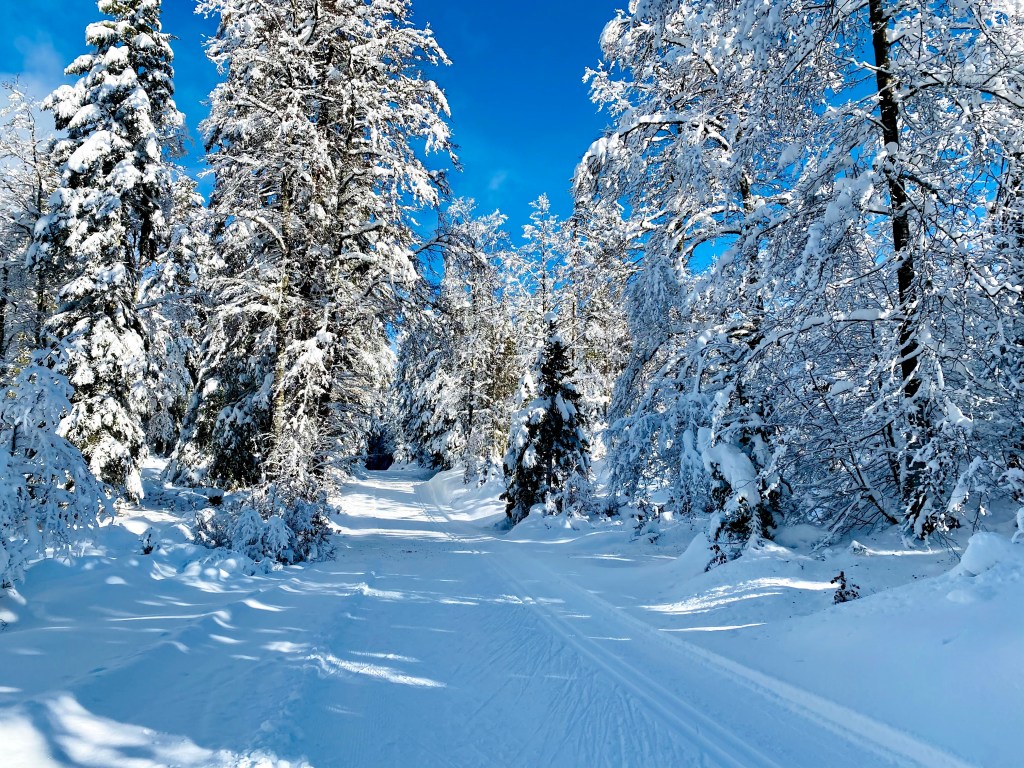
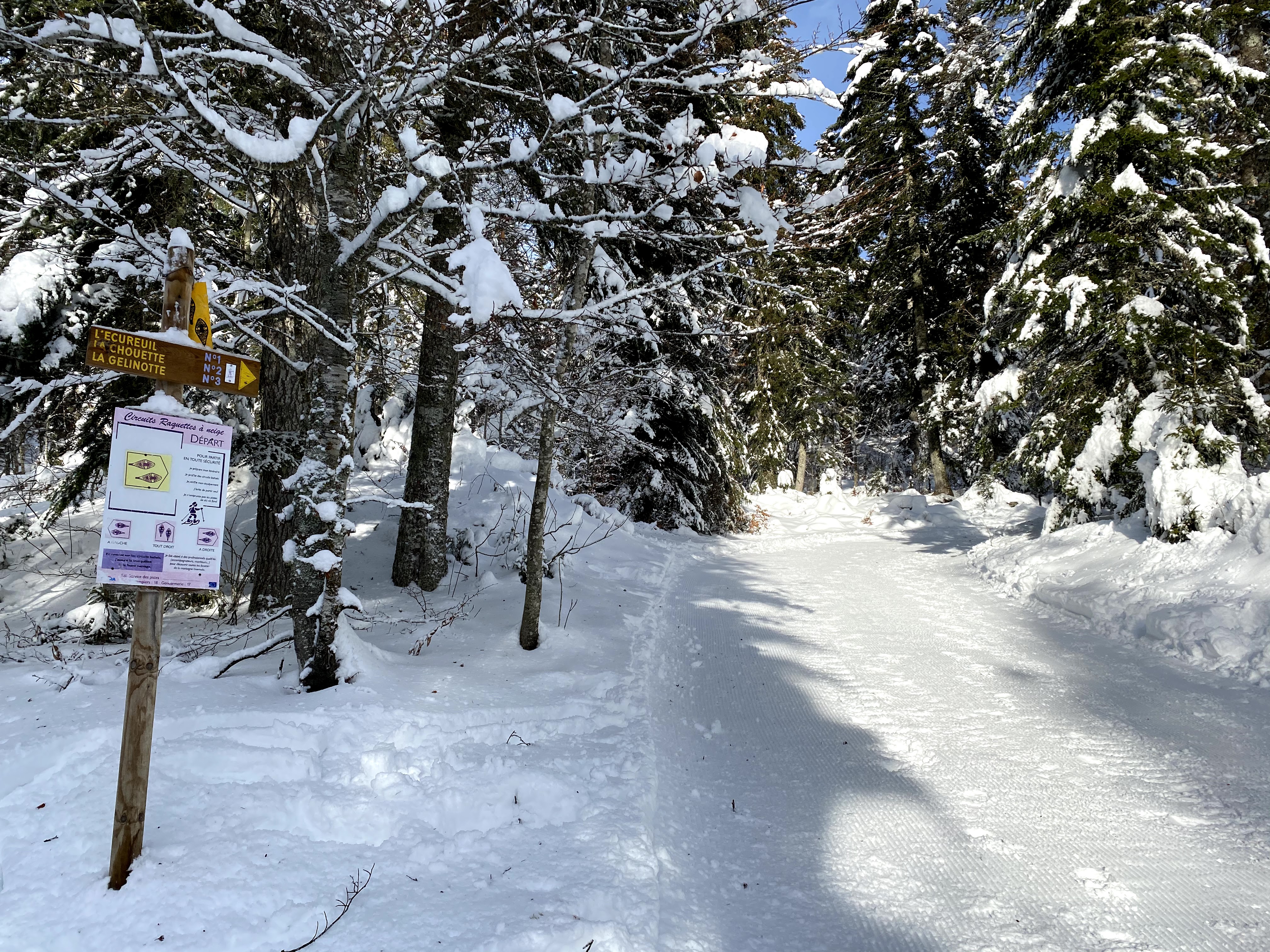
You have the possibility to choose from more than 10 different cross-country ski trails ranging from beginner to experienced, and in recent years several trails for snowshoeing have been opened. This, together with the small sledding area, restaurant, toilets, ski schools, ski club and ski and snowshoe rental make La Vattay a favorite for a weekend outing during the winter season.
The restaurant will be open and serve up hearty mountain food. There is a covered area in the basement where you can eat your packed lunch. But why not do it like the Norwegians? Prepare and bring sandwiches, hot chocolate, oranges, and chocolate (preferably the Norwegian classic Kvikk Lunch; if you are unable to find it a bar of Kit Kat will do). Find yourself a nice place in the sun with a good view of the mountains to enjoy your food and a rest. Bringing kids? Pack plastic buckets, shovels, and butt sleds, and make snow as much fun as the beach.
On sunny Sundays, the 900 parking places spread over 4 different parking areas quickly fill up. If you are not an early riser it might be a good idea to take your time with the morning coffee and wait for the early birds to finish and head back home. Opening hours are from 09.00 in the morning to 17.00 in the afternoon.
The easiest way to get to la Vattay is by personal car. During the French school holidays, there is a ski bus that only operates on Saturdays, and only if the ski lifts at La Faucille are open. The ski bus will take you from Divonne les Bains and Gex past La Faucille to La Vattay. To check the timetable, click here.
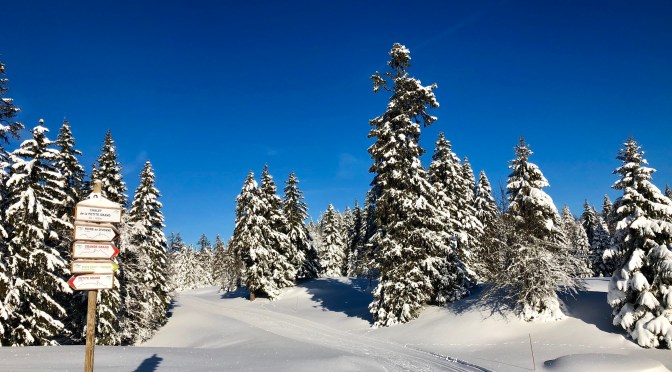
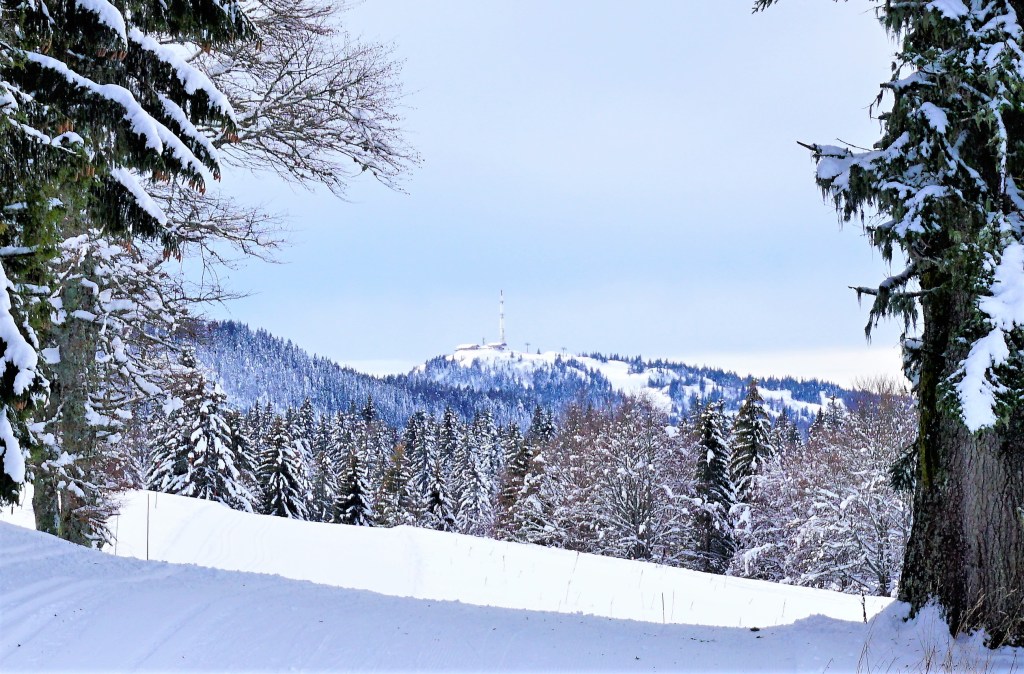
The more than 140 km of trails will take you to the Plateau de la Vattay, into the forest of Vaud (Switzerland), and down into the valley of Valserine. On the trail called La Petit Grand you will be rewarded with a superb view of Mont Blanc after some gentle uphill climb.
Mont Blanc seen from La Petite Grande
The trails are usually freshly prepared every morning. For a Norwegian like me, it was strange to have to pay a ticket to go cross-country skiing at first, but the quality and the selection of choice when it comes to trails make you understand why. Compared with alpine skiing the total cost for a family of four will be much less than a one-day ski pass at one of the big stations in the Alpes. Click here to see the list of prices for adults and children.
Something else which differs from my native Norway, but I actually find great, is that all the trails are one-way only. When you’re heading down a slope, the risk of crashing into somebody coming in the opposite direction (or being rammed by a less experienced skier coming down a slope at high speed) is non-existent. This makes cross-country skiing at La Vattay very safe. But don’t forget to watch out for each other, always monitor your speed and the speed of the others, especially in places with steeper descents. Always assess the situation and make room for somebody potentially falling over. Leave enough time for others to get up before you attempt your turn on the descent to avoid accidents. Adults weigh more than children and will therefore catch more speed. If somebody should tumble and fall over in front of you, and you can’t steer clear, it’s better to just do a controlled fall yourself – at least you’ll avoid hitting the other person. The reason for saying all this is that my daughter almost got her eye rammed by the tip of a beginner’s ski as a child – she fell during a descent, failed to get up in time, and a novice lady at full speed coming down the same path was clearly not in control of her own speed, failing to exit the piste, just yelling for my 5-year old daughter to clear the tracks. It was a close call, but the situation could have been completely avoided if the beginner had done a controlled fall.
For security measures, dogs are not allowed to accompany you on any of the trails (neither cross-country nor snowshoeing).
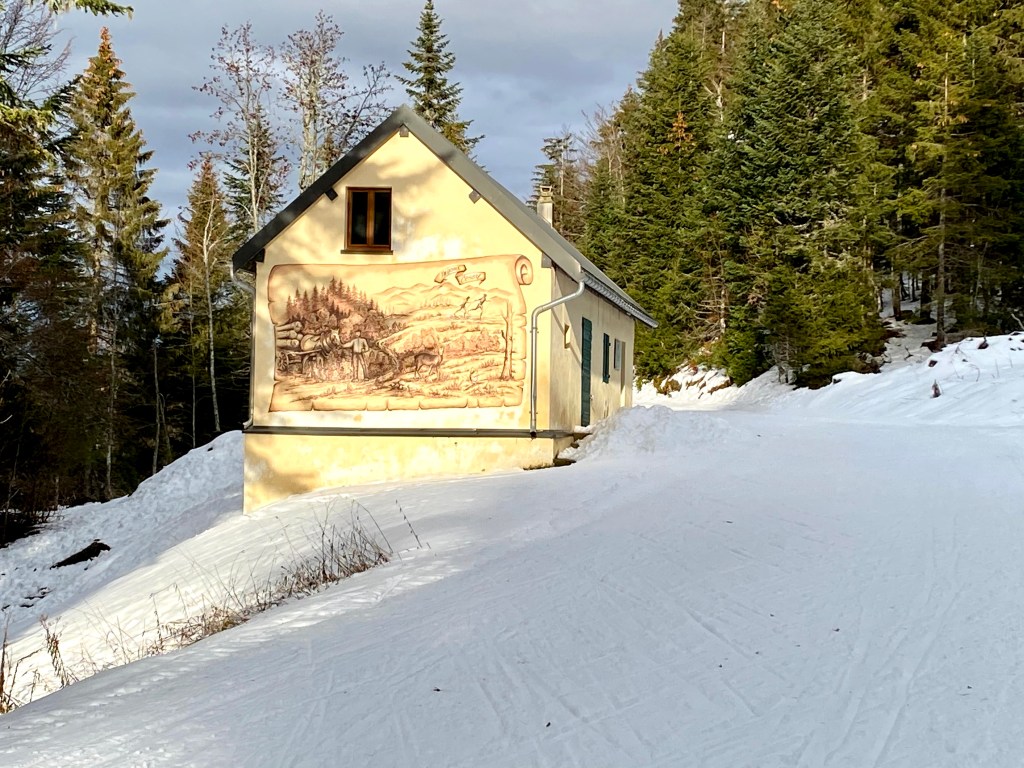
Chalet forestier de Puhod
If you say you are not an experienced Nordic skier but want to learn or simply improve your technique, there are three ski schools that offer group and private lessons for both children and adults. To contact them and book your lesson click here: Ecole de ski Nordique de la Vattay and ESI Ecole de ski Nordique and ESF La Vattay.
There is even a ski club where children between 8-16 years of age can hone their skills and techniques every Saturday.
If you do not have your own skis or have children who are growing too fast to invest in their own equipment you can rent skis from La Vattay Sports. La Vattay Sports also rents out snowshoes and sleds (pulka) if you have really small children with you.
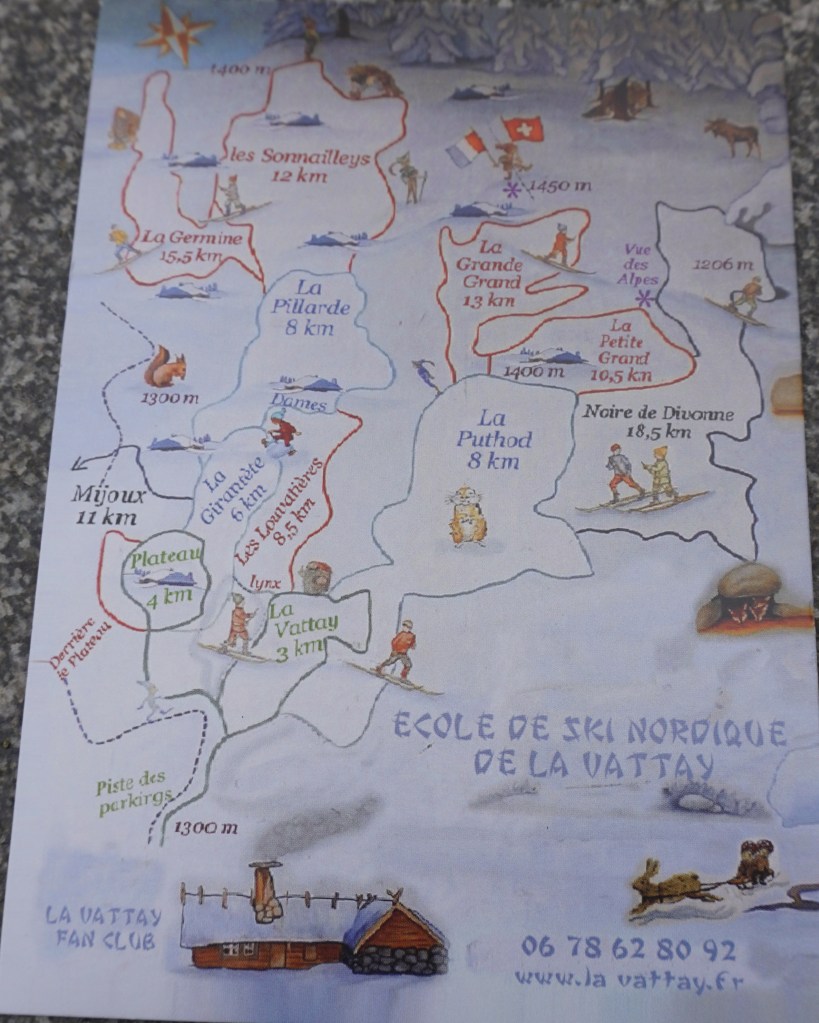
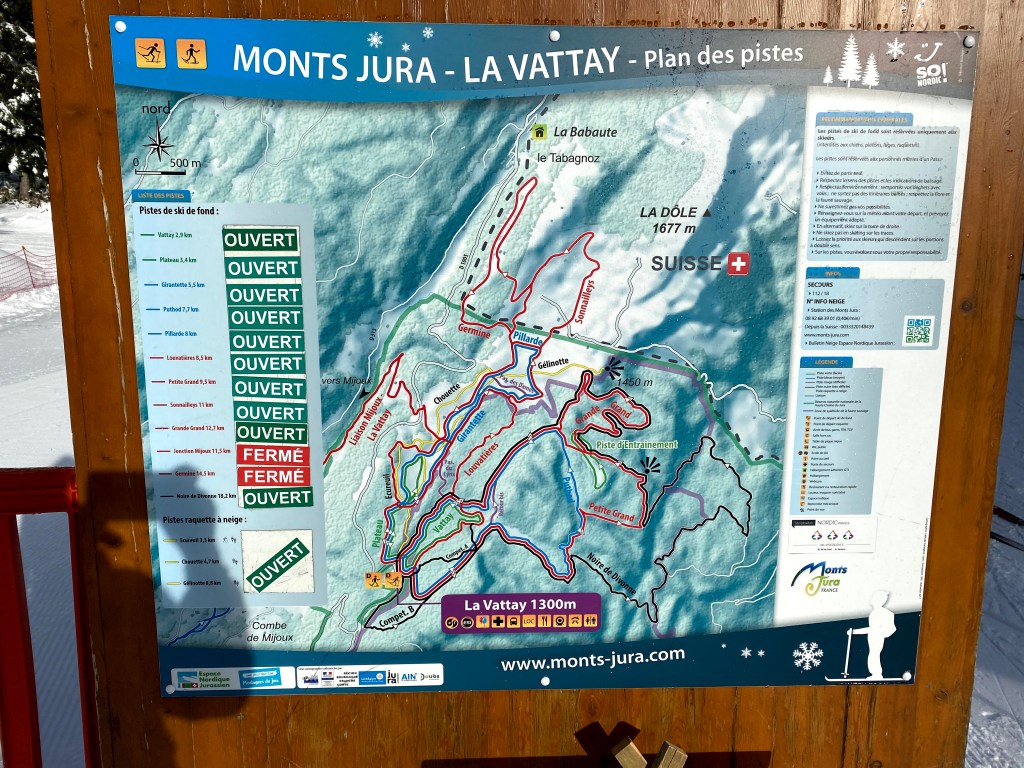
Here is a link to the complete map of all the cross-country and snowshoeing trails. On-site you can pick up a nice postcard that has all the trails marked.
Very often when it is grey and miserable down by the lake, it is nice and sunny up in the mountains, so when in doubt check the webcam.
How to get there: For the moment it is only possible to reach La Vattay by car. Due to the closure of the alpine site of La Faucille due to Covid, the Ski bus going from Divonne les Bains and Gex is not operative for the moment.
Parts of Domaine de la Vattay are situated in a nature reserve. It is therefore important to stay on the marked trails between 15 December and 30 June in order to protect the animal wildlife in the Haut Jura.
At last, a little trick that could come in handy, especially in rented or new shoes. I always try to bring with me a small selection of band-aids. On more than one occasion has this made the ski outing much more pleasant and less painful for myself, my children, and other skiers I have met.
If you do not wear a reflector you choose to be invisible in the dark.
Did you know that if you walk along a road without a reflector the driver of a car will only see you when he or she is only 25-30 meters away? When using a reflector, you will be seen from a distance of 140 meters. If you convert this to seconds, it means that if you do not use a reflector the driver of a car going 50 km/h only has 2 seconds to react, versus 10 seconds if you carry a reflector.
It could be the difference between life and death!
Street lighting creates a false security. Many people believe that reflectors are not necessary when walking along well-lit roads. It is important to know that even if you see the car, the driver does not necessarily see you. Wearing at least one reflector is therefore an important and very cheap life insurance when you are out and about in the dark.
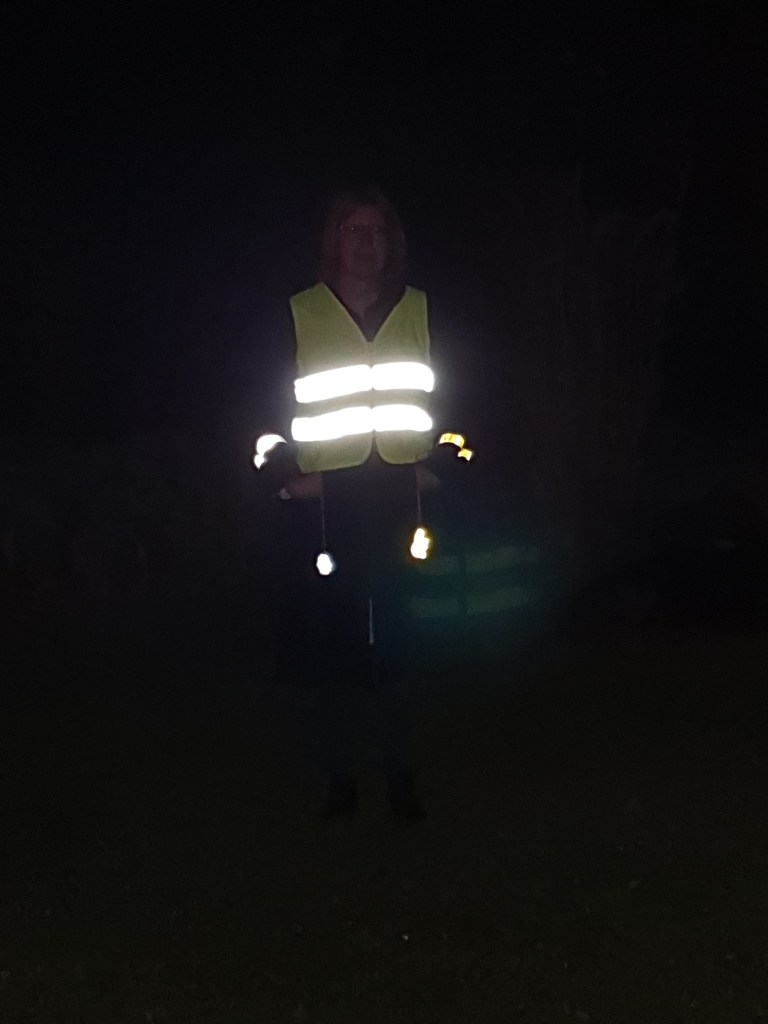
This is me outside without reflectors – can you see me?Here I am with reflectors
Over the years, as this region has become more populated, I have become increasingly worried about driving in the dark. The reason for this is that more people are now walking along the roads in the evenings. In the Pays de Gex area, we are not spoiled with great traffic infrastructure and streetlights. Nor does it help that the prevailing fashion seems to involve wearing dark clothes in the winter season (or any time of year).
Coming from a cold and dark country I’ve often wondered why the knowledge of reflectors is almost non-existent around here. In my native country Norway, people are very aware of the advantages of using reflectors. Still, some people tend to forget, so every year there are nation-wide advertising campaigns for their use. There is even a Reflector Day every year in mid-October or so to mark the entrance into the darker season. I have never seen any encouragements to use this simple and potential lifesaving little thing around here in France… Only the serious bikers seem to have understood that to be spotted in traffic you need to have both lights and reflectors on your bike and clothes.
Reflectors are also among the easiest and cheapest advertising tools. In Norway they are easily available and can often be picked up free of charge at insurance companies, banks, shops etc. It makes me wonder why nobody down here have not seen this as a great way to do publicity!
Please: when you go for a stroll in the dark, make sure you have:
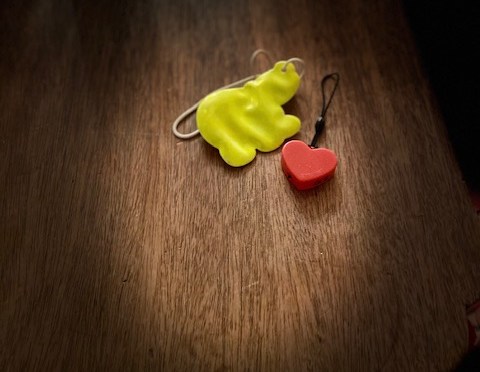
Reflectors attached to all your winter coats and bags.
Moving reflectors (suspended from your clothes) are the most visible.
Make sure these are the same height as car lights – knee height.
Use at least 2 reflectors so that you are visible from all angles.
If your reflector has lots of scratches it won’t work well, so get a new one!
Lets stay protected and wear reflectors when it is dark. Fell free to share!
Time: around 1,5 hours Km: 4 Hight to climb: 148 meters
I have recently been made aware of the Japanese concept of “forest bathing”, which is said to reduce stress and worry (in my home country of Norway I guess we’d just call it hiking in the woods, but there you go…) On my little exploration walk in Challex I started thinking about how lucky I am to have nature so close to where I live. People living in big cities go to the park to connect with nature. Me, living in the Pays de Gex, have the choice between many different forests and nature reserves. The best of it is that often, these walks in the local nature can be combined with French village charms.
Challex is a bit off the beaten tracks for me. I have never had any friends living there, so I’ve never had any real reasons for going there. Now, after having discovered this short but sporty walk, I’ll definitely go back again.
As for most of the villages in Pays the Gex, the easiest way to get there is by car. Using public transport, Tpg will take you there from Switzerland on the T bus.
I parked just outside the school (Rue des Ecoles) in the village and started my walk from there.
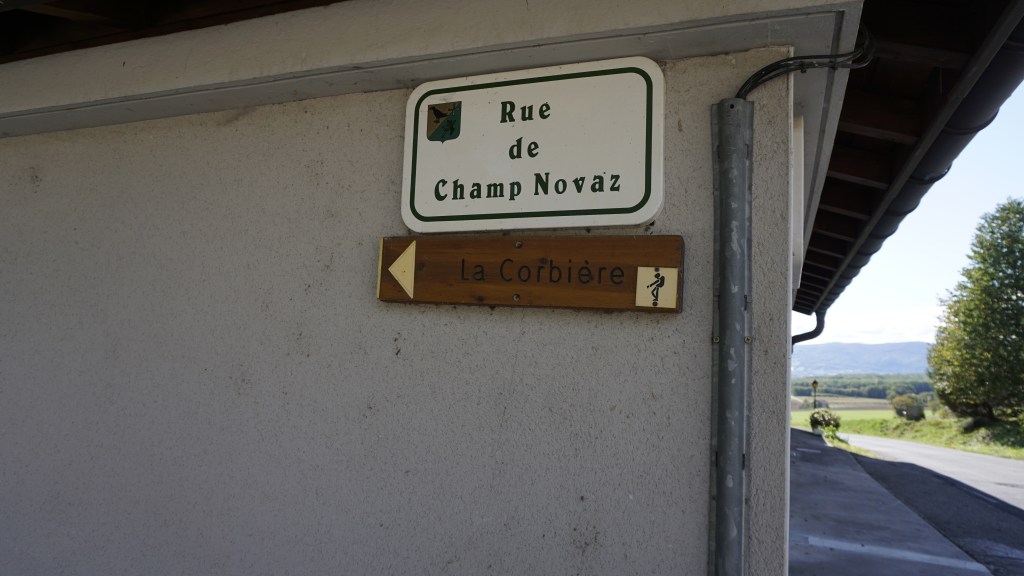
Walk in direction Bellegarde. After a few meters you will see a gravel road. Continue downhill on this road and walk past the vines. When this path ends, walk to the left onto Chemin de Corbet and continue until you reach a fountain. Walk to the right, and you will very soon see a sign telling you that you are on the “Parcours de la Corbiere”. Continue on this path and it will take you down towards the Rhone.
When you see this block that tells the story of the Chateau le la Corbière, walk to the left and into the woods.
The Chateau de la Corbière was built in the twelfth century by the Count of Geneva. By then, Challex had some commercial and political rights and controlled a bridge made of wood that spanned the Rhone river. On the other side of the bridge was the small town of Epeisses, which was controlled by the chateau. Today, Epeisses is in Switzerland and the village is no longer where it used to be. In the 13th century, the level of hostility between the Count of Geneva and the Savoyards eventually resulted in a war. The chateau and the bridge were subsequently completely destroyed by the Savoyards.
Unfortunately, I was not able to find a single trace of the chateau. Maybe you are luckier?
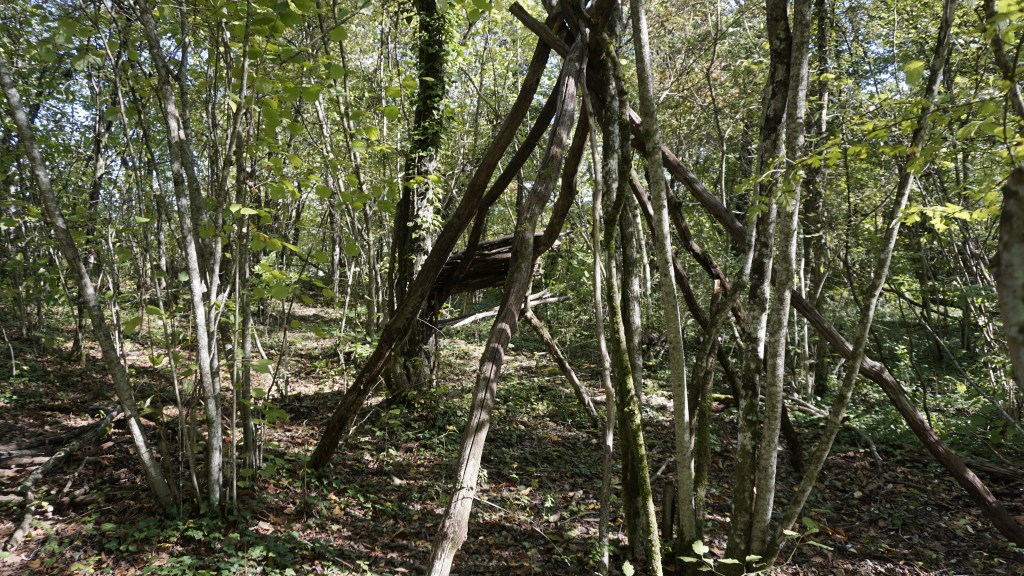
I found this, however, and with a little more work who knows it could turn into a chateau.
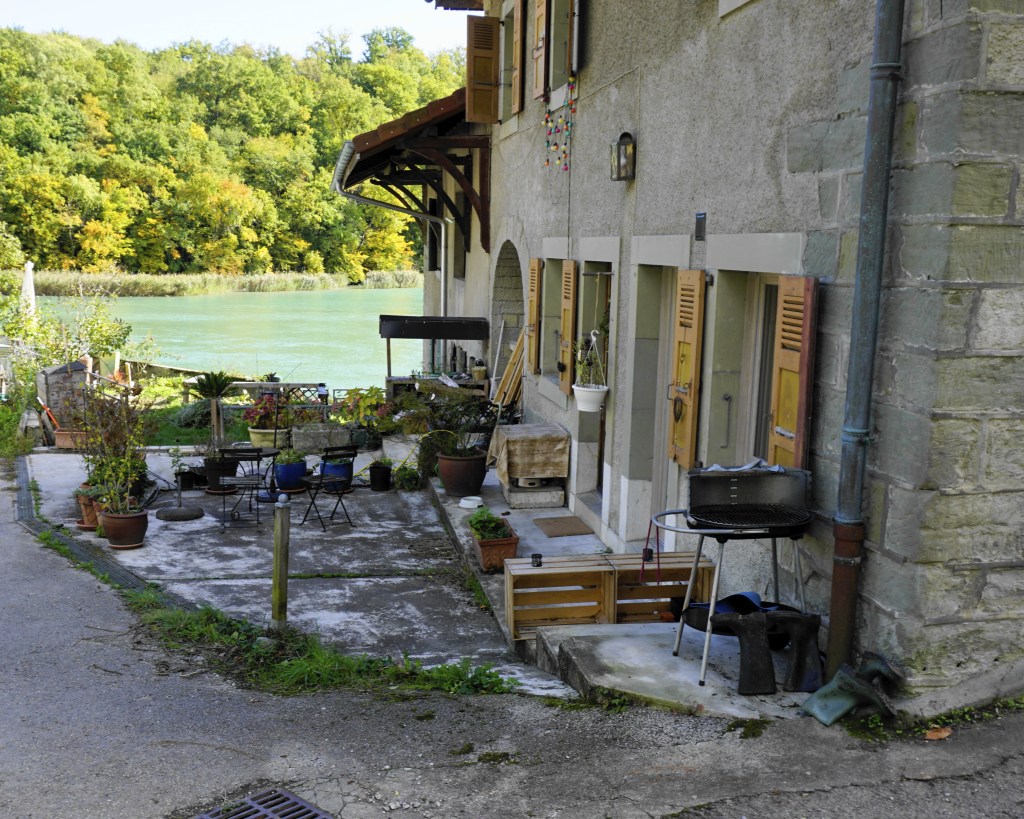
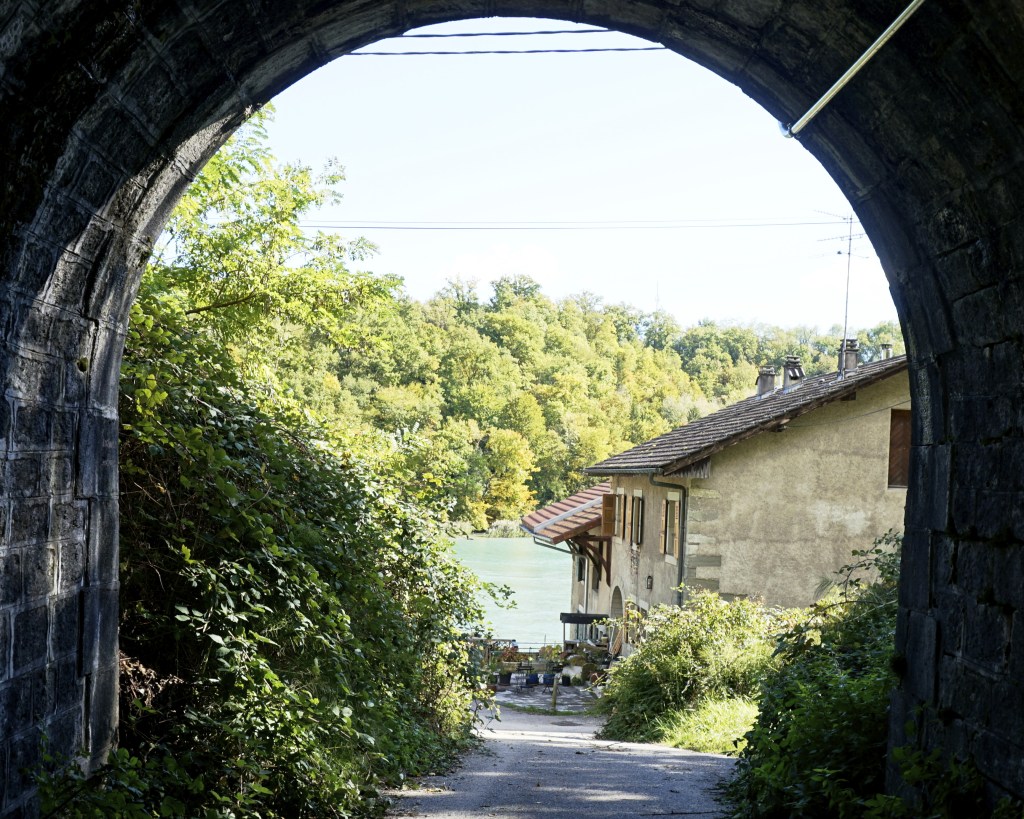
Leaving the forest, I walked down under the bridge to have a look at the Rhone. That’s where I came across this house which I think must have been an old mill. The people living here have a magnificent view. Just imagine having your breakfast on the terrace on a summer day, with the Rhone gliding gently by.
What a luxury!
Now, on to the sporty part. I hadn’t really realized that until now, my walk had been mostly downhills. From here on, you’ll get reminded about your heart and lungs! When you see this crossing, walk left and continue up, up and even more up on to the Rue du Chateau.
On Rue de la Treille, walk to the left and through the little village centre of Challex. If the Auberge is open, you can enjoy a drink on the terrace overlooking the woods below, where you’ve just enjoyed your forest bath. Continue for a few more meters and you will be back to your starting point.
Enjoy discovering Challex, and feel free to share!

























 The Activity Factory