My name is Berit Pedersen and I created The Activity Factory because I wanted to make it easier for both newcomers to the region and those who have lived here for a long time to explore new things in and around our beautiful corner of France.
For the time being I’m focusing on walks. After almost two months of staying at home due to COVID lockdown rules, and restrictions of not going further away from my house than one kilometre, being able to go for longer walks and hikes again has been so amazing.
The Pays de Gex and the nearby regions have not disappointed. Even after having lived in the area for more than twenty years, I have discovered places I had no idea existed. There are local gems hidden all over this place, sometimes almost literally in our own backyards.
We always seem to look out to foreign places whenever we plan our getaways, thinking the grass must be greener elsewhere. These past months of restrictions and lockdowns have brought lots of stress, but maybe all of this can serve as an inspiration to show us that we don’t need to go halfway around the globe to explore, or find something new, or be inspired, or to learn.
This is the beginning, and I hope you will join me while I continue to explore new areas of the region I thought I knew.
I am sure a lot of people in the Pays de Gex area still remember the Collonges- Fort-l’Ecluse – Divonne-les-Bains railway line passing through Pays de Gex.
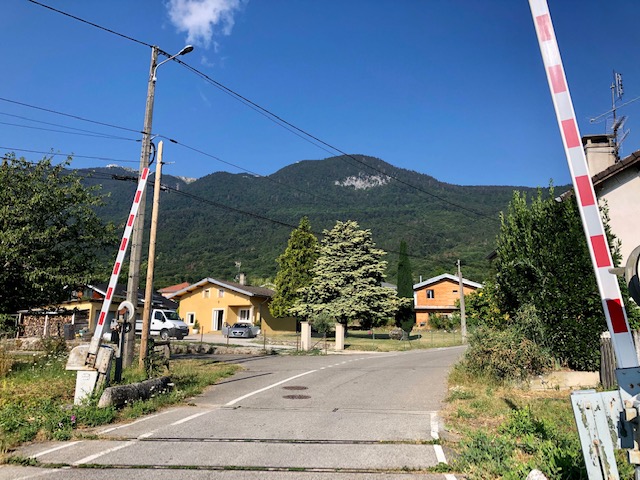
I arrived here for the first time in the late nineties, and to start with I was always careful when approaching a train crossing. I was soon told there was no need to worry about being hit by trains since the line had already been closed for many years.
Later, I remember hearing people claiming to have seen recent trains, and I remember we tried (after giving them incredulous glances at first) to work out how that could at all be possible. You’re probably laughing right now because information is so easy to get hold of these days. Twenty years ago, there were no Facebook groups, and the information on Wikipedia was scarce (especially in French). Exploring this train line has therefore provided me lots of new knowledge about the train line that runs from one side of the Pays de Gex to the other.
Here are some historic facts:
The railway line between Collonges-Fort-l’Ecluse and Divonne-les-Bains was inaugurated in 1899, at the height of the railway craze sweeping through most of Europe. The length of this railway line was at the outset 38 kilometres. Five years later, you could travel all the way to Nyon in Switzerland from Collonges-Fort-l’Ecluse, however, this part was closed and removed in the early 1960’s when the highway was built.
During the second world war the line was closed for traffic.
The last passenger train on the Collonges to Divonne line ran in 1980. I assume this had to do with the proliferation of individual transportation that has changed so many other aspects of our lives: constructions of motorways and more and more households having access to a car. With institutions like CERN and the United Nation setting up offices in Geneva, the traffic patterns had also changed, and the need for travelling into Geneva was probably now much larger than the need for going to exotic places like Bellegarde and Lyon.
In hindsight, I think you could say that the local politicians were short-sighted, because closing this railway line made public transport within Pays de Gex almost impossible for many years. There used to be three to four train services per day, and the communes in Pays de Gex fought to keep their beloved train line, but it was just not profitable enough.
With the large influx of people into the area in the last 20-30 years, and the difficulties we now face going from one village to another, this train service would probably have been very useful today. My own kids very quickly found out that it was easy enough to use public transport to go into Geneva, but using public transport to see their friends around Pays de Gex was impossible for them for a very long time.
Reading up a bit on the history also shed light on these ghost trains I’d heard about and proved that those friends of mine were indeed not delirious or mad after all. From 2001 to 2014, part of the railway line was actually used to transport household waste from Chevry to Bellegarde to be incinerated twice a week.
In 2014, the railway line was closed for good.
From Divonne to Gex, the old railway lines have been transformed into a very nice walking and cycling path.
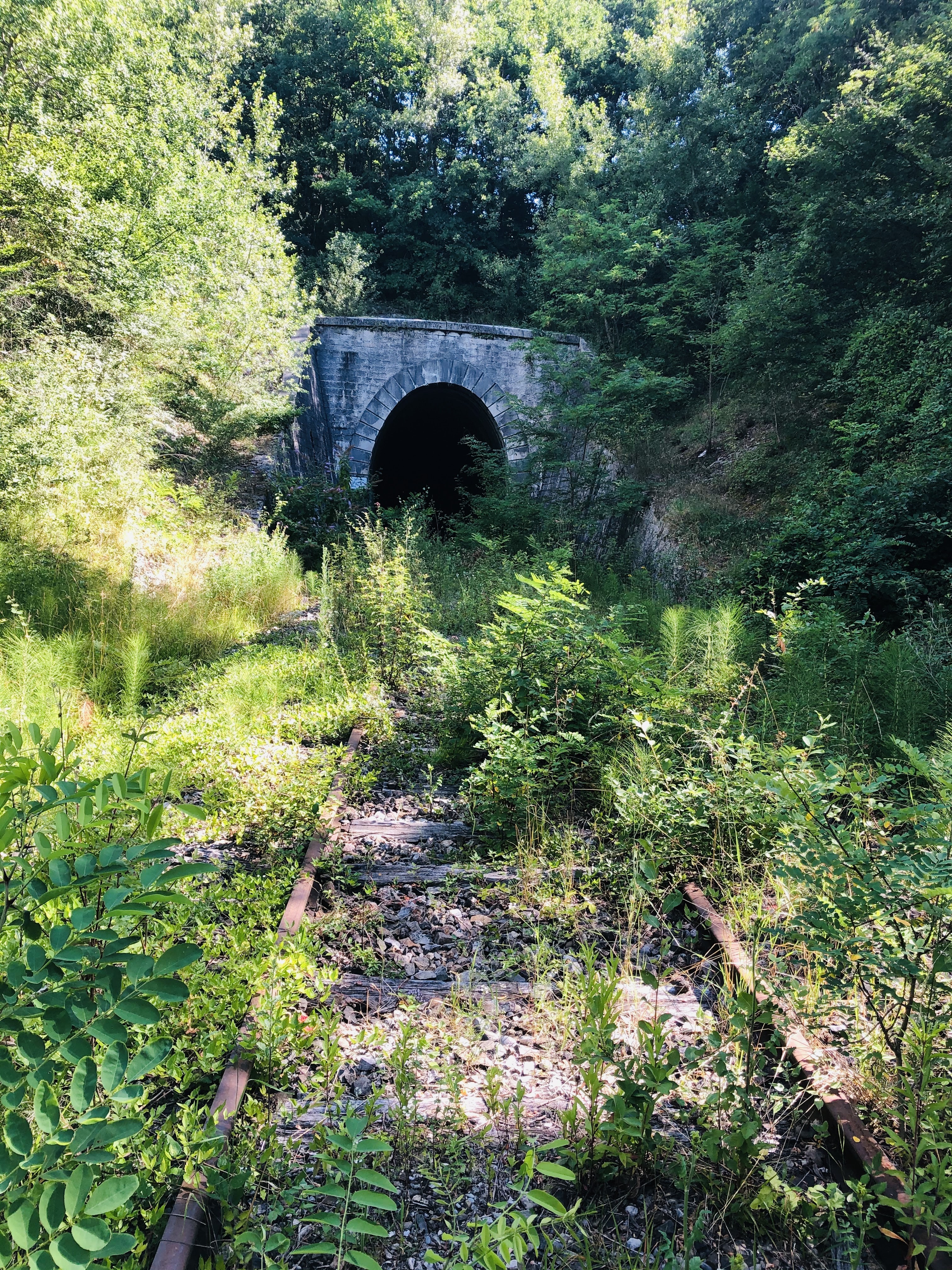
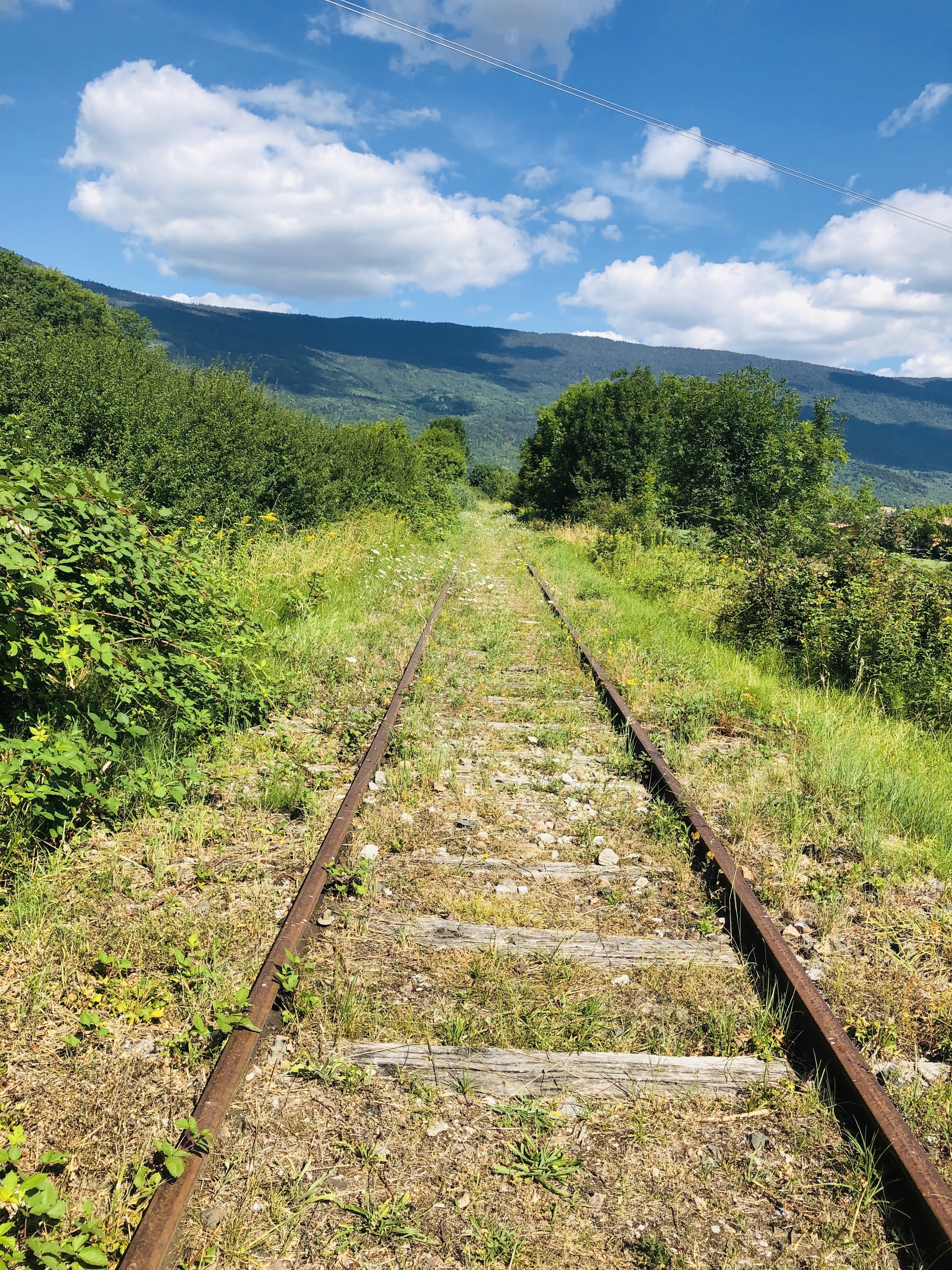
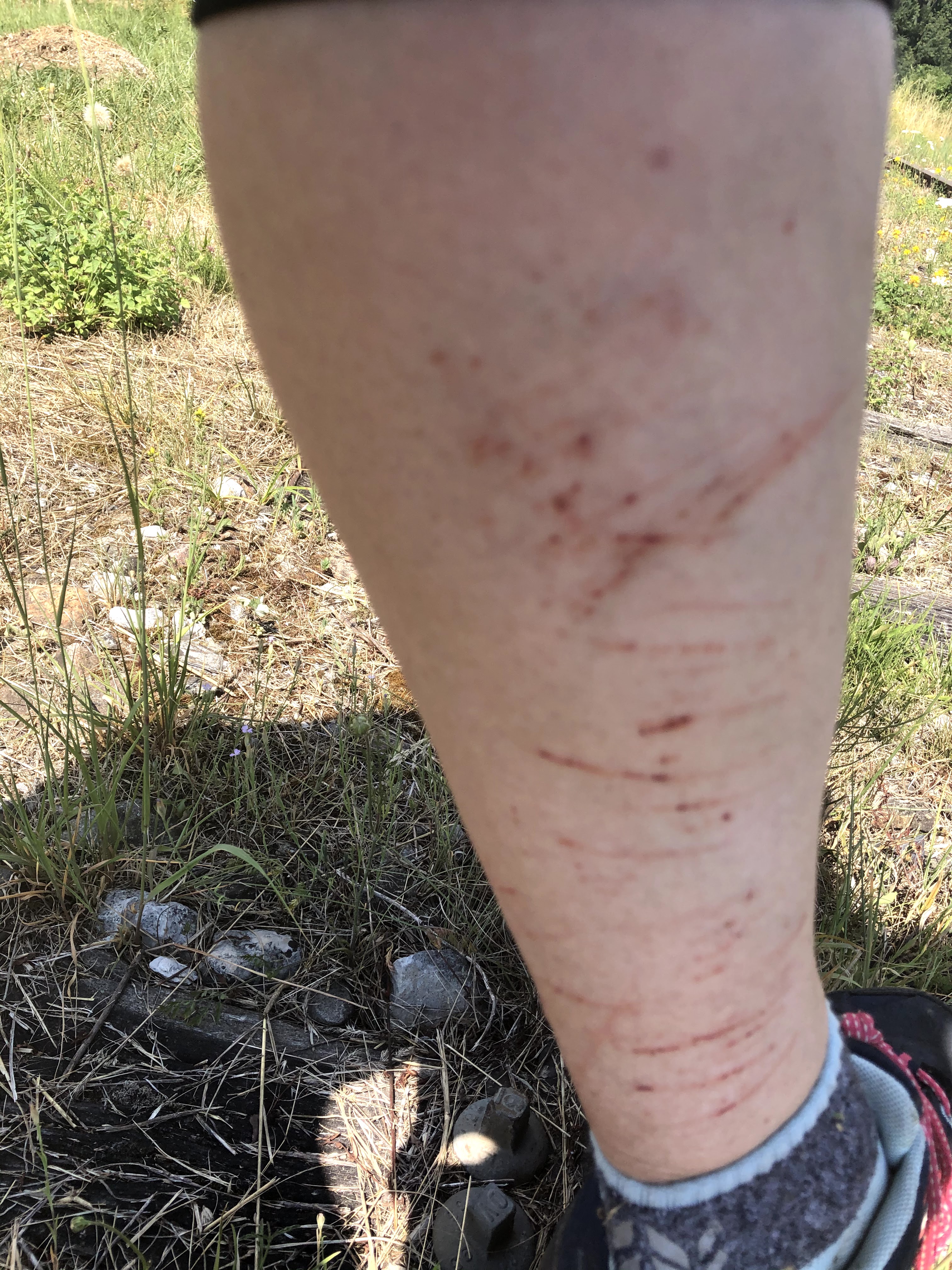
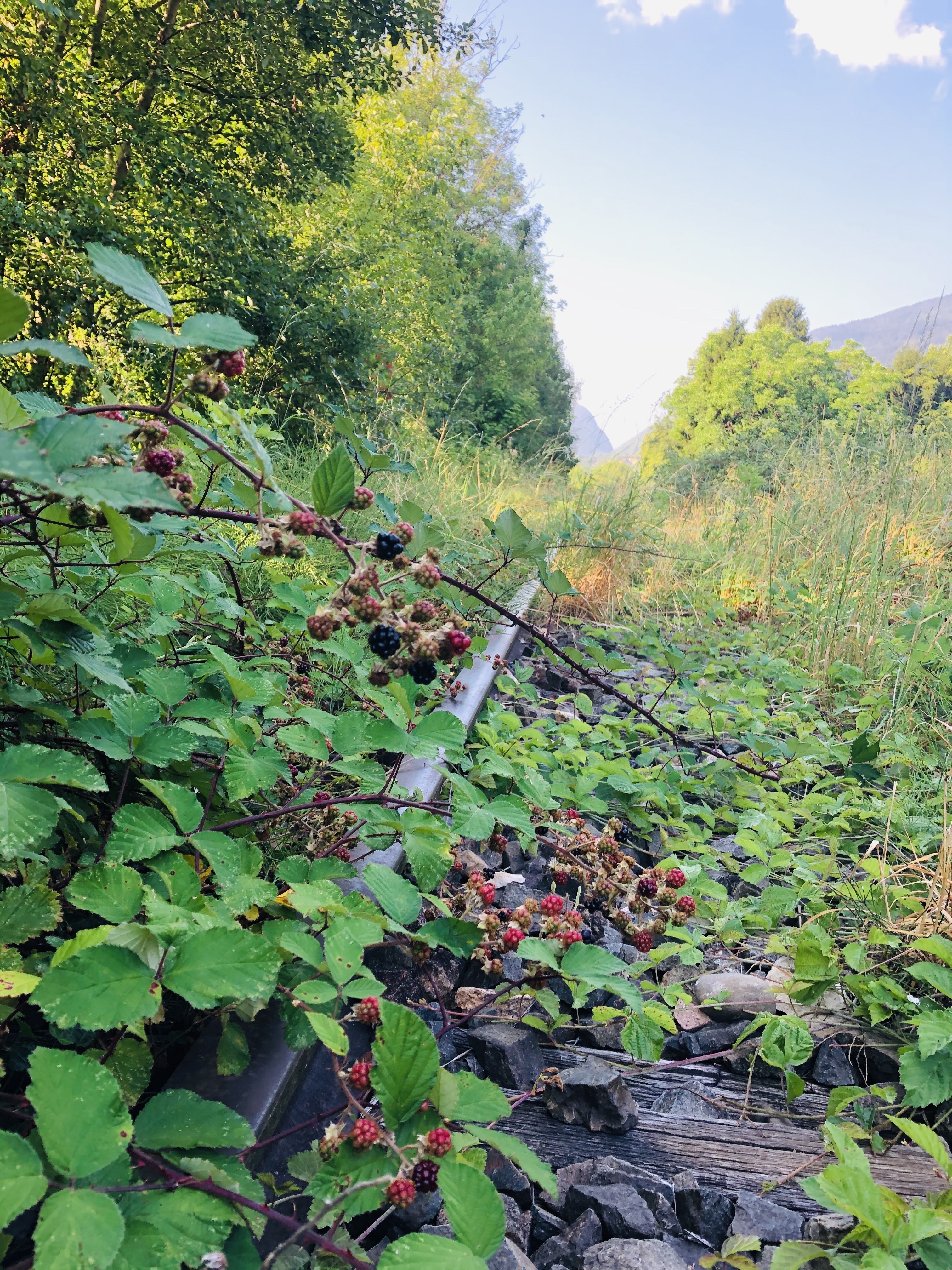
However, today we’ll focus on walking on the real tracks. A railway walk is perfect whatever the weather. However, if you want to explore the parts that have not been transformed into a walking path, I will recommend long socks and trousers. Speaking from experience, I can say that wearing a pair of shorts and short socks is not ideal on overgrown paths with thorn bushes and nettles. But on the upside, from July to September you don’t need to bring a snack with you as you can feast on the delicious blackberries growing in and around the tracks.
I have done two outings walking on the railway line, for both walks I started in Asserans where I literally parked on the railway lines. I then walked from Asserans to Peron and back and from Asserans to Collonges and back. You will need plan around two and a half to three hours for both walks.
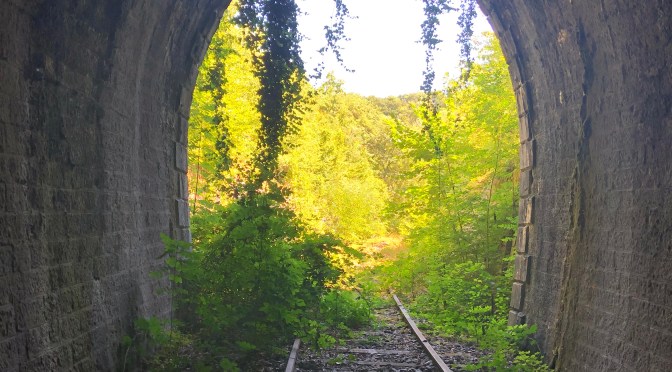
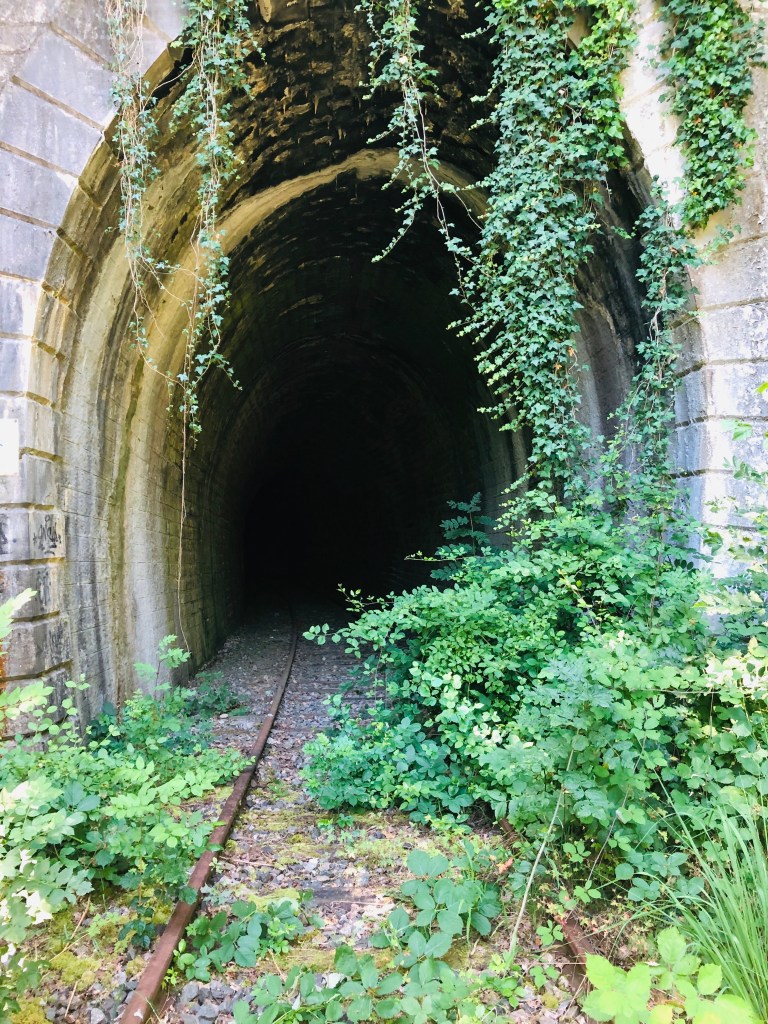
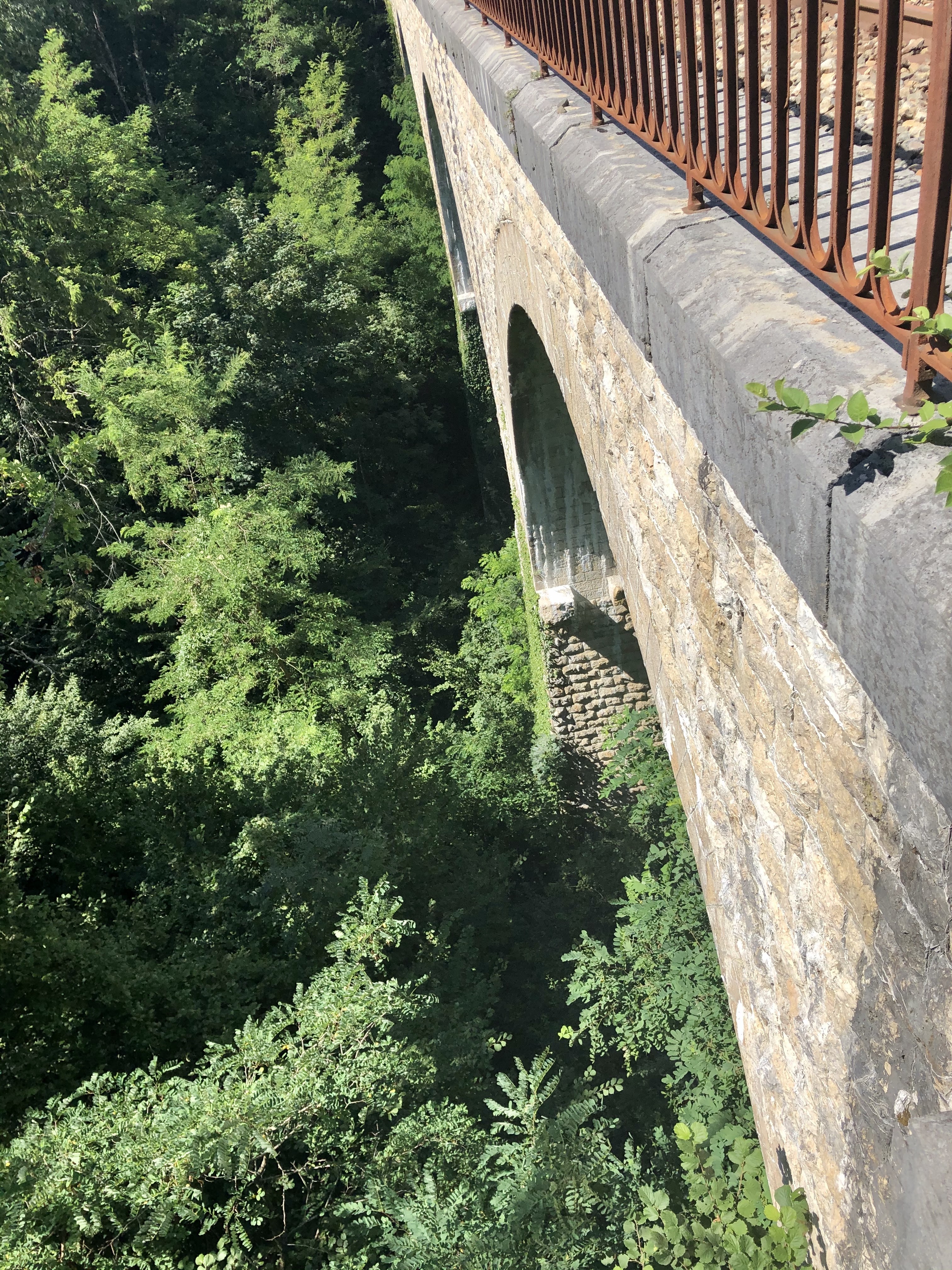
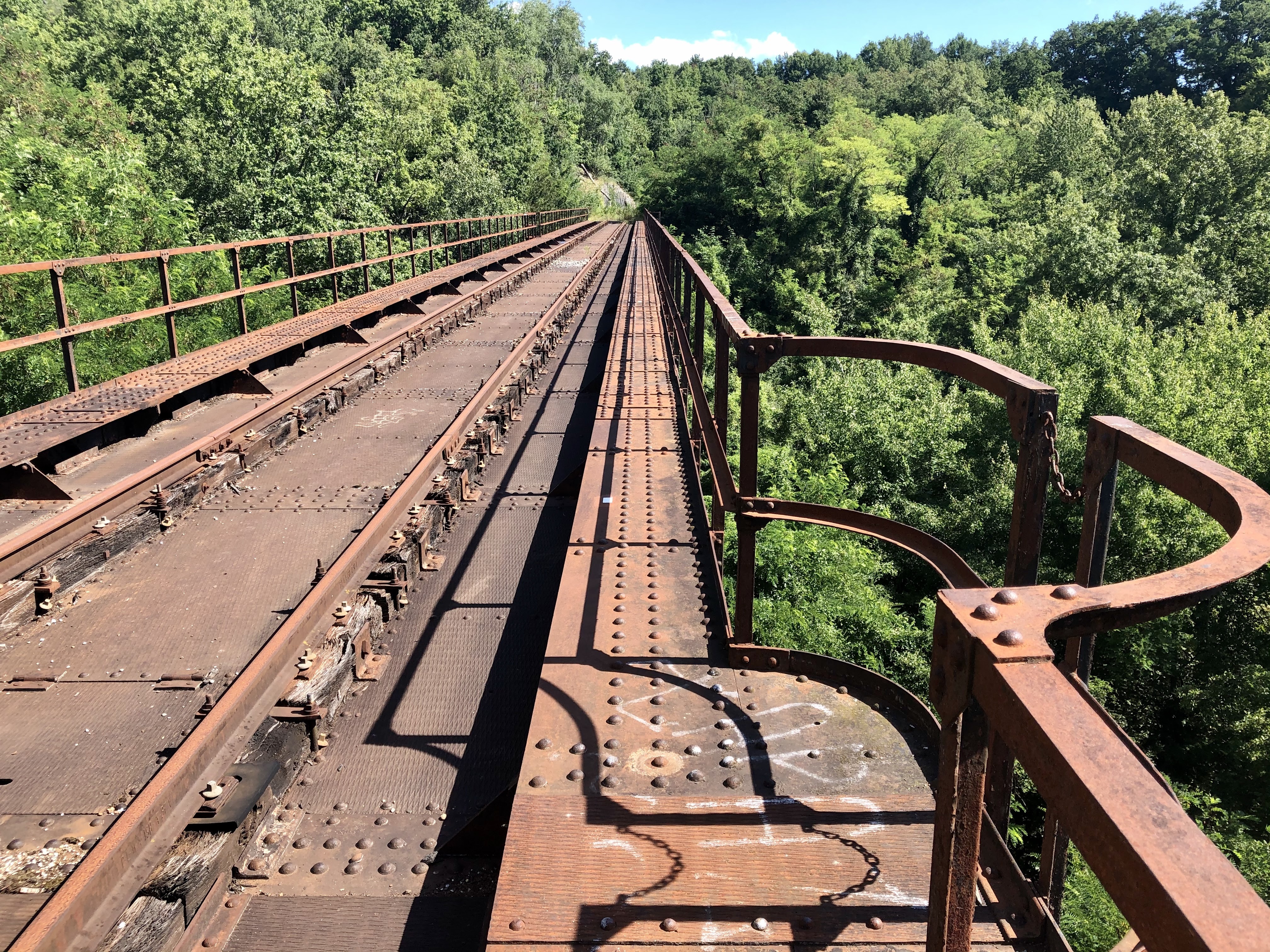
The most scenic walk was from Asserans going west, to Collonges. Here you will be walking through two tunnels and across two spectacular train bridges.
The first is tunnel is Grand Echaud which is 258 meters, followed by the Tunnel des Isles which is 149 meters. In both tunnels, having a flashlight available is handy. Luckily most phones these days have this tool built in.
The two impressive bridges, or viaducts, are the Viaduct de Grand Echaud and Viaduct d’Almogne.
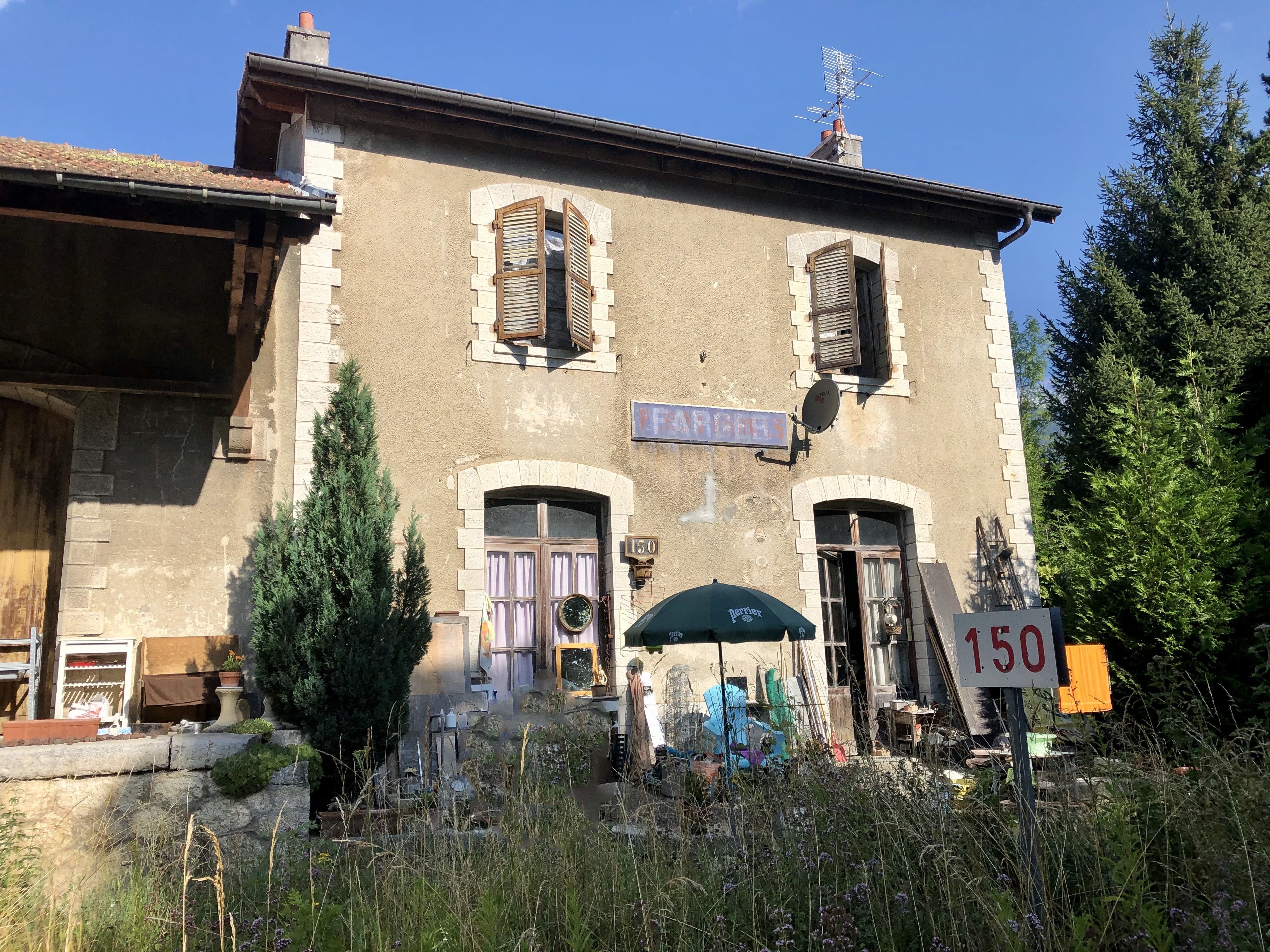
The old station building in Collonges Fort-l’Ecluse is not a very interesting sight and you will probably be better off enjoying the nature, pretty views, tunnels and viaducts on your return to Asserans.
Features: Forest – river – history – panorama view
Overview: I will say it is a medium to difficult walk, mainly because of the crossing of the scree
Time: around 3-4 hours Km: 10 Hight to climb: 568
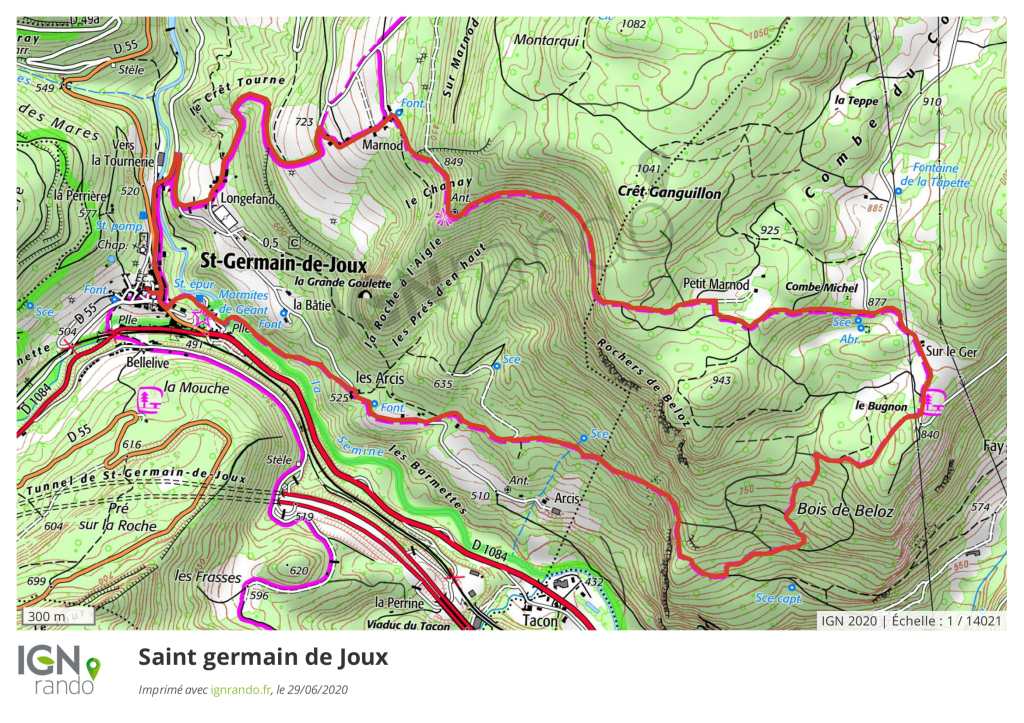
You will find the map at the bottom of this page.
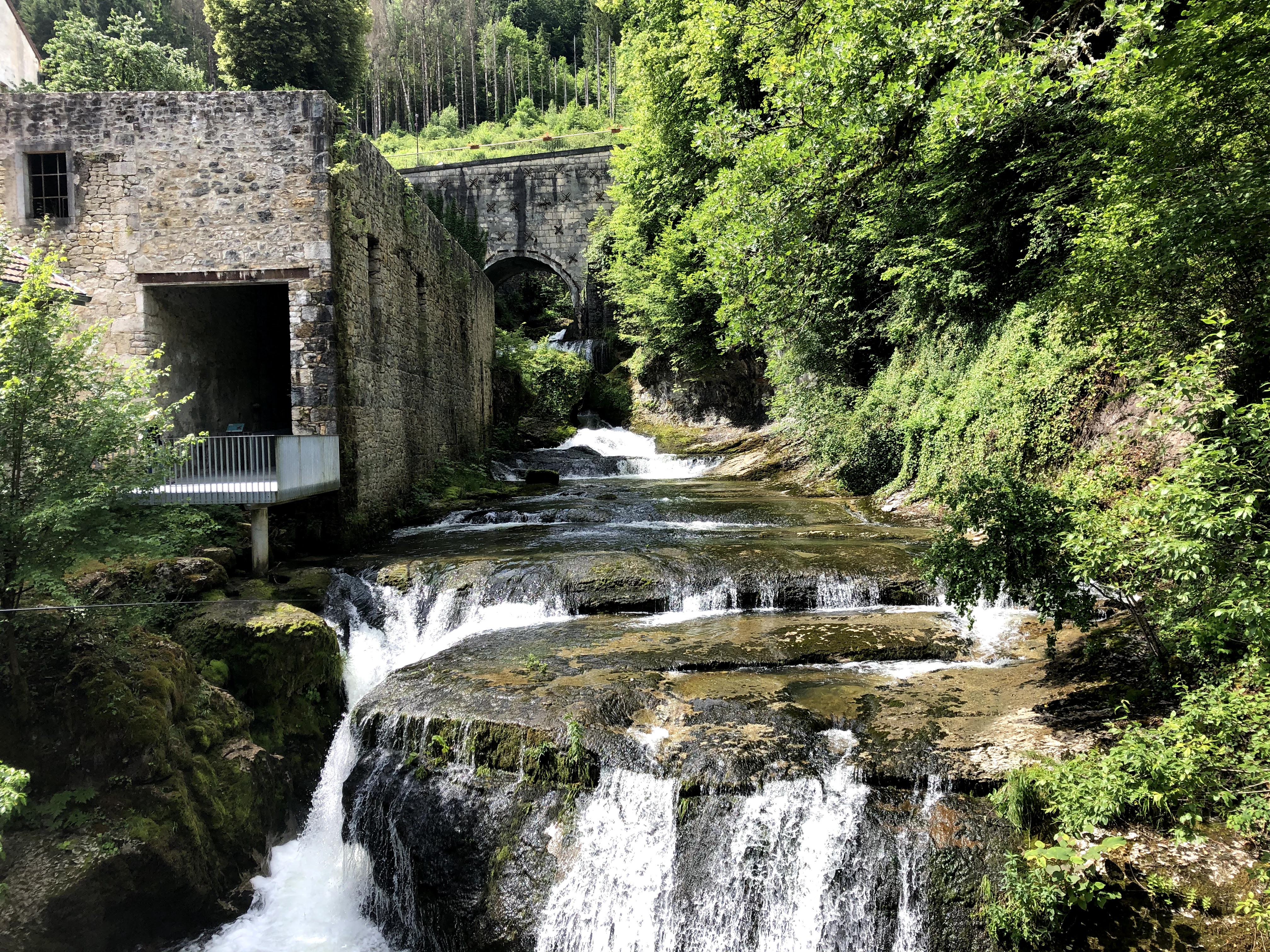
This walk brings you to the heart of the Semine valley, and you will be able to explore its hydraulic heritage.
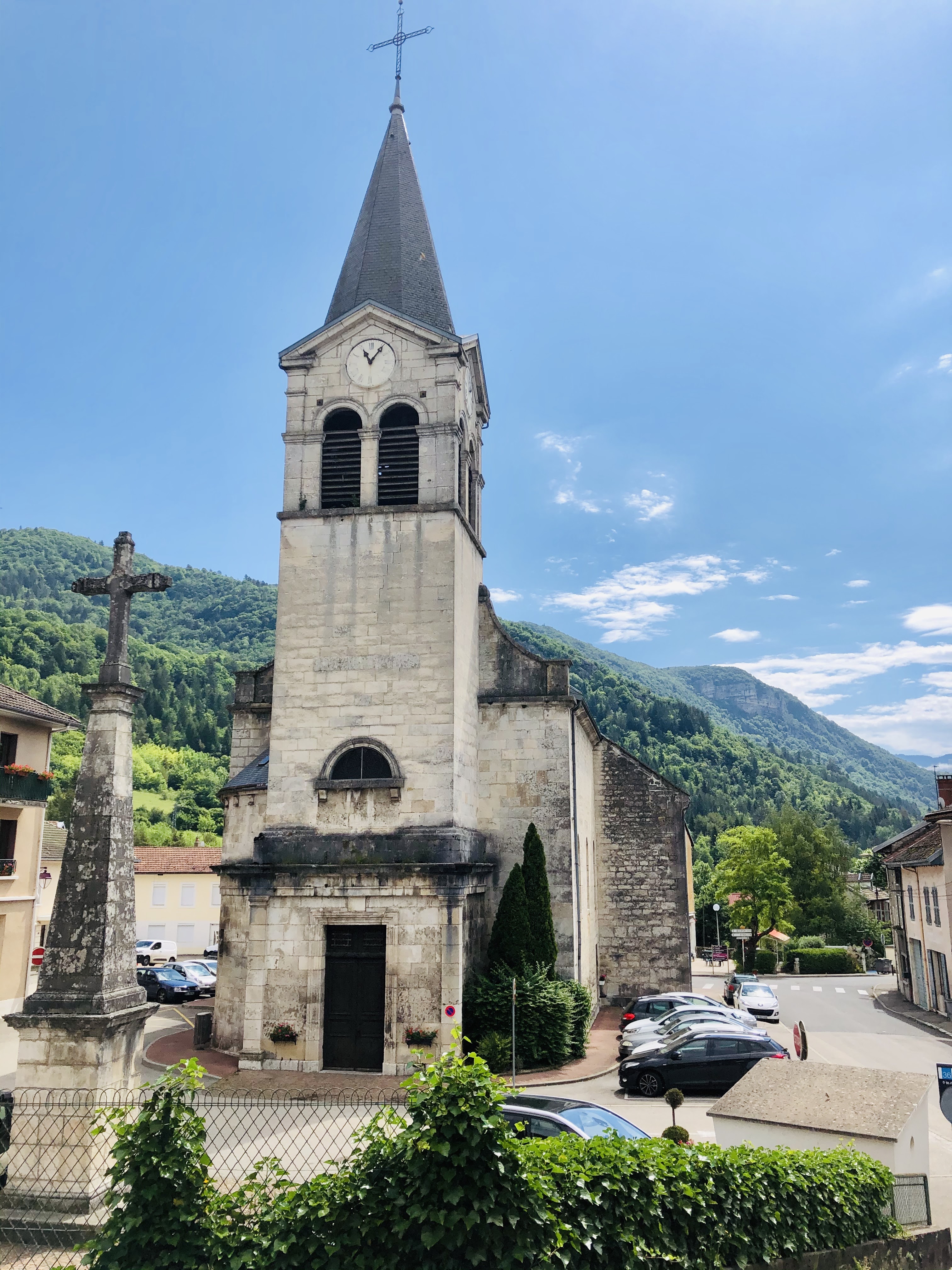
The staring point is in the centre of Saint Germain-de-Joux where it should be relatively easy to find a parking spot for your car. I found ample parking right next to the church.
To find the start of the walking path you’ll have to walk 50 meters down in the direction of Bellegarde on rue de la Gare.
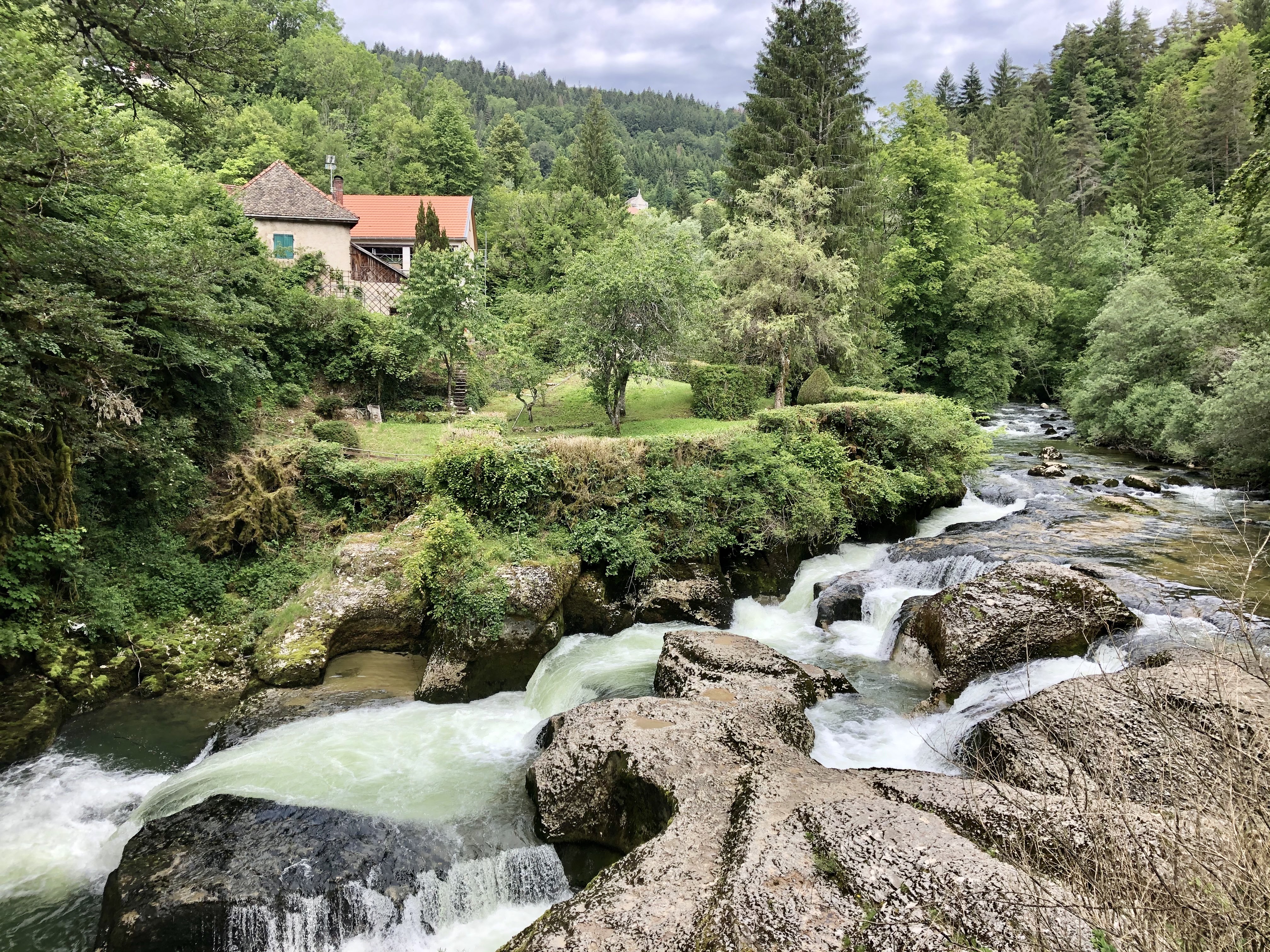
You will soon see the familiar yellow signpost which is right after the petanque area on your left-hand side. The path will take you down to the Giant kettles – but before going there, you should take some time to explore the old sawmill.
The water wheel, which has been completely restored, measures 7,54 meters in diameter and has 96 blades. This makes this water wheel the biggest in the department de l’Ain.
Back in the good old days this little village had no fewer than eight sawmills along the two rivers that connects here, and the last one closed as late as 1998.
One of these sawmills also used to cut stone coming from a neighbouring quarry, and most of the churches in the area were then build with these stones coming from Saint Germain-de-Joux.
When crossing over the bridge you will see a new yellow sign indicating the hiking path. Follow the path down along the river to Les Arcis.
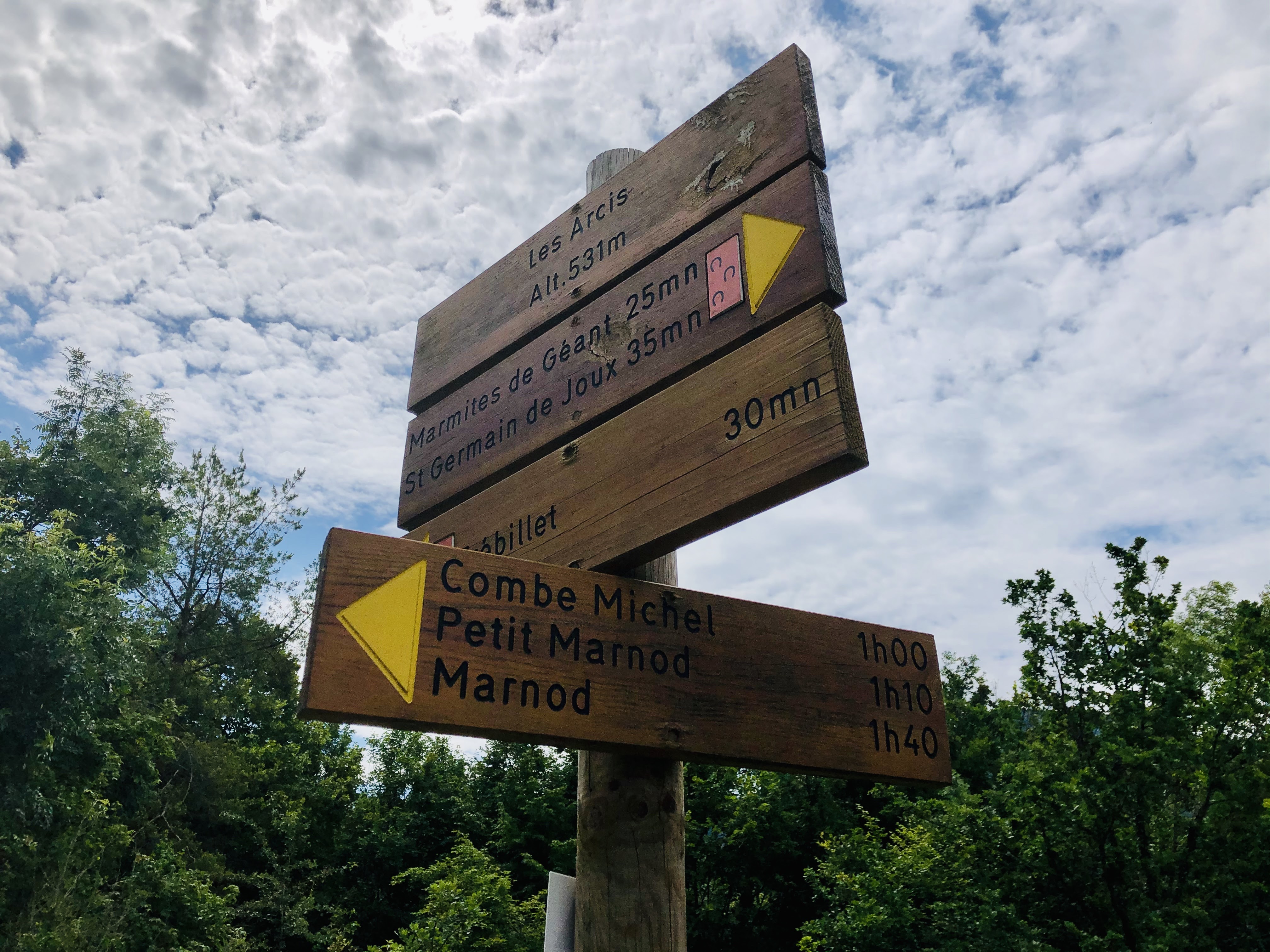
From Les Arcis, follow the signs towards Combe Michel and Marnod,
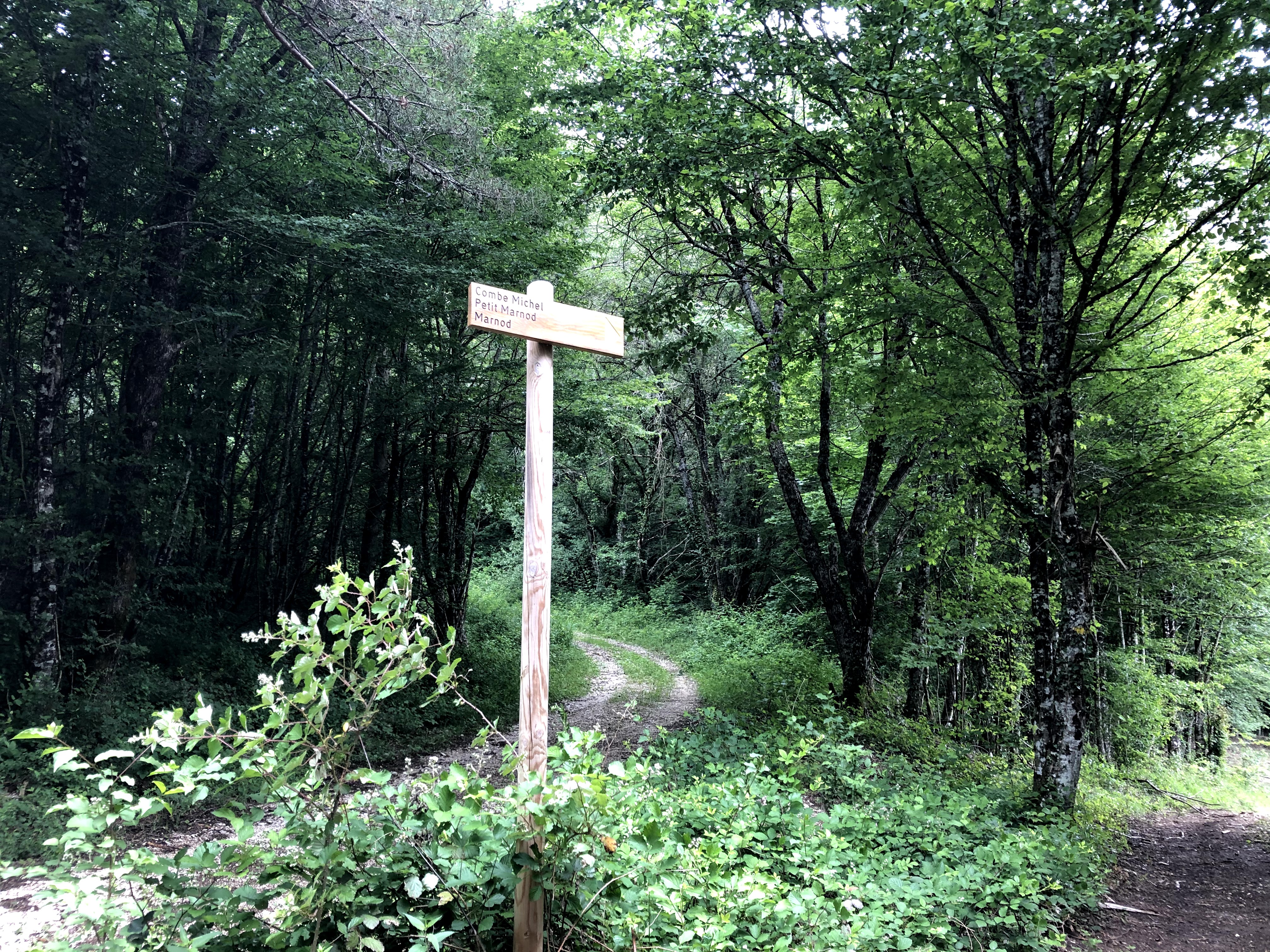
until you reach this signpost:
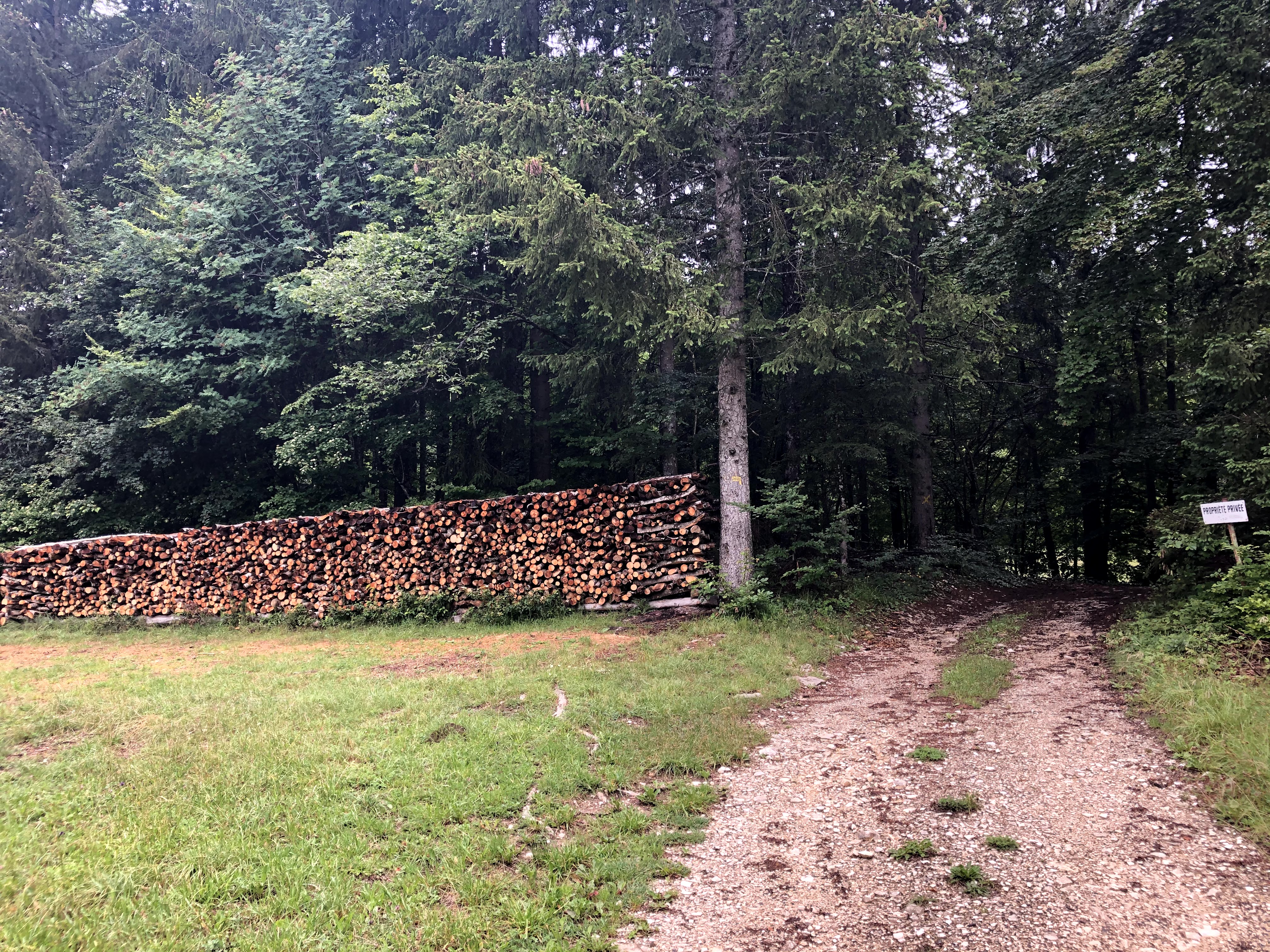
The first time I tried to walk this route I was not able to find the path. I admit I was very badly equipped, with no good map, but to my excuse there was also a lot of forest work going on which has changed the original pathway. The trick is to not be tempted to walk down, to walk no longer than 100 meters in a straight line from the sign and keep your eyes to the left. Then, in between the trees, you will see a small path. When you’ve found it, it will take you up into the forest of Beloz.
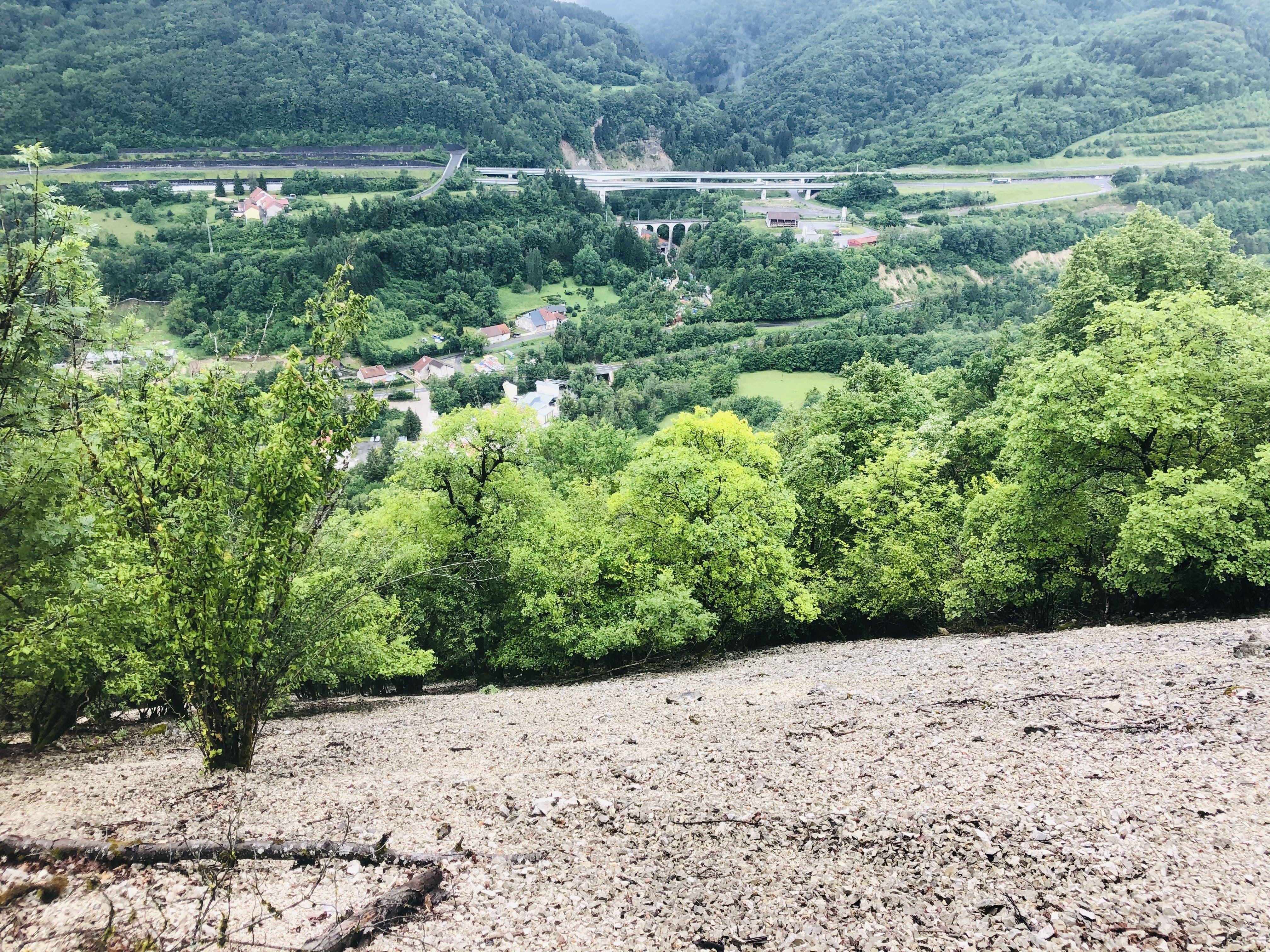
After some minutes you will reach Pierrier du Rocher de Beloz. This is a mass of loose stones that cover the slope of the mountain. Such masses are also called screes.
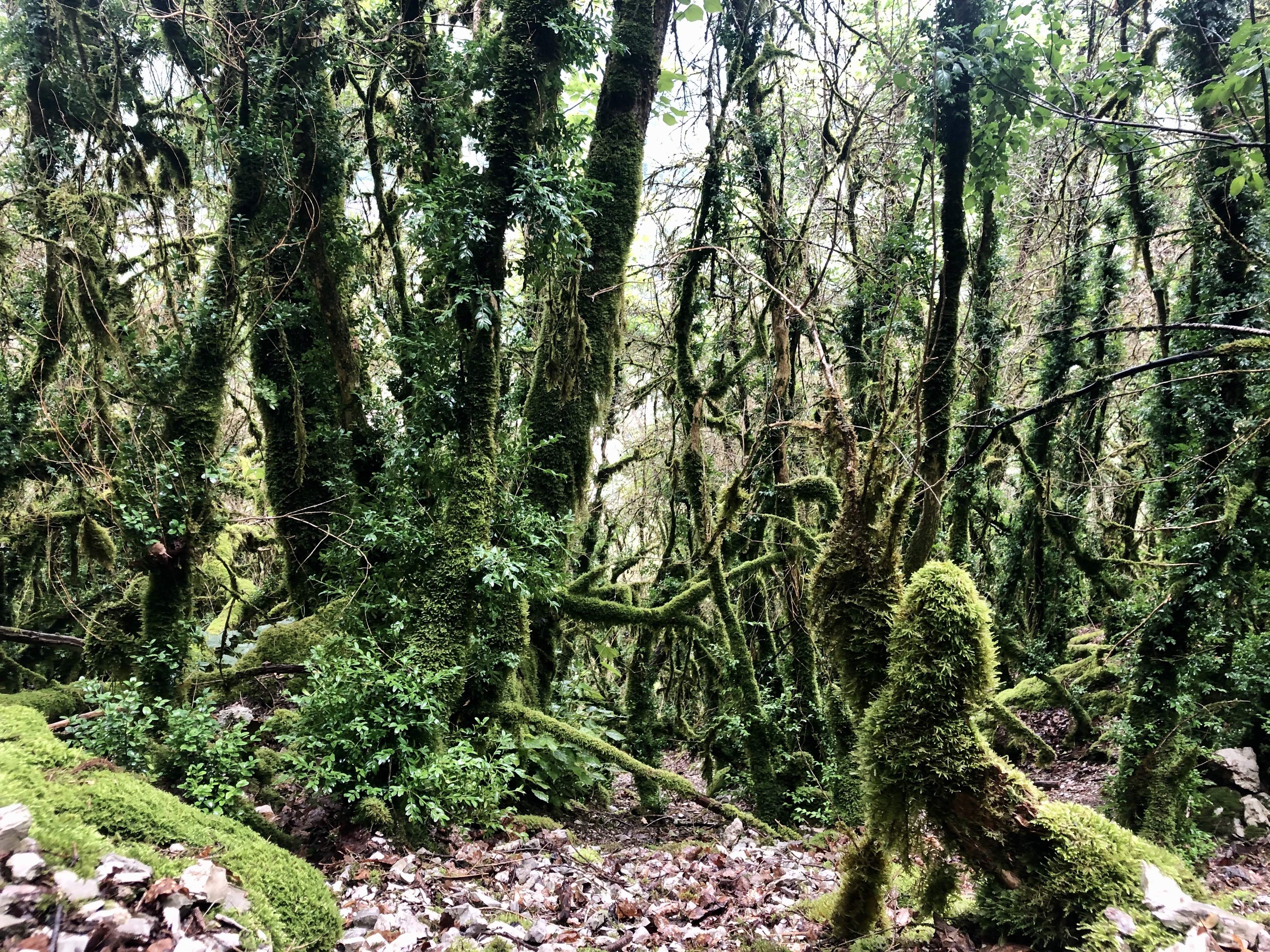
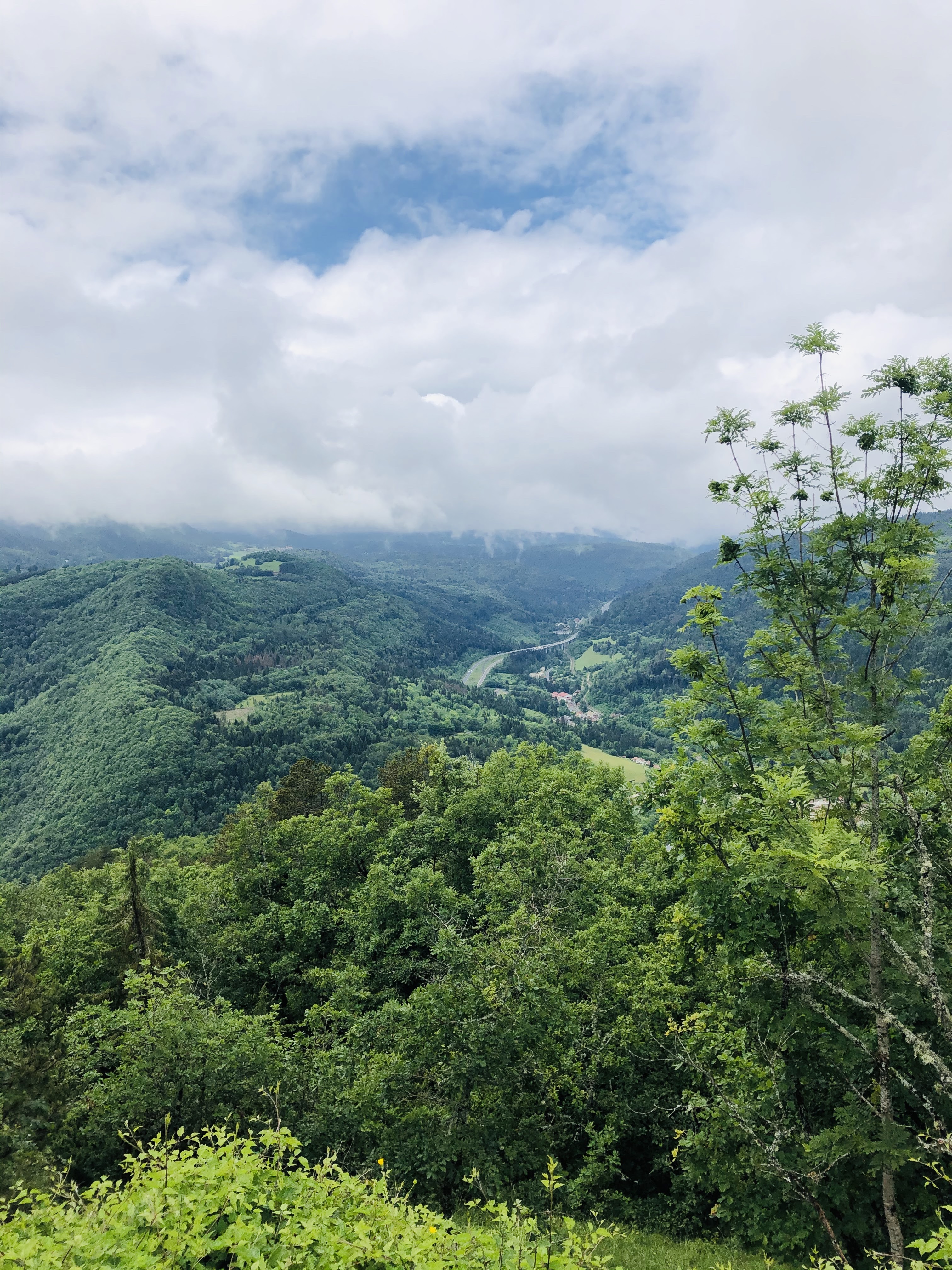
Crossing this scree can be daunting. My friend who came along with me was very quick and focused on a rapid crossing, and we were both happy to put our feet back on an earthy path after the approximately 50 meters walking on loose gravel. The forest itself is amazing, with threes overgrown with moss. Bring a camera because with the right light you can take amazing photos here. You will also get a really good view of the motorway and viaducts and witness how it is sculpted into the landscape. I have so many times seen the nature from a car window along the highway. Looking at the highway from another viewpoint enables you to admire the great engineering knowledge that’s made this highway possible.
Moving on along the path takes you up and over to Combe Michel, before you start to descend back to Saint Germain-de-Joux past the small hamlet of houses in Marnod.
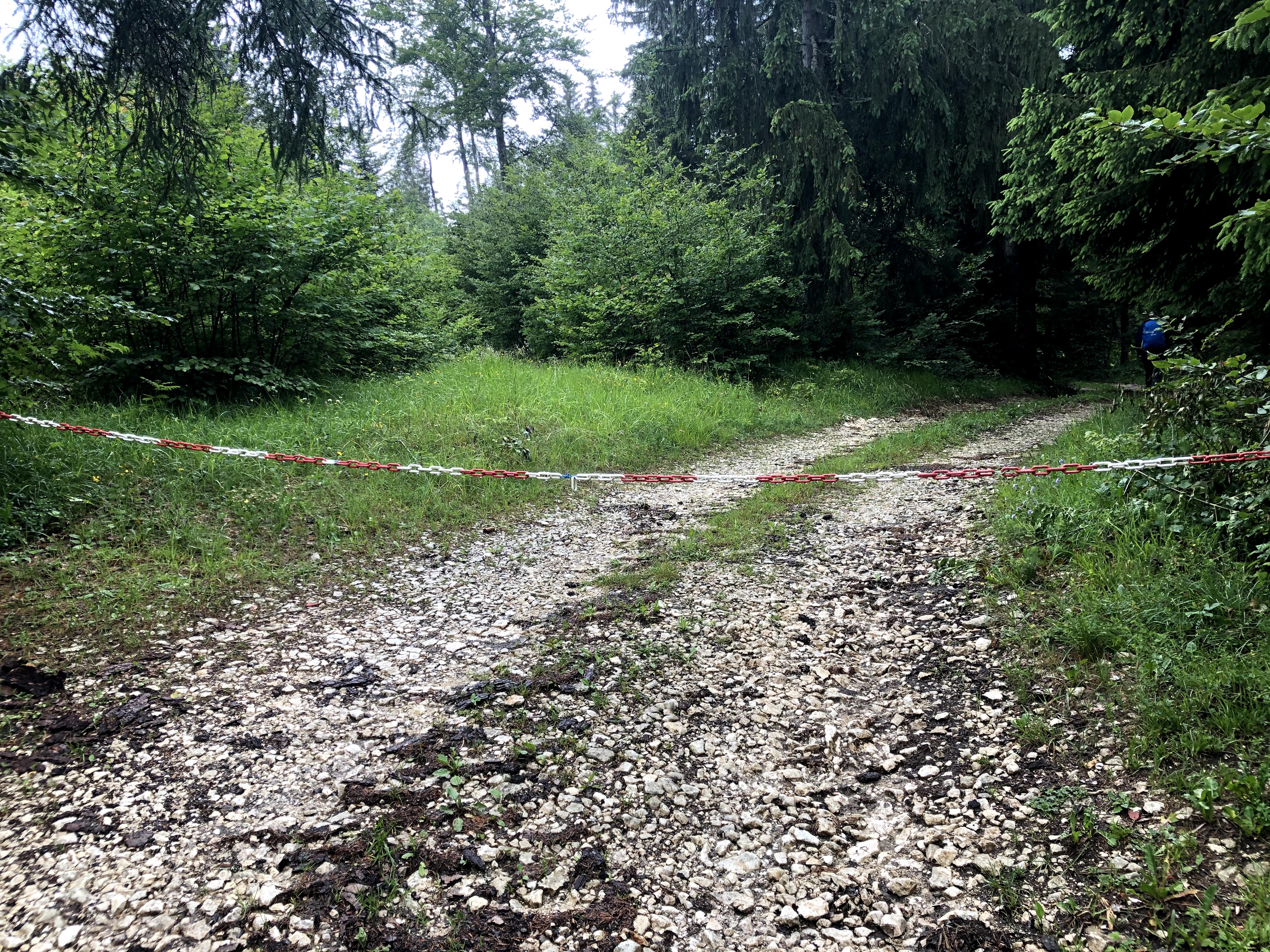
In Petit Marnod, we started to wonder if we’d lost track of the path, since we were faced with a barrier across the road. The trick is to walk past it and continue until you see a wall of three logs. The path follows these logs to the left. You will soon be rewarded with another great viewpoint of Saint Germain-de-Joux, the highway, and some small summits.
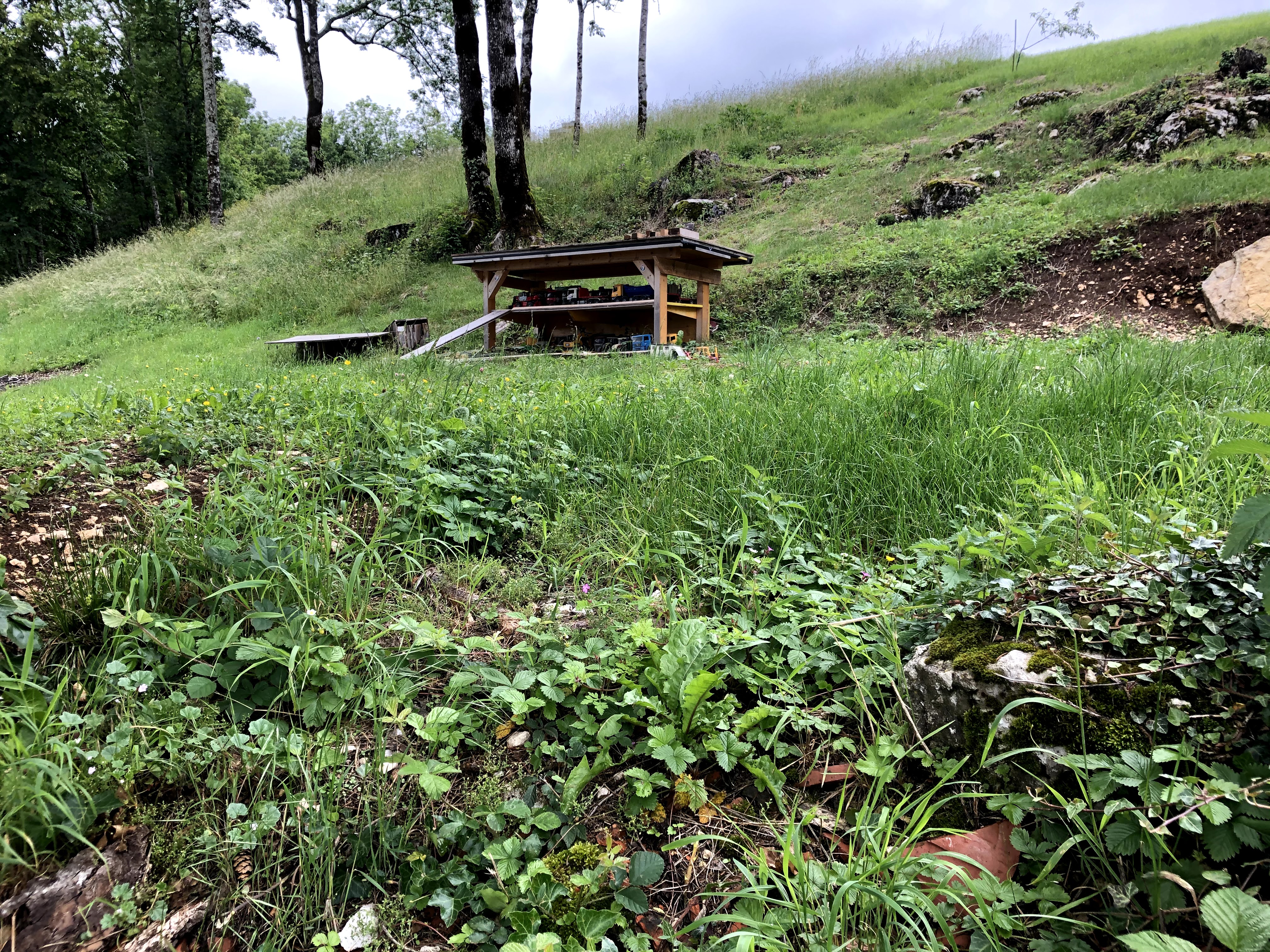
The Marnod is a really charming hamlet of houses and you will be walking along the road that connected these houses to St. Germain-de-Joux. If you are lucky and find some of the locals out and about enjoying their coffee or a glass of wine, they’ll be happy to talk with you. They also have a really great sense of humour and could end up asking you to watch out for crocodiles and toy cars!
Follow the signs down to Longefand and then back to Saint Germain-de-Joux.
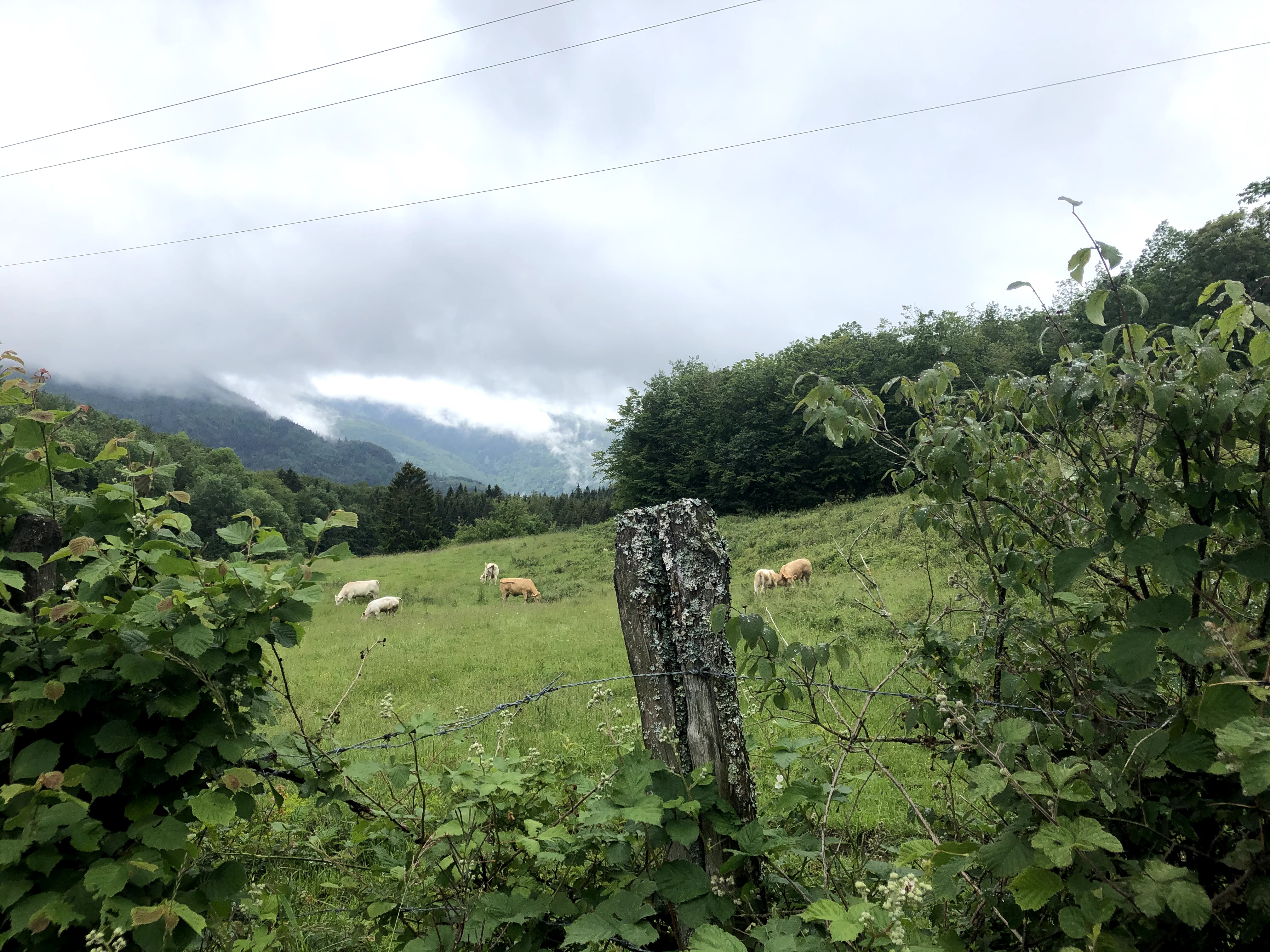
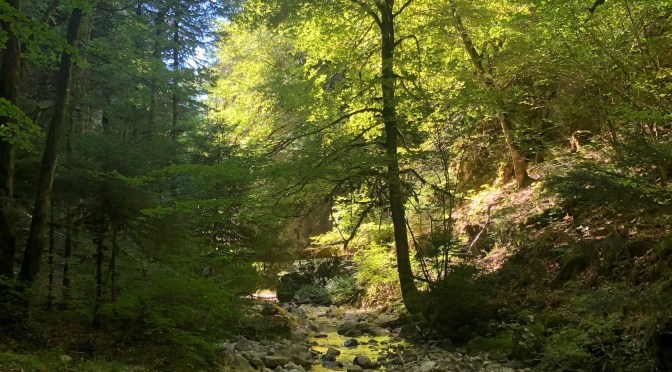
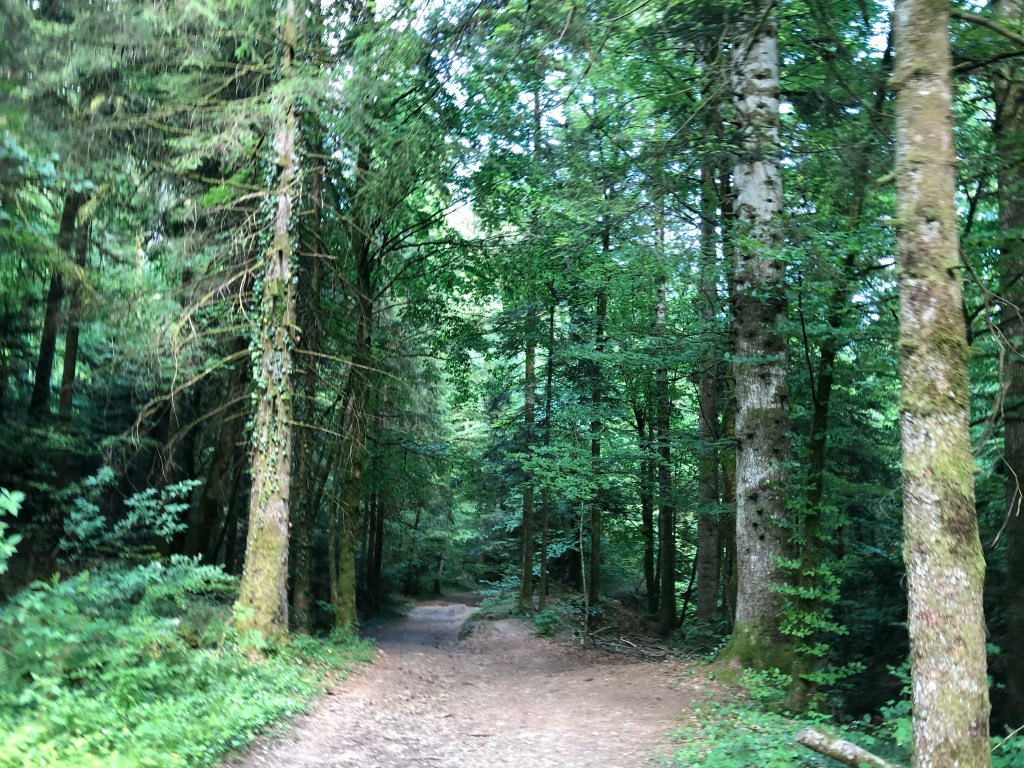
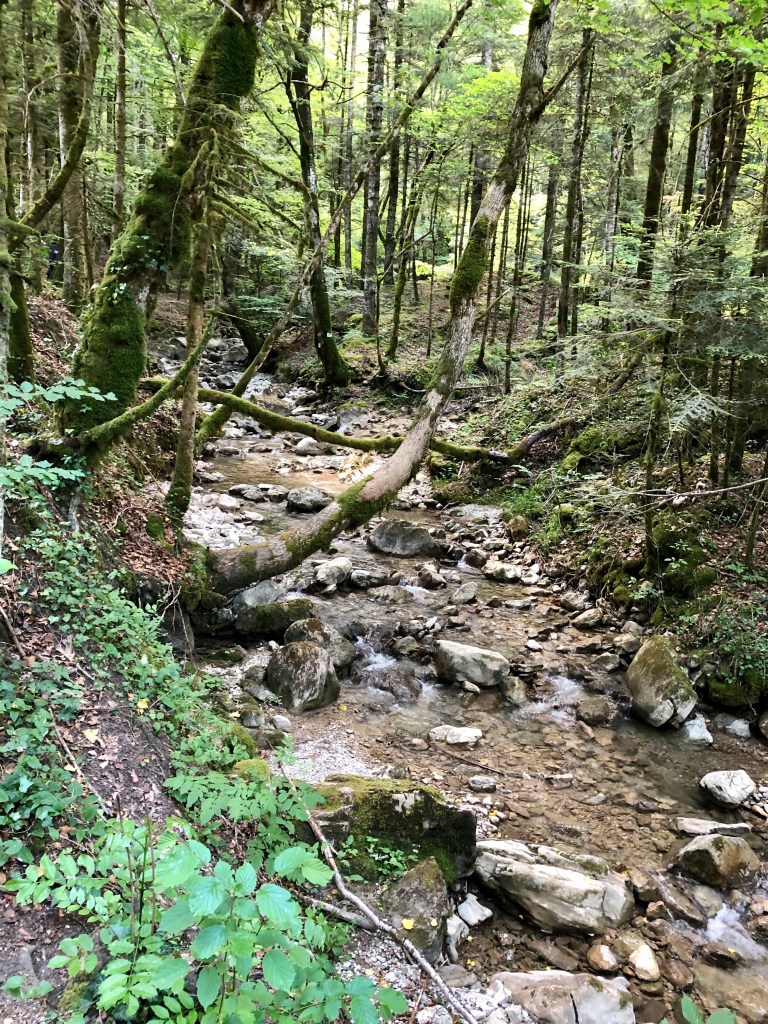
This is a walk that can be done almost the whole year around. In the springtime it is impressive to watch the quantity and speed of the water. In the summer it is nice to have a walk in the shadow of the threes, and in the autumn the colors are impressive. You will find the map at the bottom of this post.
Creux de l’Envers translates into English as a V-shaped north-facing riverine valley.
Did you know that Gex has the largest community forest in the Ain department with 1770 hectares?
Most of the forest, 1640 hectares, is a productive forest, and a small part is protected.
We depend on forests for our survival, from the air we breathe to the wood we use. Besides providing habitats for animals and livelihoods for humans, forests also mitigate or prevent the impacts of natural hazards. The protected forest is usually kept that way for preventing such things as rockfalls, avalanches, erosion or landslides, that otherwise might affect people or assets.
In recent years the climate has become much dryer and significant lack of water can cause stress on the trees. The lack of water can cause the trees to weaken, which will make them much more vulnerable for insect attacks, diseases and death. The forest workers are constantly working on increasing their knowledge on how to best protect and maintain the forest against these changes cause by increased temperatures.
Creux de l’Envers is the source of the river Journans that flows through Gex and other communes in Pays de Gex before it ends up in the Rhone and eventually the Mediterranean Sea.
I started my walk from the Place Perdtemps in Gex where it is easy to find a parking spot for the car. If you want to go even further by car you should drive up Chemin des Galas or Chemin de la Noyelle.
From Place Perdtemps the walk is well marked with yellow signposts. The path is large and even if it goes up it is not hard or difficult to walk.
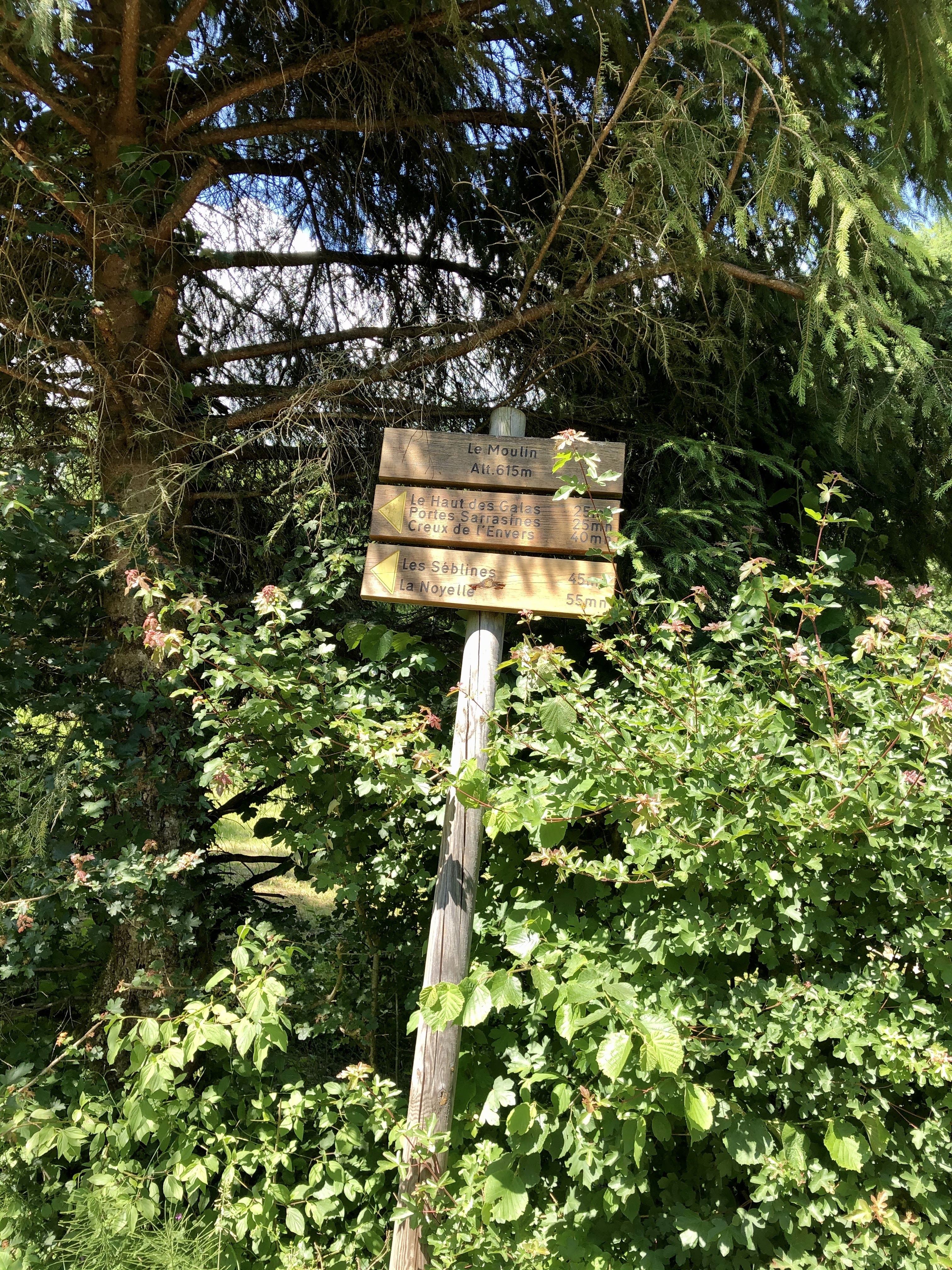
When you reach this signpost:
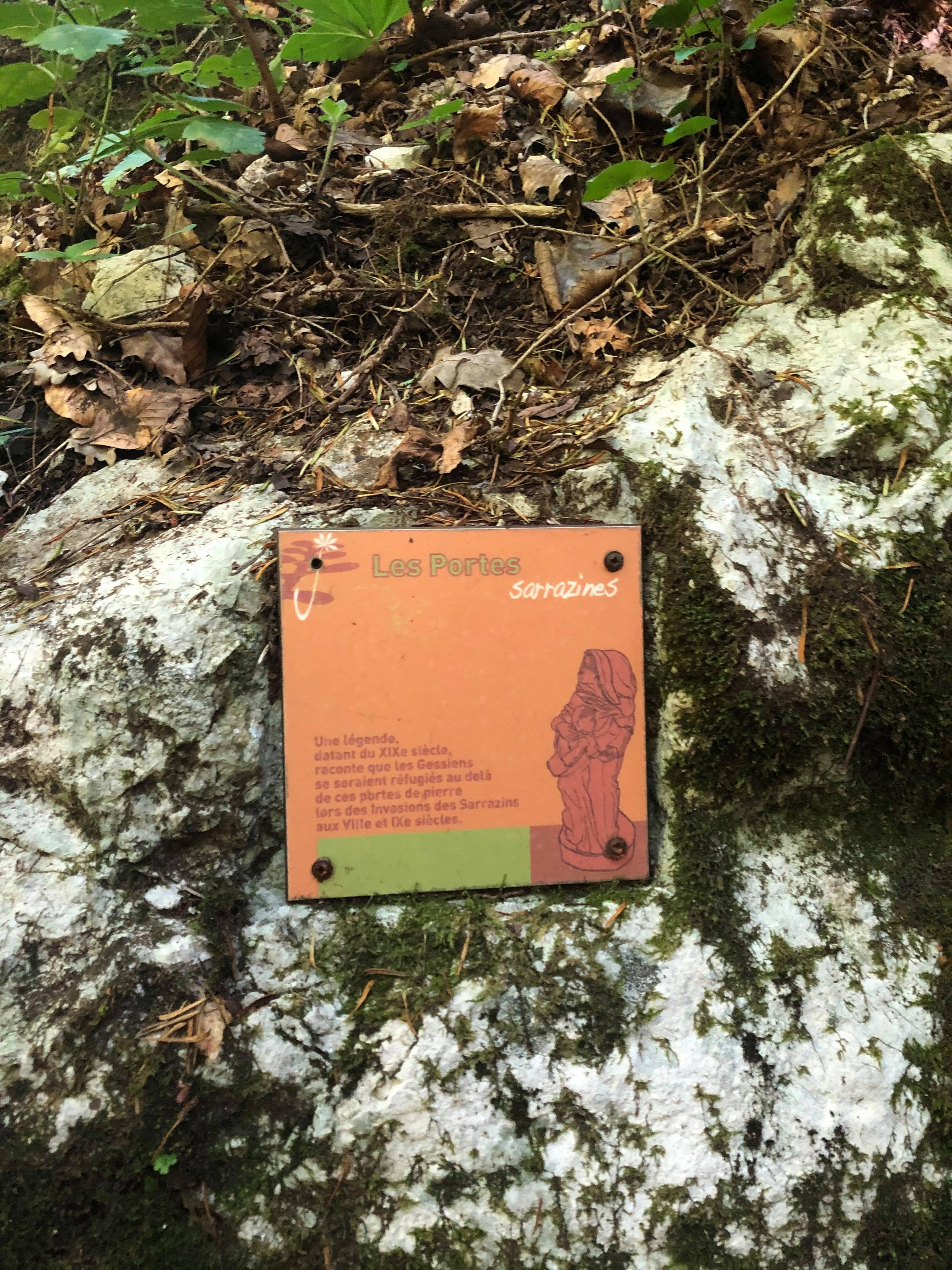
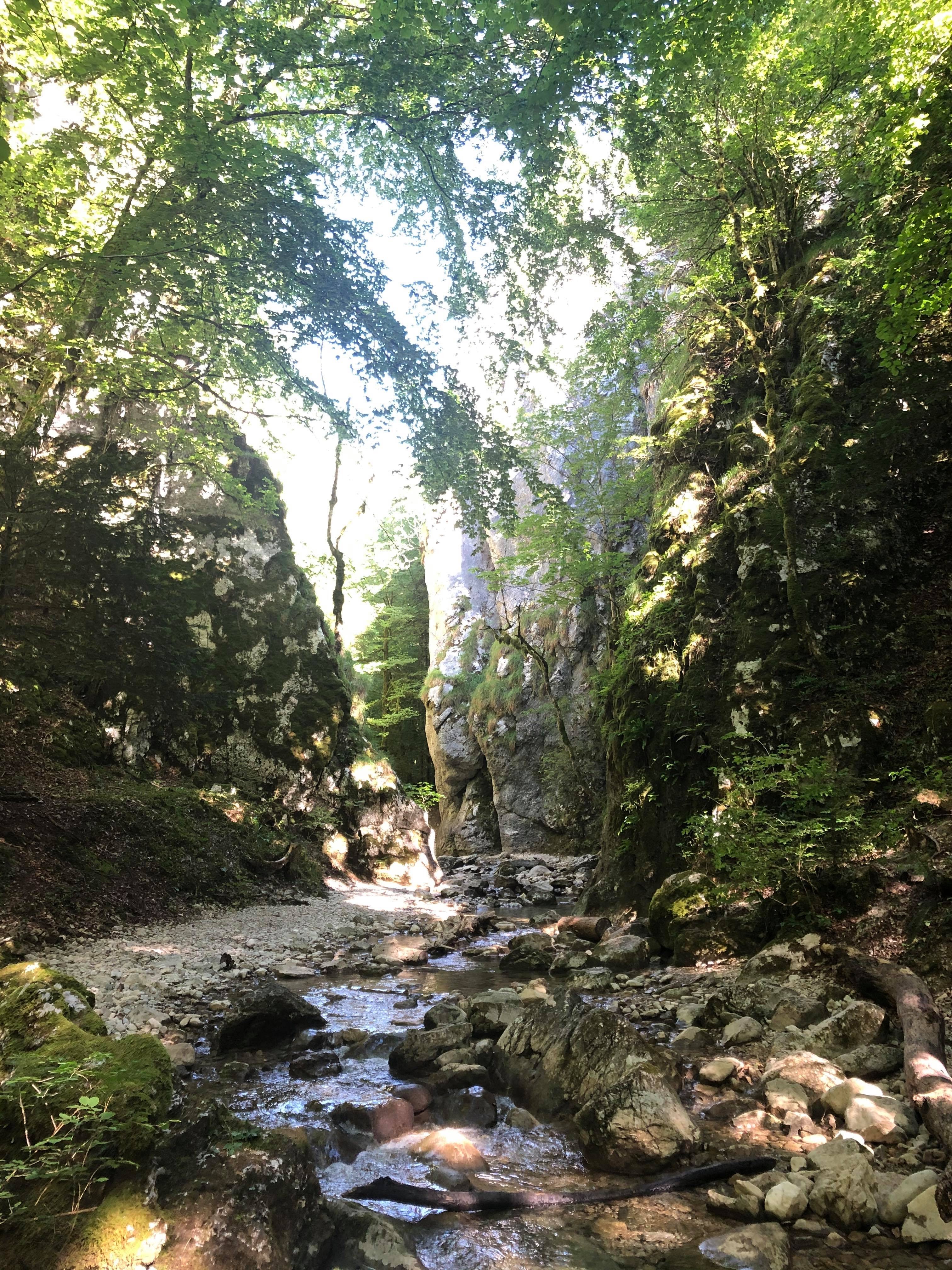
you can walk up directly or add a little bit to your walk and go past Portes Sarrasines and La Noyelle.
The legend says that the population of Gex came to take shelter behind this narrow gorge during attempted invasions by the Saracens (which was the term used in the middle ages to refer to Arab Muslims) in the 8th and 9th centuries.
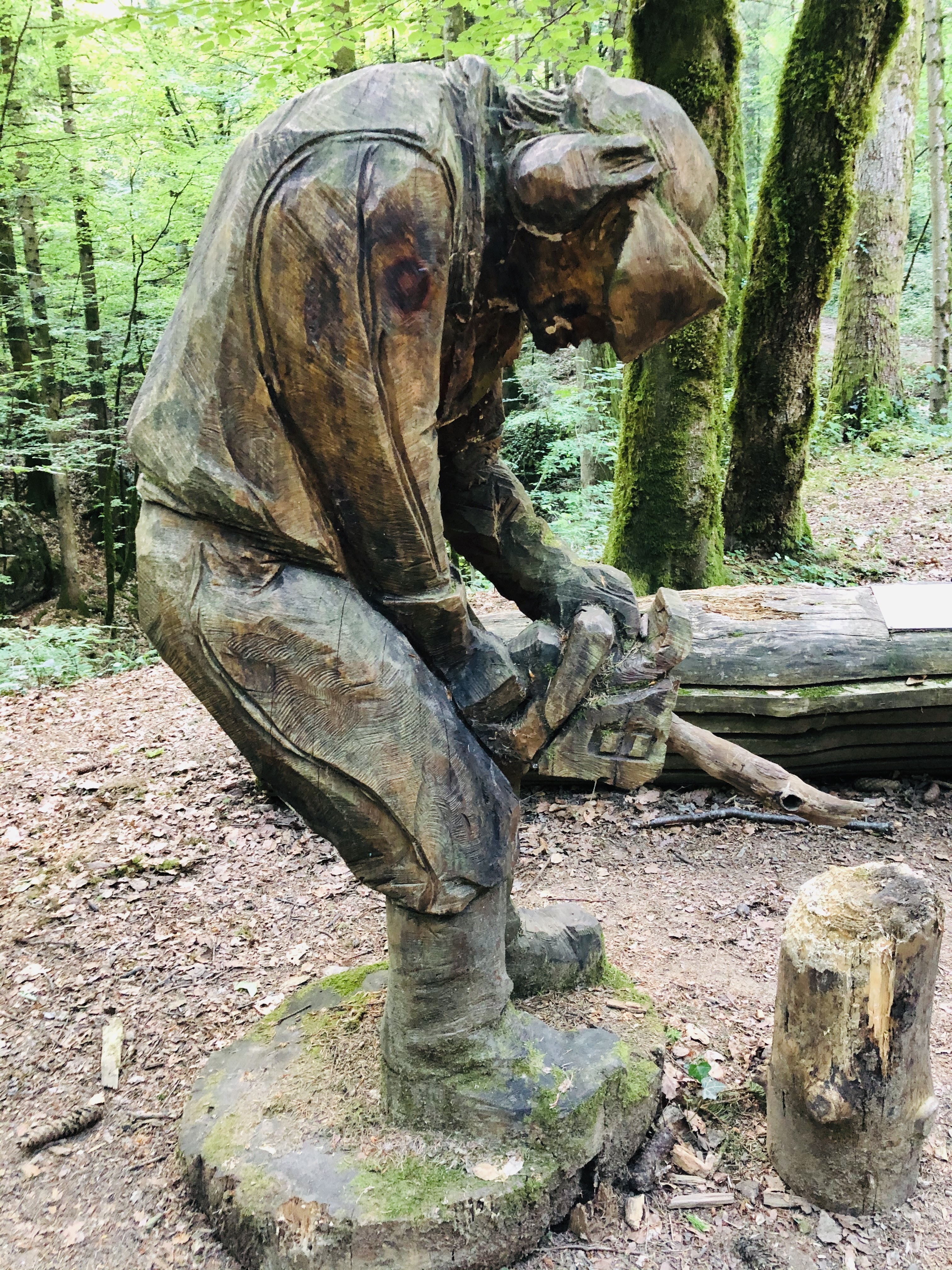
When you reach Creux de l’Envers it is a must to walk down the narrow path to look at the impressive nature and also the wooden sculpture the artist Adrien Meneau has cut out with a chainsaw.
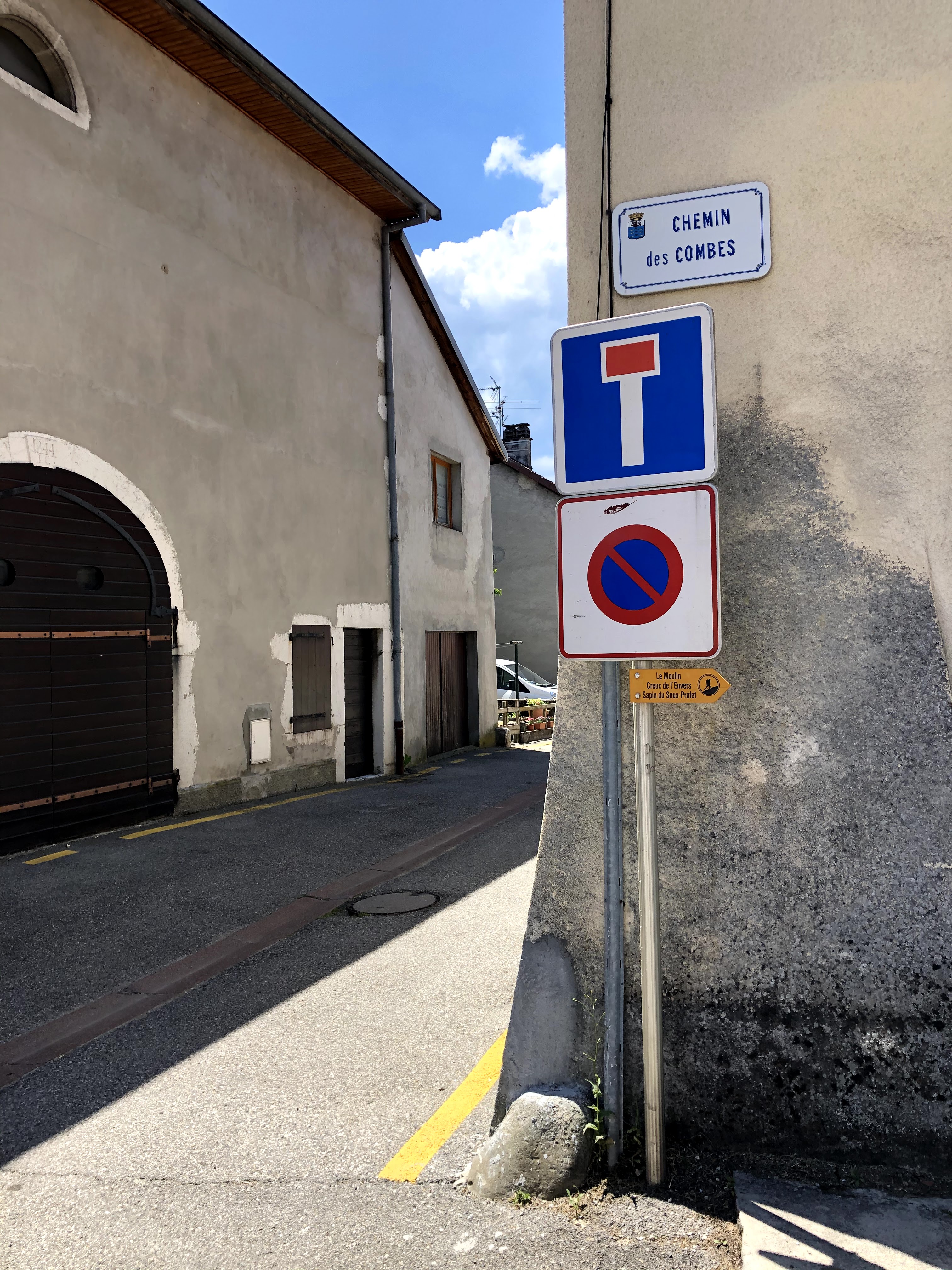
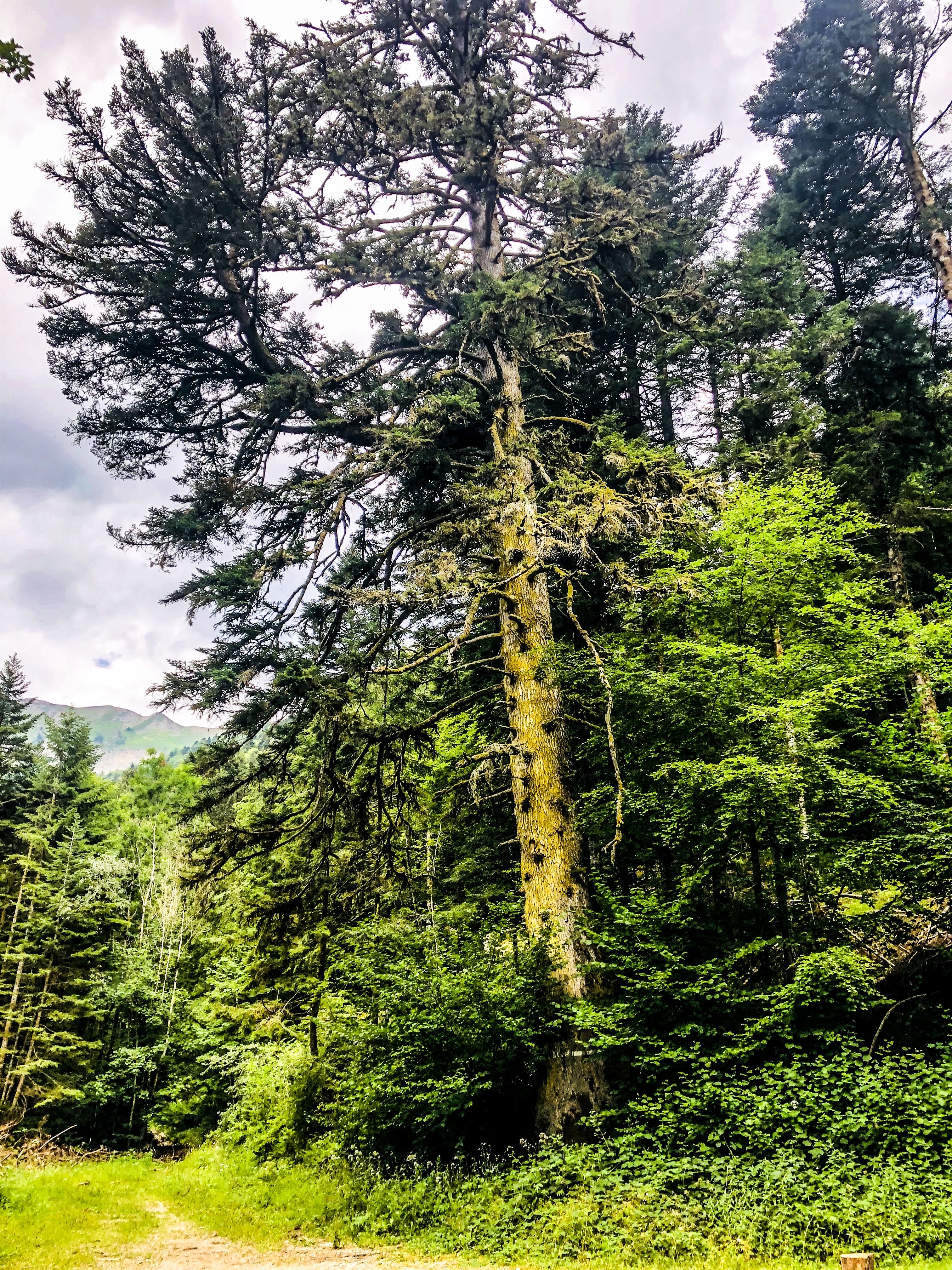
From Creux de l’Envers you can choose to continue walking up to Le Sapin du Sous Préfet. This remarkable tree was measured in 2019 to be 46 meters high and has a diameter of 5,80 meters.
Depending on which way you chose walking up to Creux de l’Envers, you can make it a circular walk, or you can walk back the same way you came up.
The Chartreuse massif is only just over an hour or so away from Pays de Gex and full of splendid walks.
Altitude to climb: 850 m
Time: 6 hrs
Level: medium/difficult
Mont Granier is a mountain with a horrifying history, positioned at the northern end of the Chartreuse massif. The northern face of Mont Granier overlooks Chambery and Lac de Bourget. This impressive vertical northern face is the result of a catastrophic collapse of a large part of the mountain in 1248.
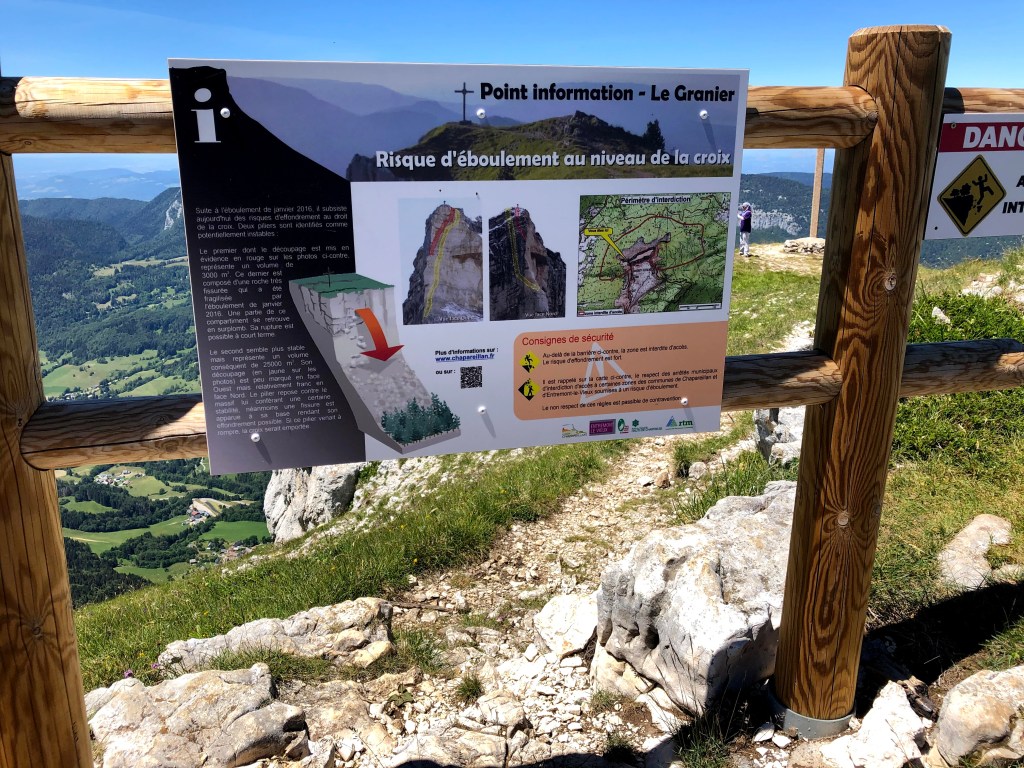
The rockslide occurred during the night of November 24-25, 1248. A large part of the north-eastern part of the mountain, having been slowly eroded, fell off, swept across the slopes and plains all the way to where the current highway lies, and completely destroyed 5 entire villages. The disaster, which covered 23 square kilometres, killed more than 1,000 people. The mountain is predicted to collapse entirely one day, and the area at the top where the cross can be found is not advised to be approached, after a number of smaller rockslides there in 2016. Even if you leave out the last few meters down to the cross, the walk is spectacular and will be a memory for life.
OK, back to the walk. This walk is quite challenging, especially when descending a steep couloir on the way back, and I would not recommend it for children under 10-12 years of age.
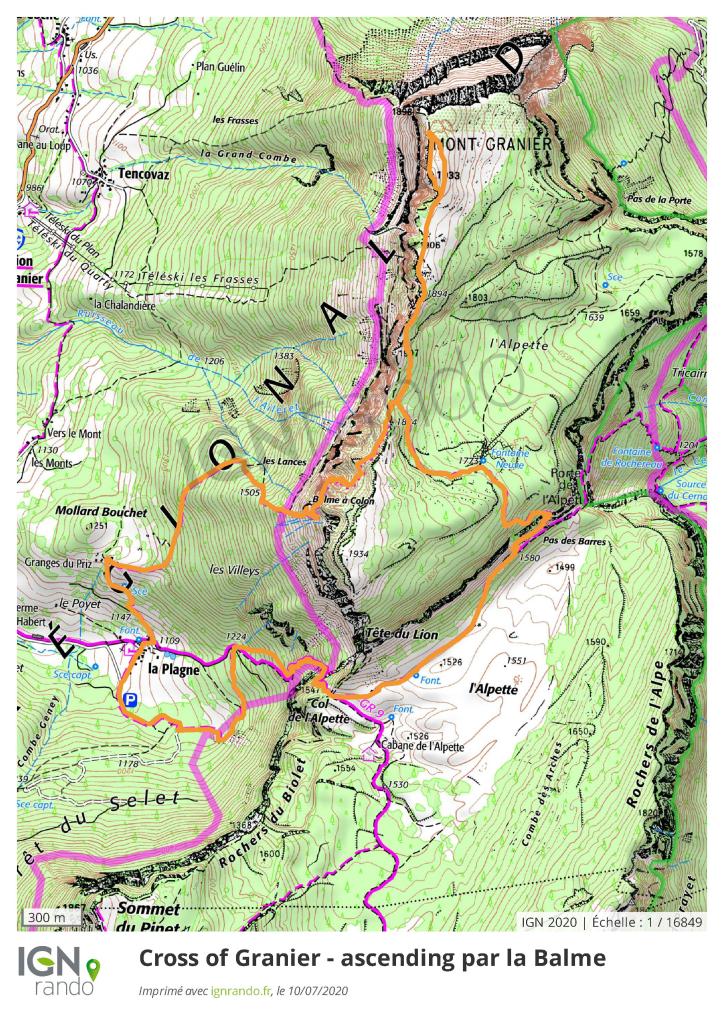
The starting point is La Plagne, which is a small hamlet of houses overlooking the impressive southern summit of Mont Granier and the neighbouring summit of Le Pinet, whose cliff face is equally impressive.
Parking can be found along the road and also on the forestry track that continues after you have passed the hamlet.
This is a fairly steep walk in parts, and because of that it really requires good weather. On the other hand, if the sun is shining there will probably be a crowd about and I’d advise you to arrive relatively early.
The route itself is well marked with yellow signposts all the way from start to finish.
I followed the signs to Mont Granier “par la Balme”. This will take you through the charming hamlet of houses in La Plagne.
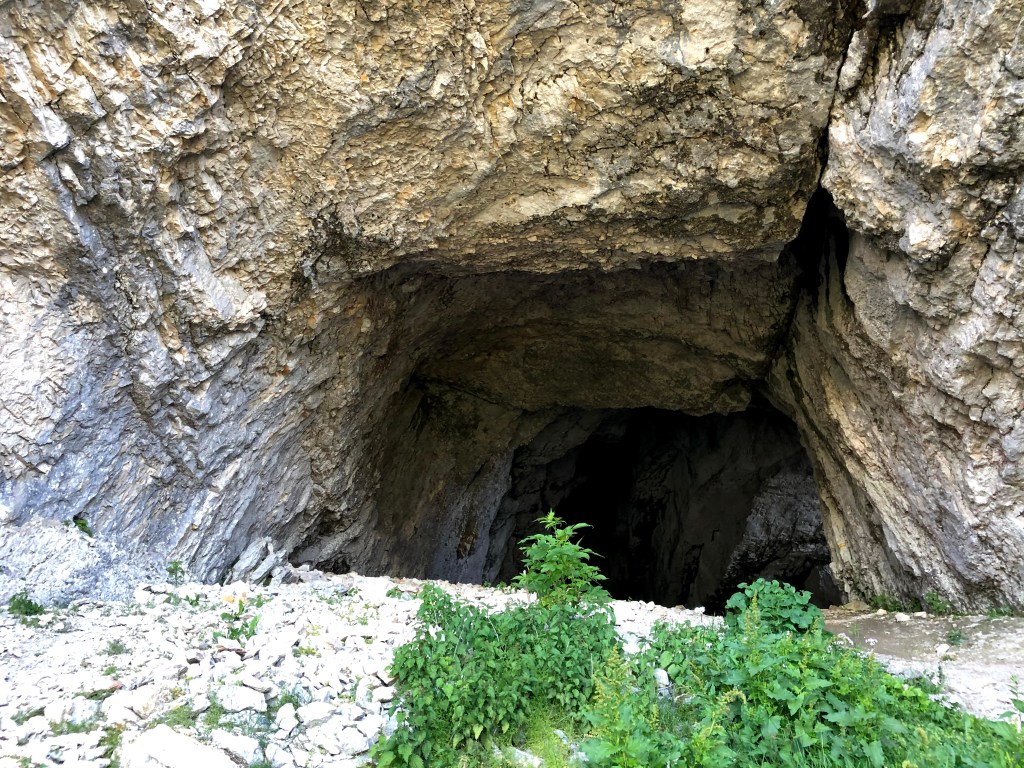
The path then ascends steeply through a beech forest and levels out when reaching the crest. When above the trees, you’ll see the entrance to a cave. Follow the path straight into it. The cave opens up when inside (10 meters wide by 4 meters high), and you will see that the path continues through an exit to the right. If you brought a flashlight, take some time to explore the cave. In the late 1980’s several new passages into the cavernous system beyond the main cave were found, and bones from over a thousand cave bears were found. Some of these are exhibited in theMusée de l’Ours des Cavernesin Entremont-le-Vieux. Cave bears were ferocious monsters, way larger than bears of our time…
After emerging from the cave exit, the path follows a grassy traverse before ascending a gully through the cliffs. Relax, You’ve now done most of the climbing. Just a small traverse of about 20 minutes along the ridge of the mountain, and you are at the top of Mont Granier.
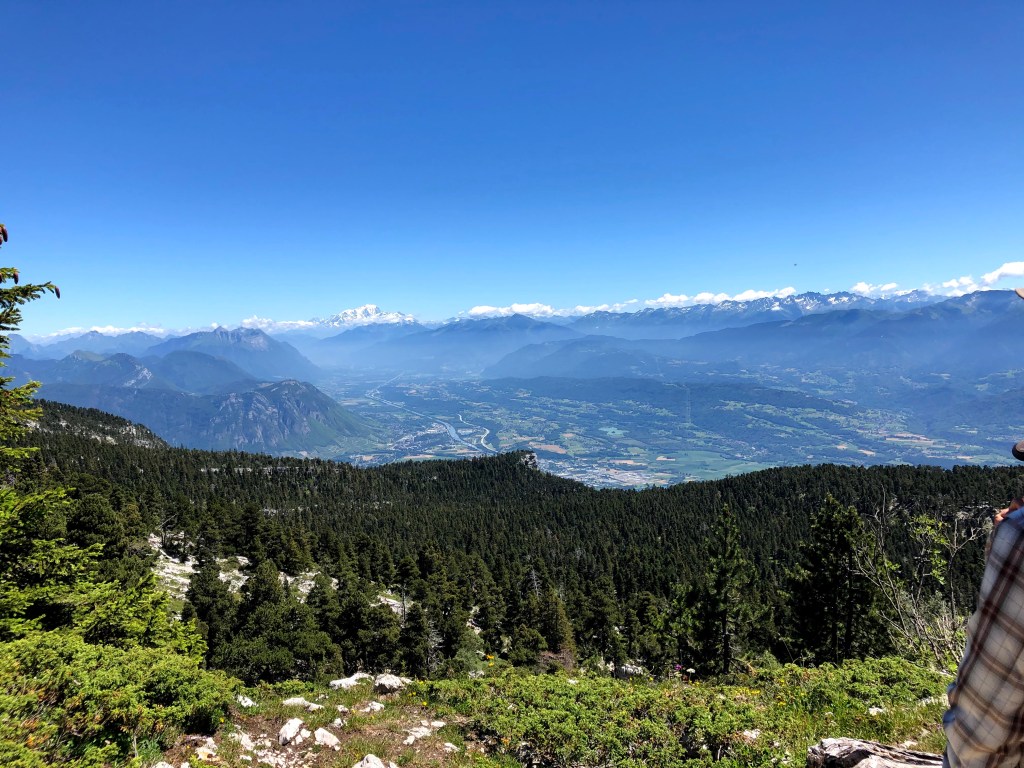
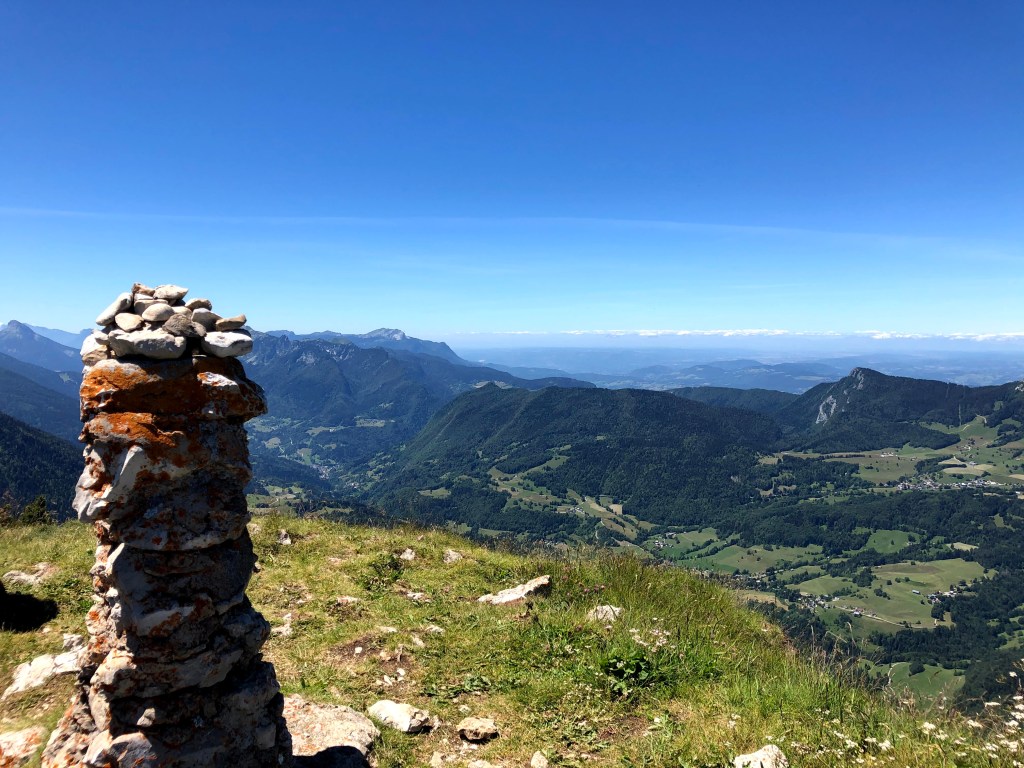
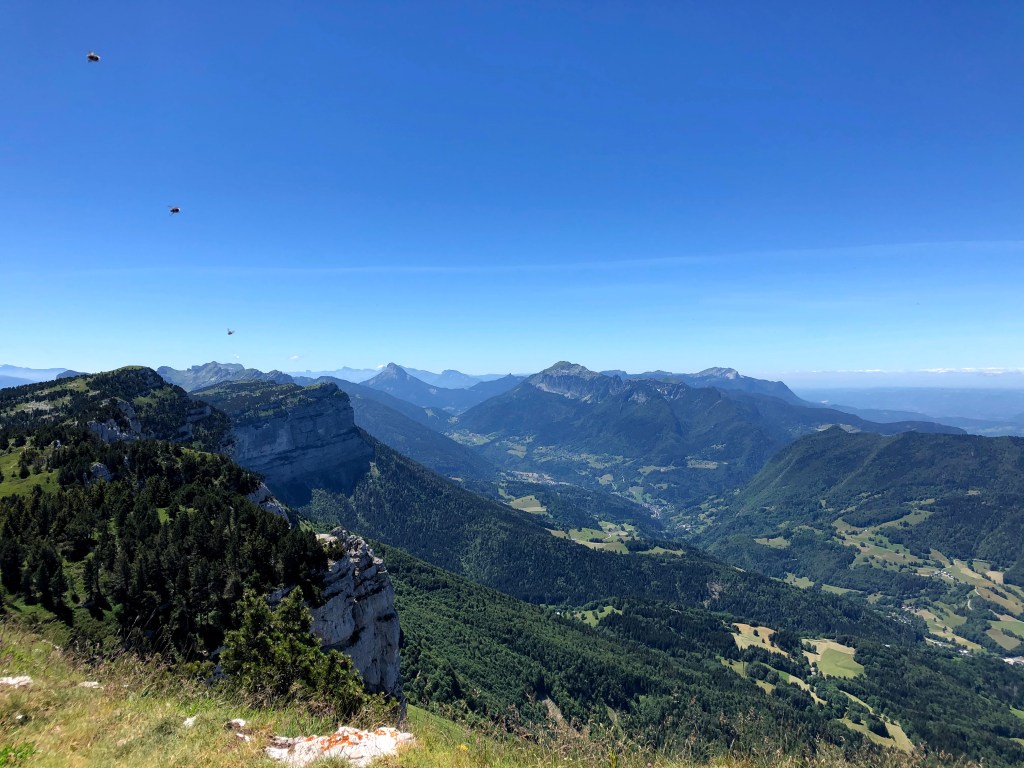
You will have an amazing overview of Chambery, Lac de Bourget, massif de la Chartreuse, Les Bauges and Mont Blanc.
From here, you can continue another 300 meters or so to the Cross of Granier which is situated at the top of the northern cliff for an even more spectacular view of the town of Chambery. Attention: don’t pass the signpost located 10 meters or so from the cross; it advises you to not approach the edge of the cliff due to possible new landslides.
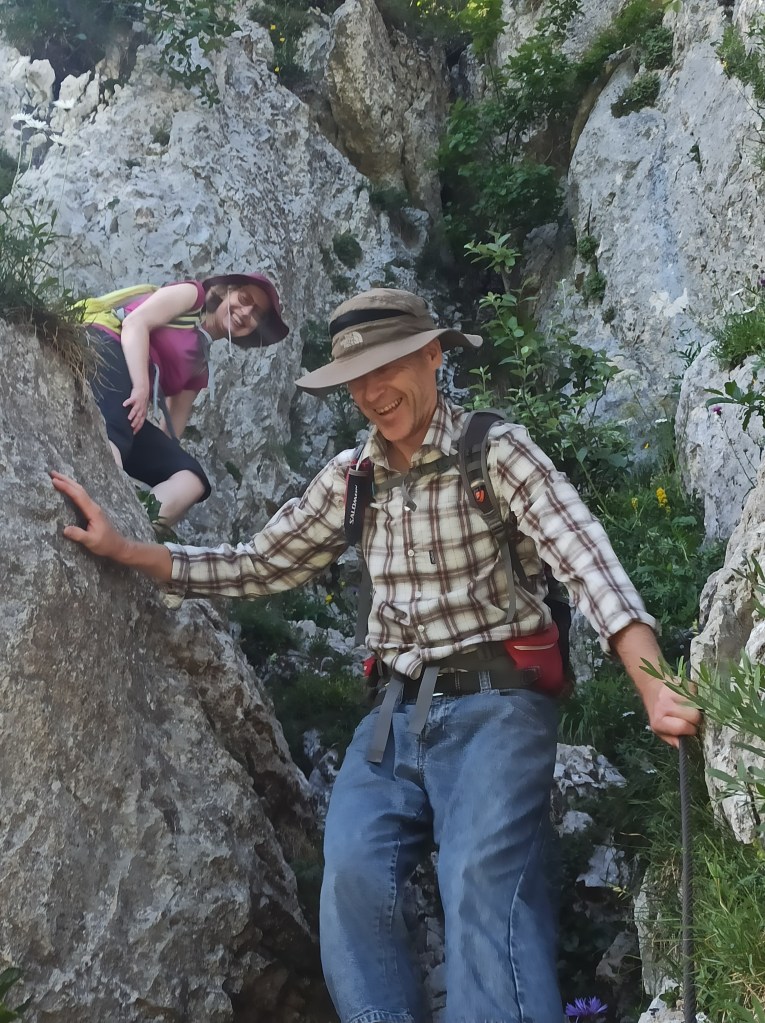
For the descent, you have two options. The easiest – and recommended if you suffer from vertigo, is to walk down the same path you used for the ascent. However, I would recommend you return via Pas des Barres and Col de l’Alpette. This path will start off leisurely for the first 30 minutes or so, and then zig-zag you down the cliff (not the main wall, mind you, but the eastern side, which is a lot gentler). Although there’s no real climbing involved, there are a couple of chimneys (Pas des Barres) that may be a little challenging (10-20 meters). This part of the descent is made easier by fixed iron steps and railings, almost like a miniature Via Ferrata. Honestly, if you’re in decent shape you can handle it well, but it may not be the best idea if accompanied by kids younger than 10-12 years of age.
When safely down at Col de l’Alpette you will be walking past a pair of giant boulders, and it’s a nice place to take a photo of Mont Blanc. The path continues to the right past some other boulders (one is really impressive – just imagine these things coming off the cliffs above) and to an easy but relatively long descent that takes you back to La Plagne and the car. Fun fact: this descent is apparently used when ferrying cows up and down for the summer pastures…
If you’re like me and you love French cheese, there’s a farm selling the goods in La Plagne. It is not in the center of the hamlet but a few hundred meters further down. It was closed when we passed and we went to the Cooperative laitiere des Entremonts instead, another 5 minutes down towards the center of Entremonts-le-Vieux. Here, you’ll find a big selection of locally produced cheese, wine and other regional products. They also have locally made ice cream – in case your car is equipped with a portable freezer (or you remembered to bring a spoon!)



























 The Activity Factory