
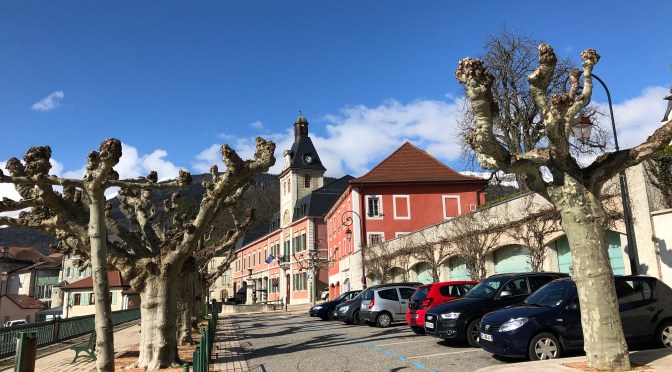

House from the 1600 century.
This is a town people usually drive past, either on their way up into the Jura mountains, or towards Geneva in the other direction. Until recently, the main road passed right through the town centre, but now skirts around it, making Gex even easier to overlook.

Having lived in the Pays de Gex area for almost 20 years I decided that doing the historic walk around Gex was well overdue. Knowing that there is a weekly market on Saturdays, I decided that it would be a good occasion to combine visiting the market stalls with exploring some history. As the walk took me around Gex I realized how little I knew about the history of the area I live in.
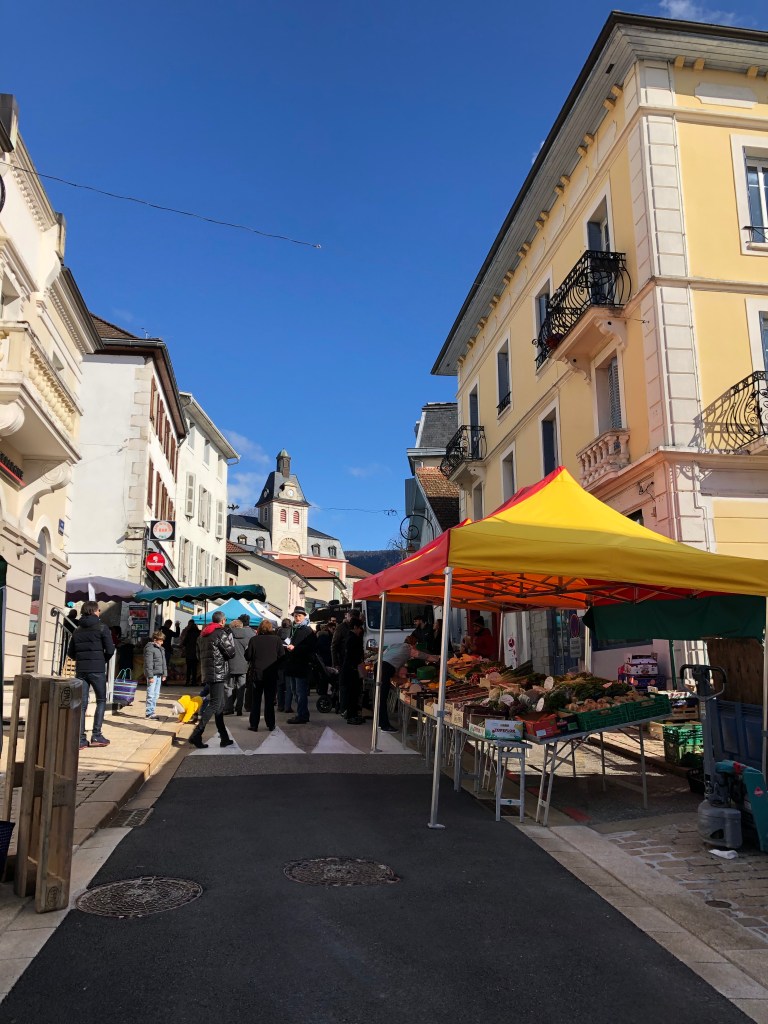
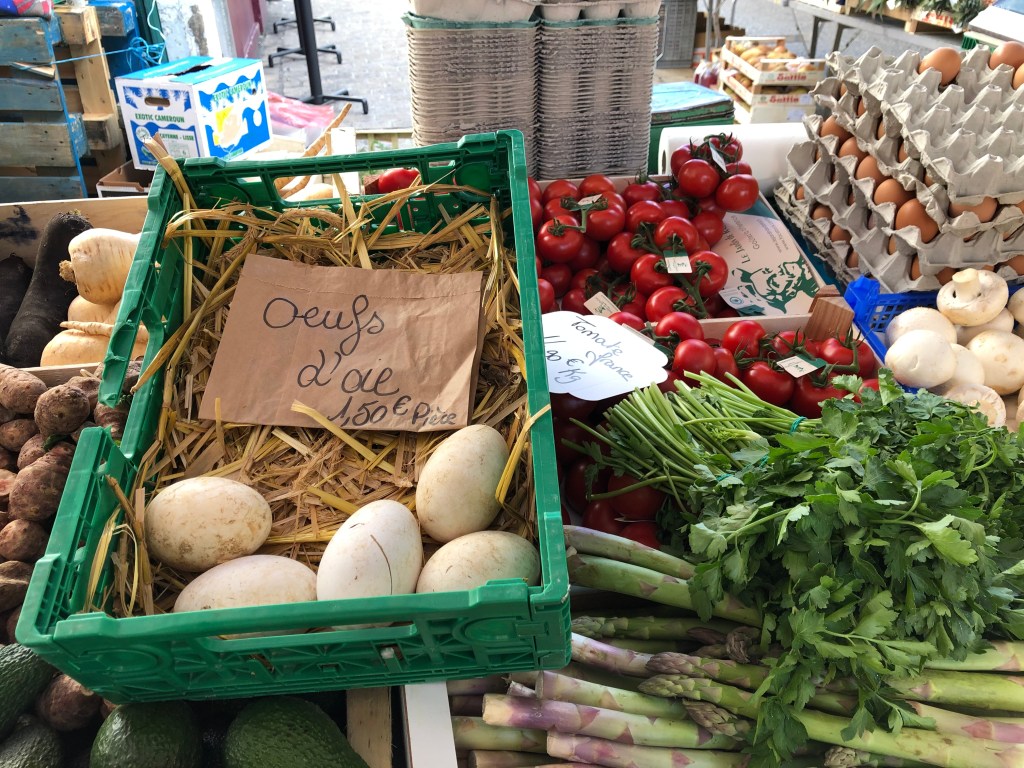

You can almost feel the different epochs of history when walking around. In the little “bourg” (town centre) just below the castle ruins you are taken back to the middle ages and you can imagine how crowded it must have been in medieval times, with lots of noise and family life around the small square.
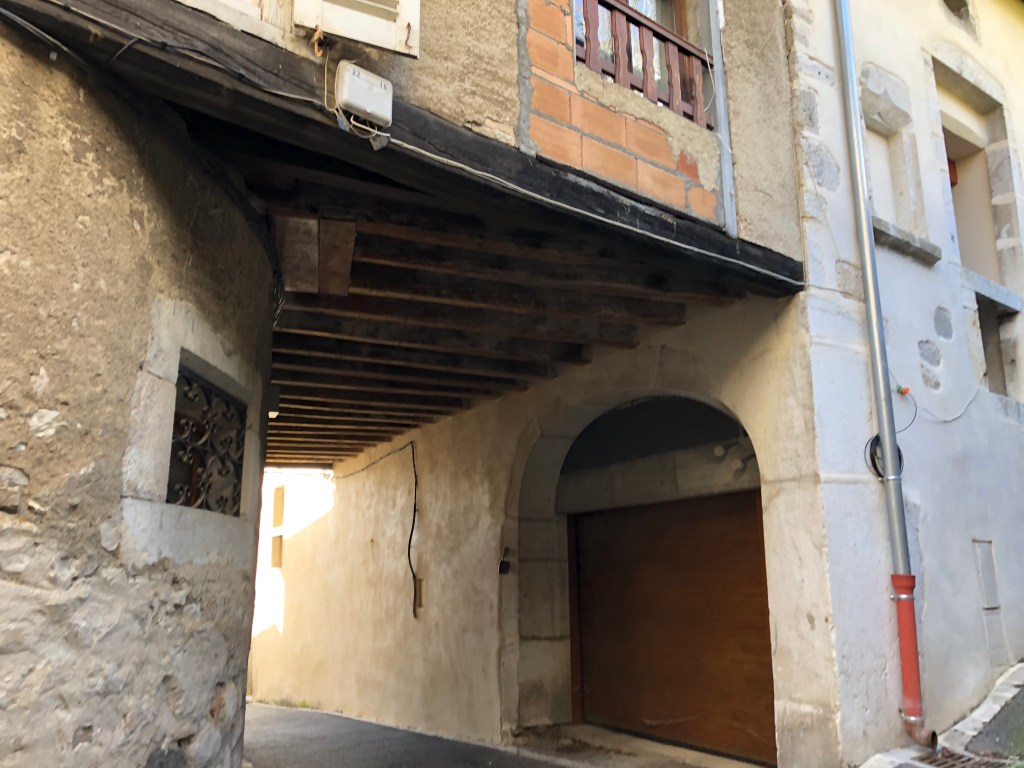
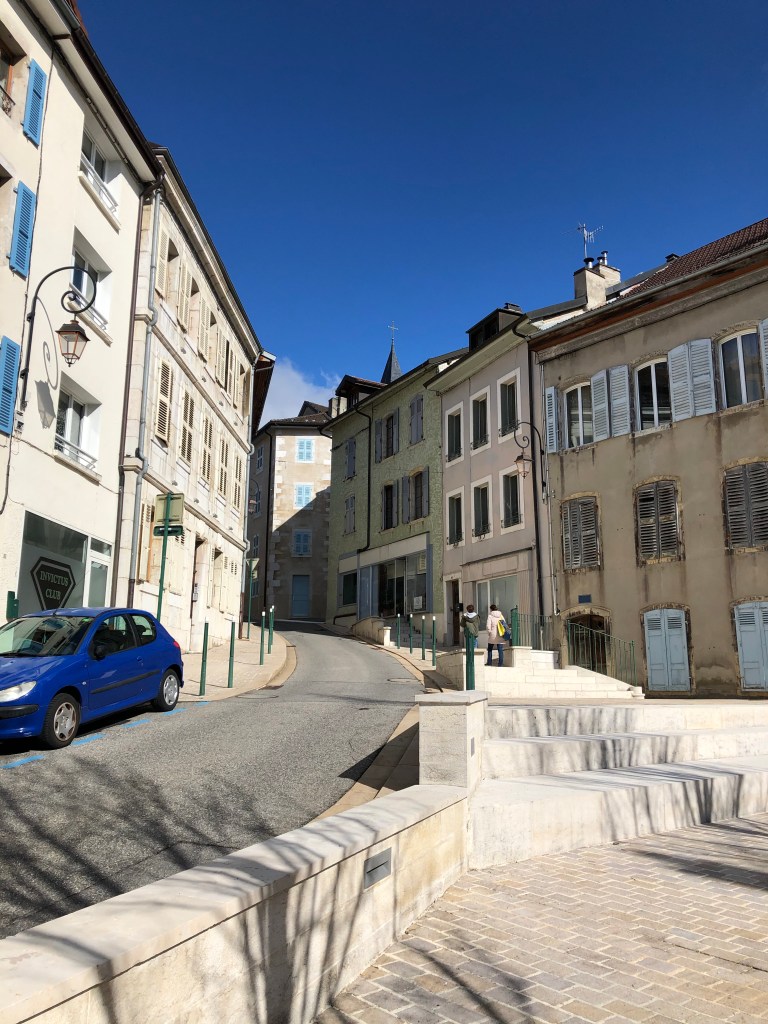
In other parts of Gex you feel taken back only a couple of hundred years, when Gex was an important and prosperous town in the region, with its small yet majestic town hall and courthouse.

With all the contemporary architecture and large supermarkets and shopping centres that the influx of people to this area has brought in recent years, it’s easy to overlook the small local towns like Gex. I really recommend that you take some time to explore this small and charming town in the near future.
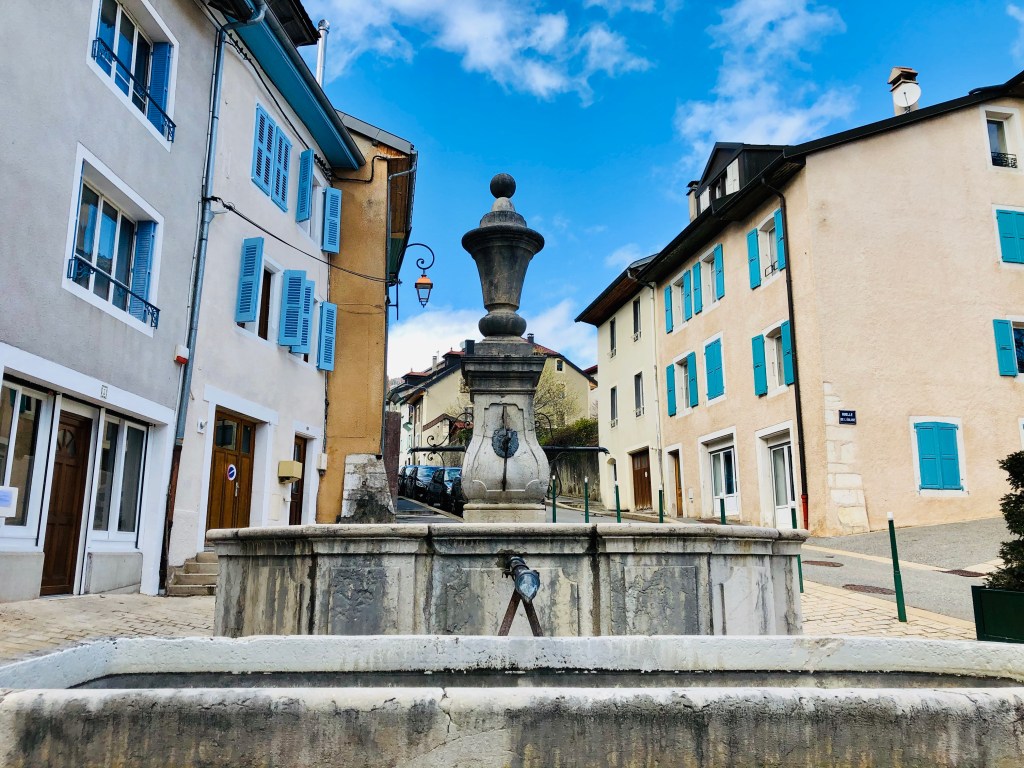
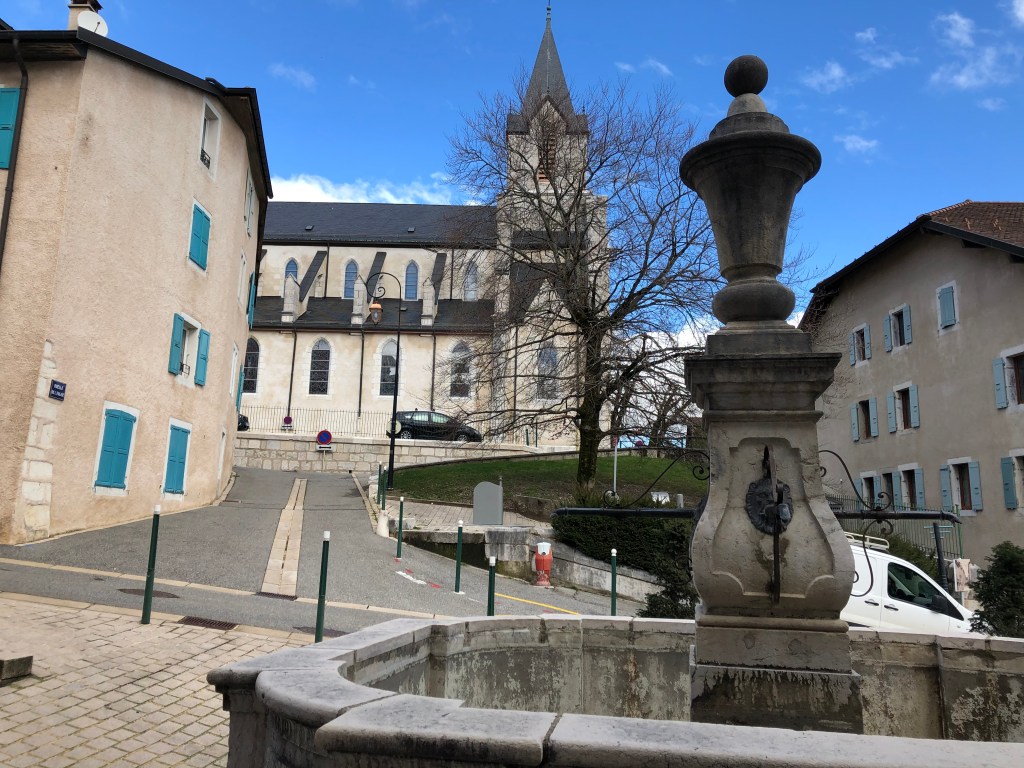
You will find the walking route further down in the article but it’s always useful to have the printed map. You can get it from the local Tourist Office, located in Rue des Terreau.

In the summer months the tourist office also offers guided tours. To contact the Tourist information:
https://en.paysdegex-tourisme.com/contact-opening-hours-tourist-office.html
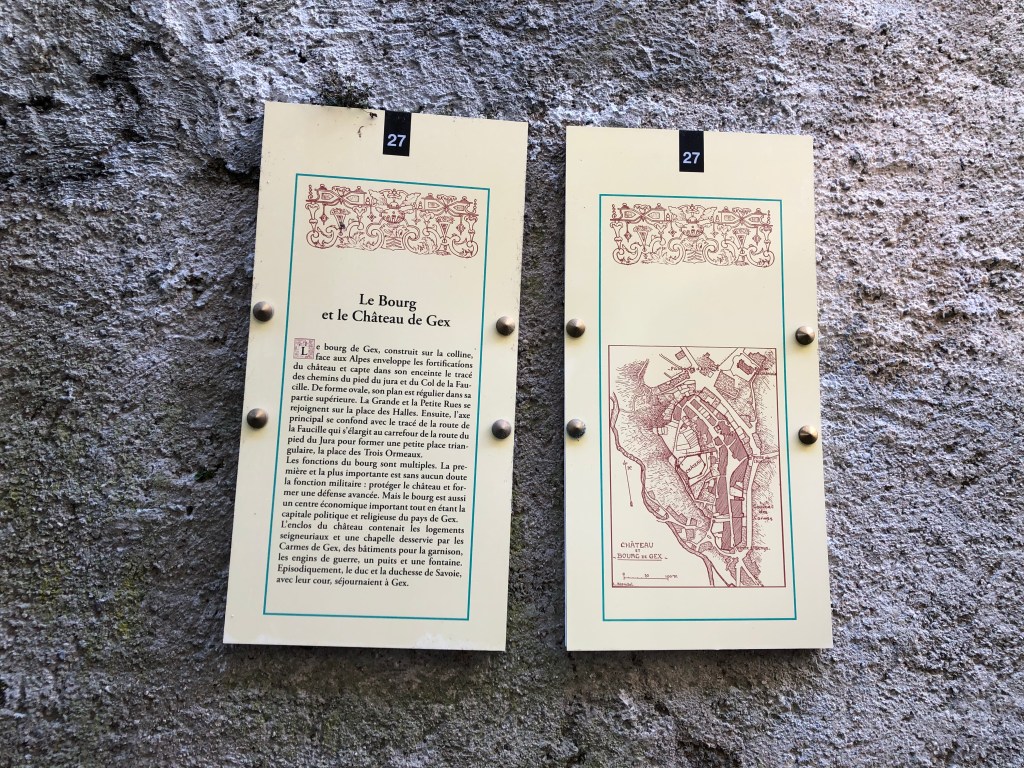
Each stop on the route has a panel of historic facts. Since these panels are unfortunately only in French, here are some historic facts about Gex and Pays de Gex:
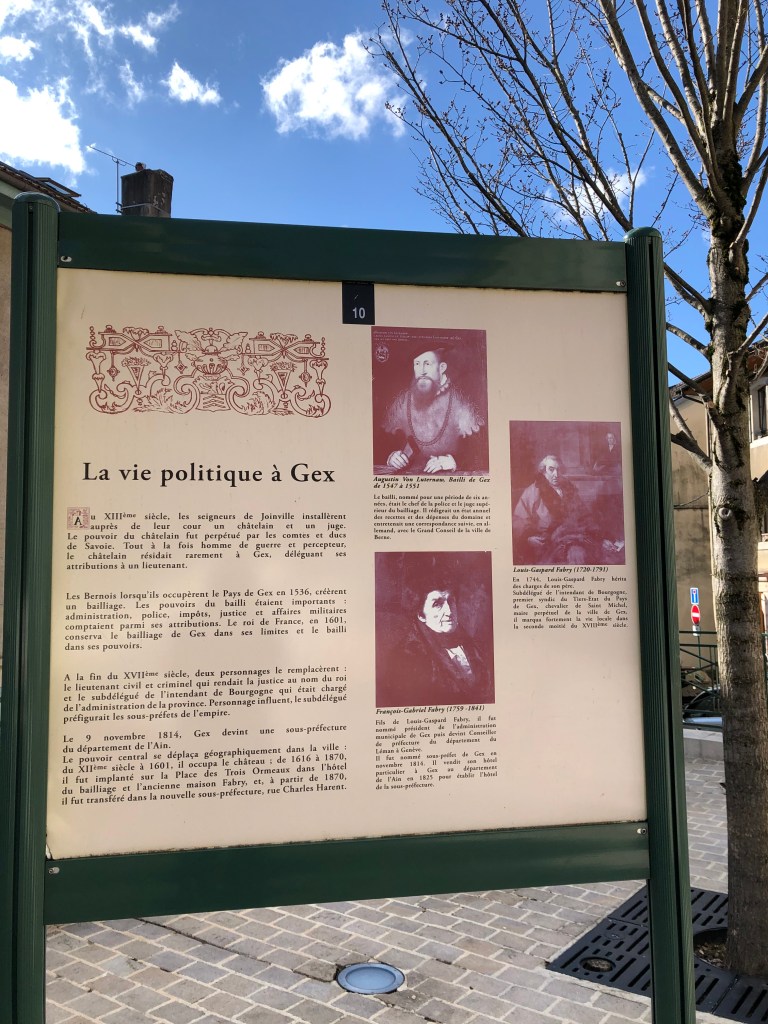
Le Pays de Gex was called “Gaium” in the very old Latin charters, which is a word the old Romans used to describe a thick forest.
Gex has been inhabited since at least 1800 years before Christ.
In the 11th century, the Lordship of Gex became a Barony under the authority of the Count of Geneva.


The geographical surface stretched from Fort l’Écluse in the west all the way to Versoix in current Switzerland, before being split between Geneva and Gex. In 1353 the Duke of Savoy sized the Barony and it became part of the Duchy of Savoy.
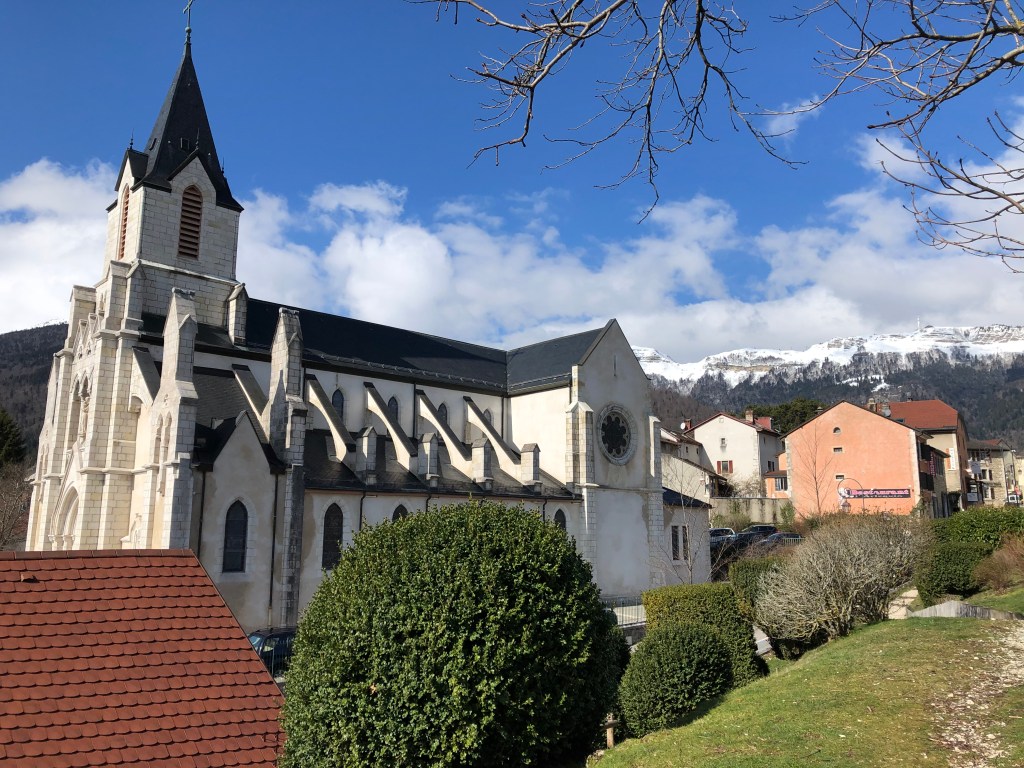
Church – built in 1860 and replacing the old church which was located where you today will find the Perdtemps primary school.

Gex and the Pays de Gex remained a political entity under the rule of the Dukes of Savoy for the next two hundred years until 1536, when the Bernese moved in to snatch control over the region. From 1563 Pays the Gex was torn between the Swiss, the Savoyards and the French and their respective religious convictions, with Catholicism in France and the Protestant reform going on in Switzerland. In 1601 Pays de Gex became attached to the Kingdom of France.


Tanneries – The tanneries used the water from the river Journans along with the tree bark that the nearby forest provided for the treatment of leather. The varying levels of water in the river forced the tanneries to stop the work for four months of the year. The last of the tanneries closed during the economical downturn of 1929.
Happy walking!
 The Activity Factory