This is a little walk to do on those days where you might have a slow start on the day, or you can’t be bothered with a longer drive.
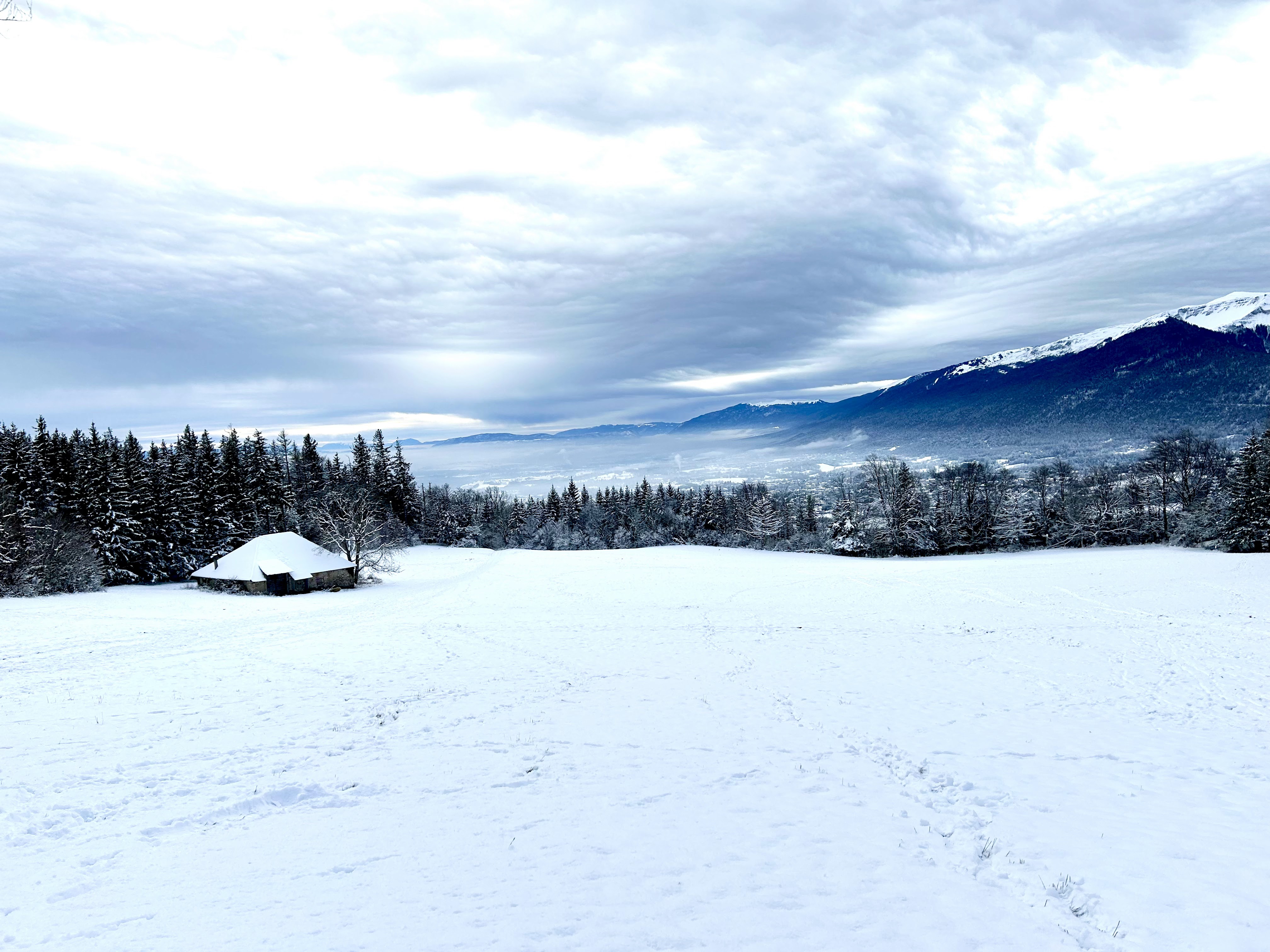
I have lived in the area for many years but never have I visited the Chapelle or the Chalet in the winter. I will defininitely do it again because it is the perfect little afternoon outing. It is near by and it offers a great view with minimal physical effort. I chose to only walk up to a forest Chalet and back which takes around 1 hour, if you have more energy you can make the walk longer.
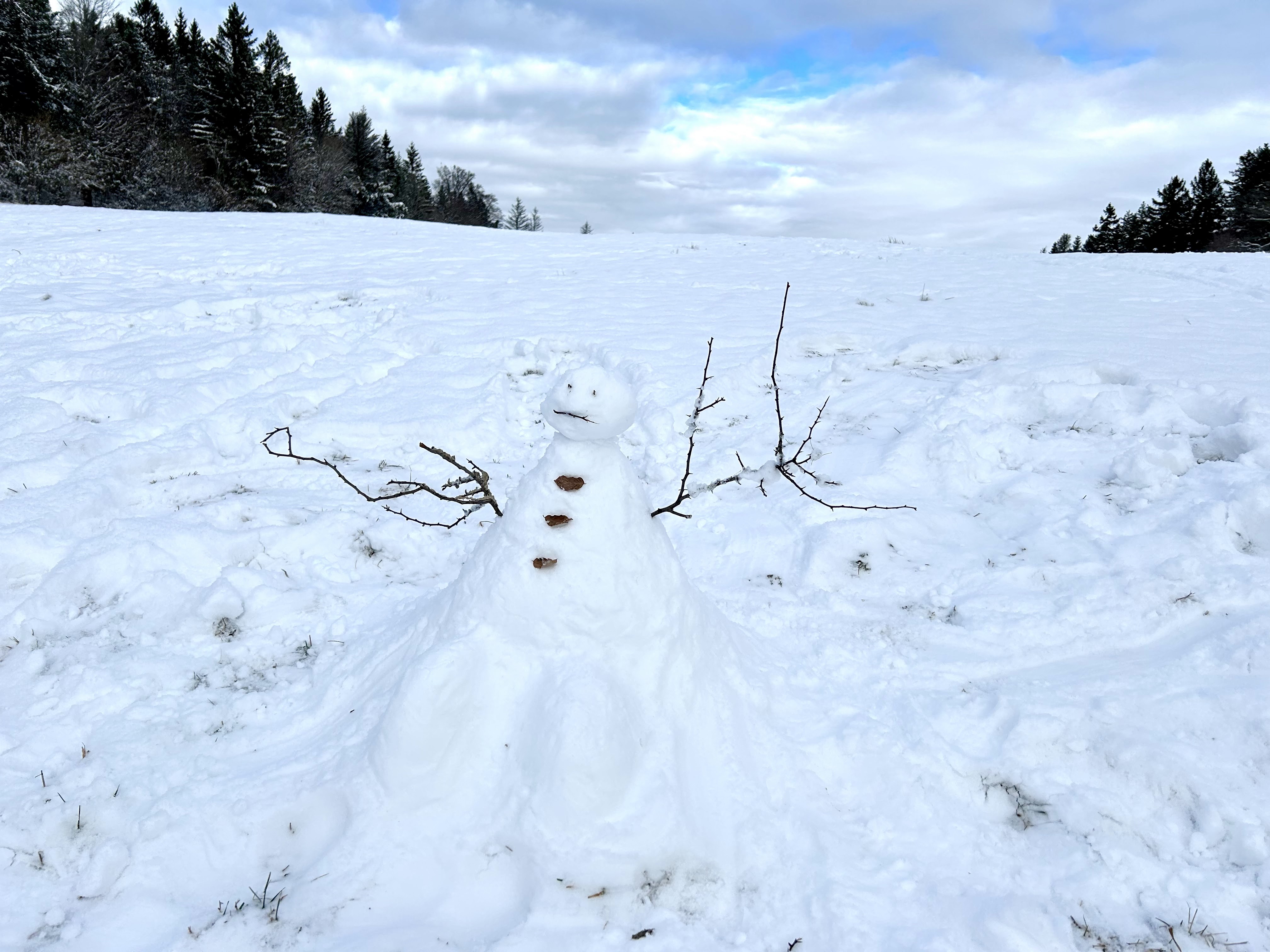
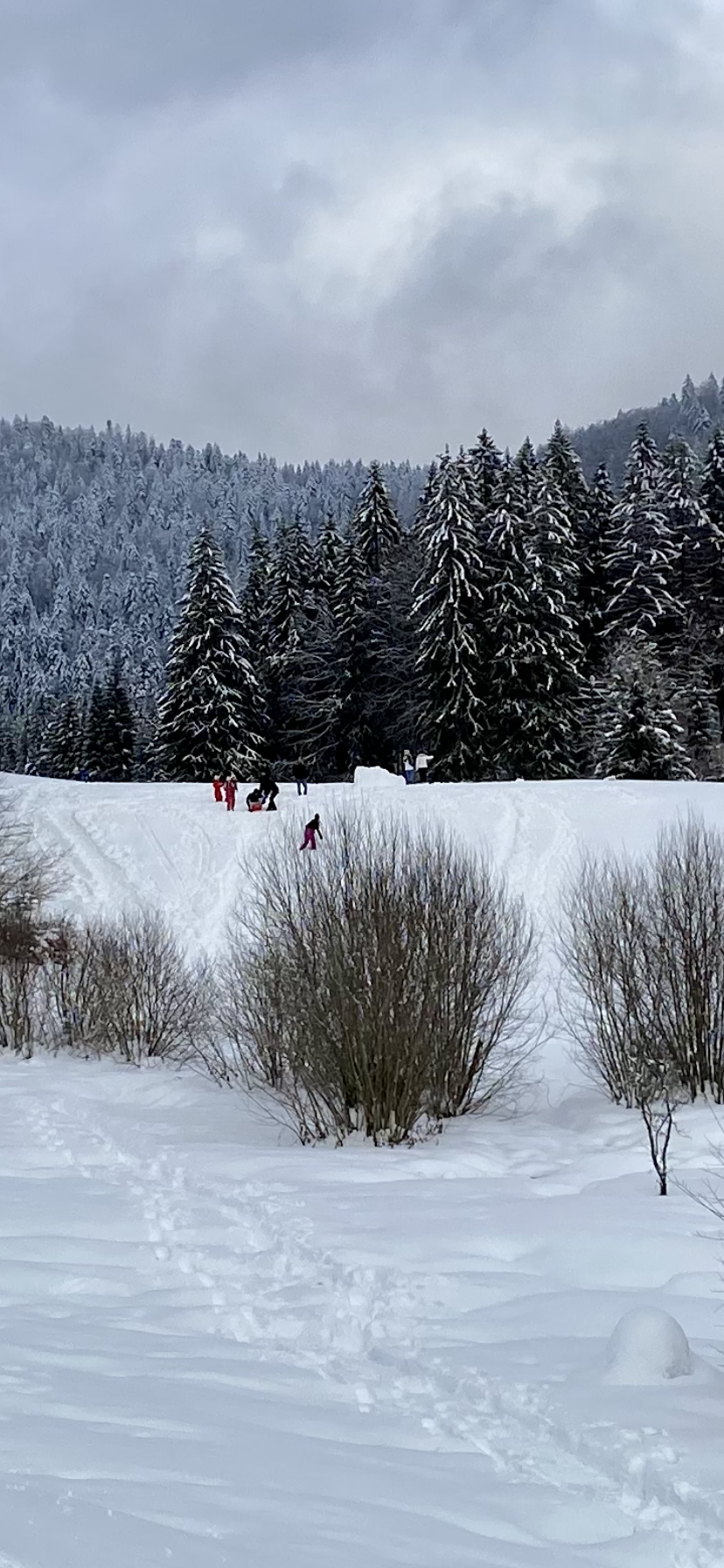
I often see people asking for places to go sledging. I saw lots of people enjoying the snow around the Chapel. And it looked to be a fantastic place to have a grand day out playing in the snow and sledging.
From where I parked the car it takes around 30 minutes to walk up to the forest Chalet. The elevation is around 170 meters and should be manageable even for small feet. If you have a sledge with you I am sure that the small feet with be comfortable installed on the sledge while you will be sweeting a little extra pulling them upwards.
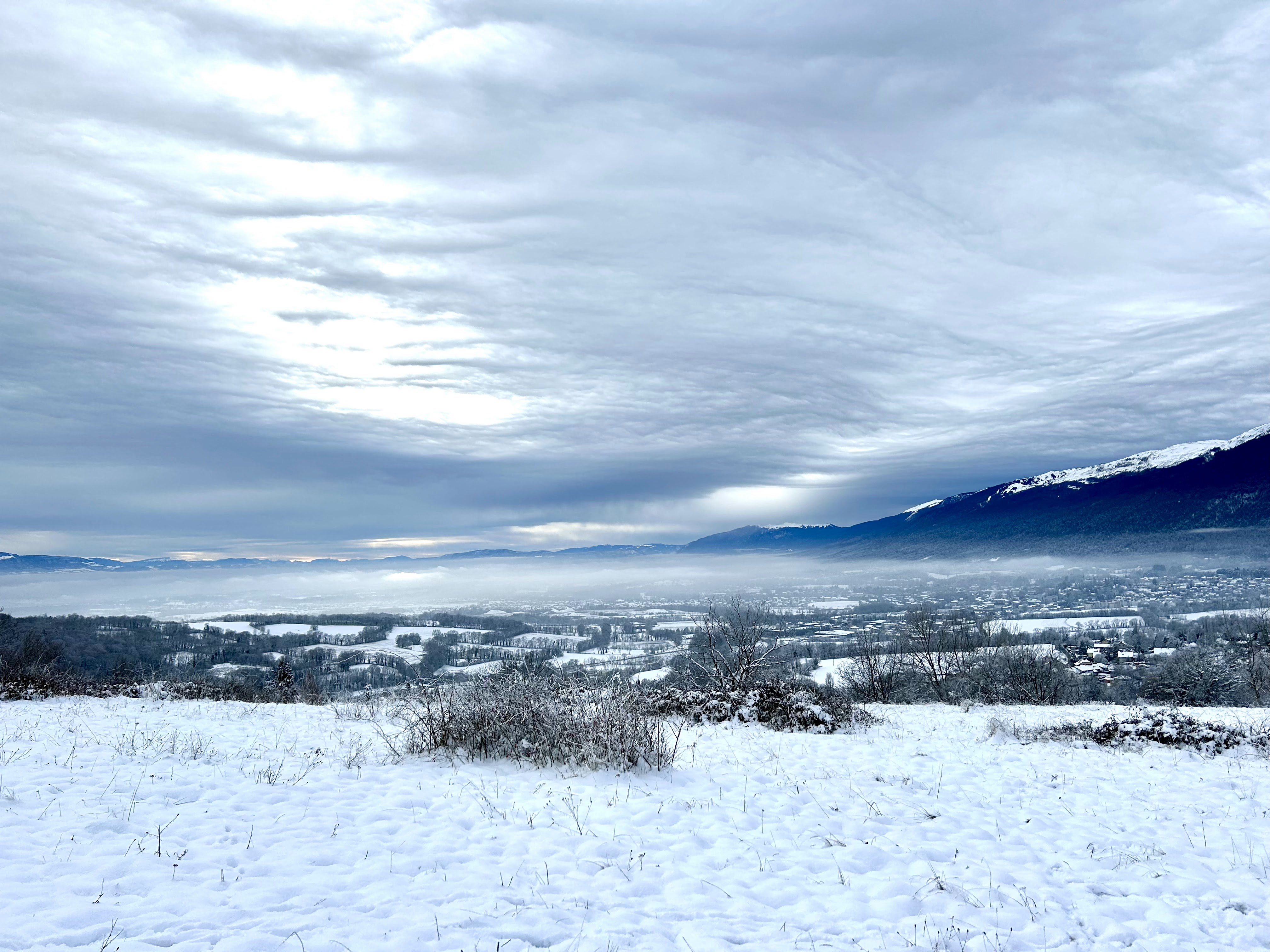
There are view points along the way where you can stop and take in the beautiful view of the Pays de Gex, Geneva, Jura and the Alps.
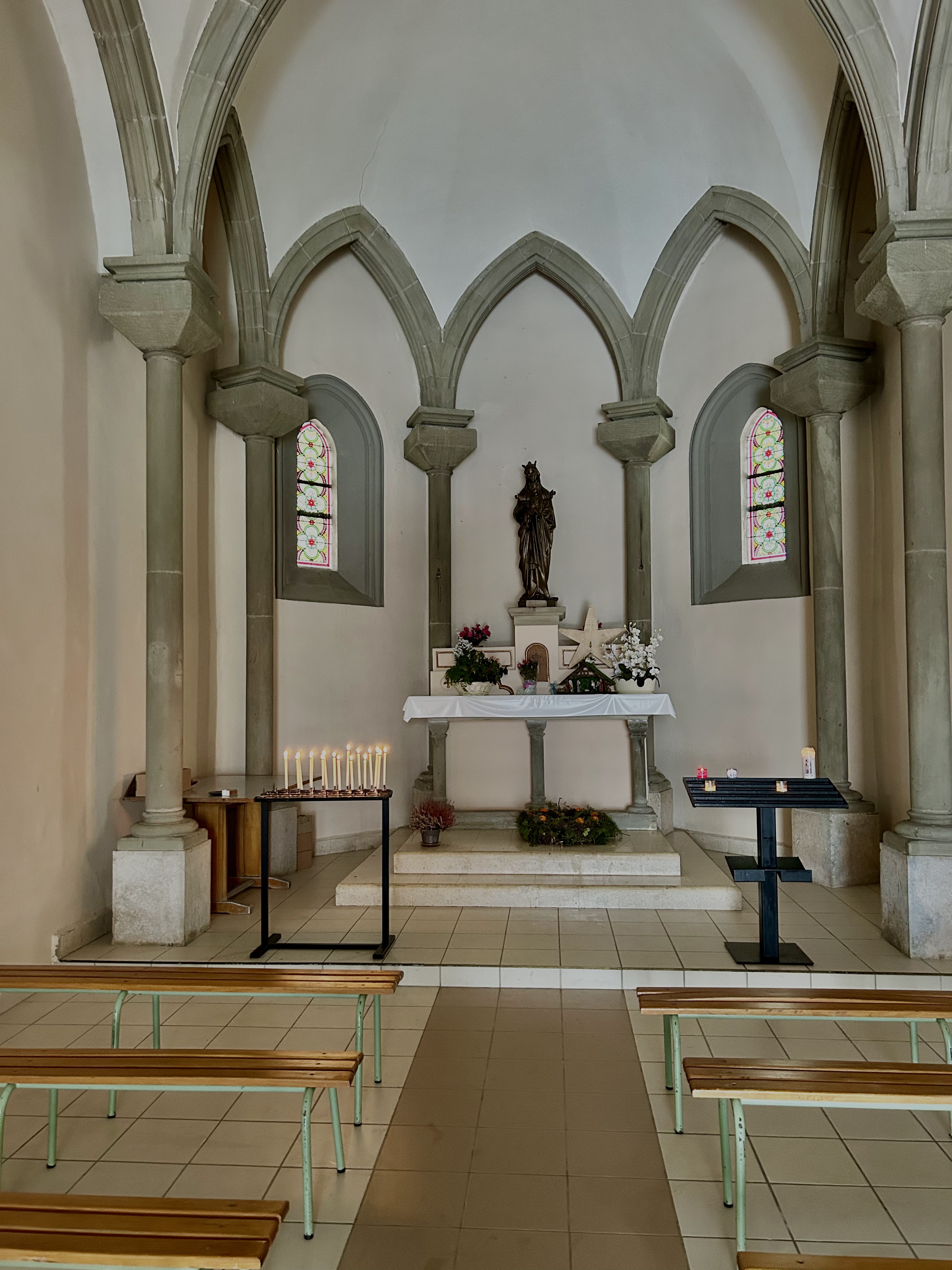
Pope Pius the 9th made the Chapelle de Rianmont to be the protective sanctuary of the Pays de Gex. Every Pentecostal Monday there is a pilgrimage. The story says that all young men from Vesancy going to war in 1870 came safely home thanks to the protection by the virgin. The chapel should be open for visits every day between 9-18.
If you don’t want to park and have a look around the charming centre of Vesancy the best place to park in the winter is in Route de la Vesanciere.
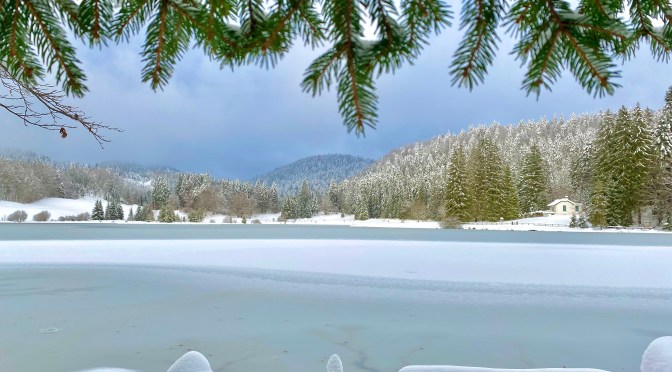
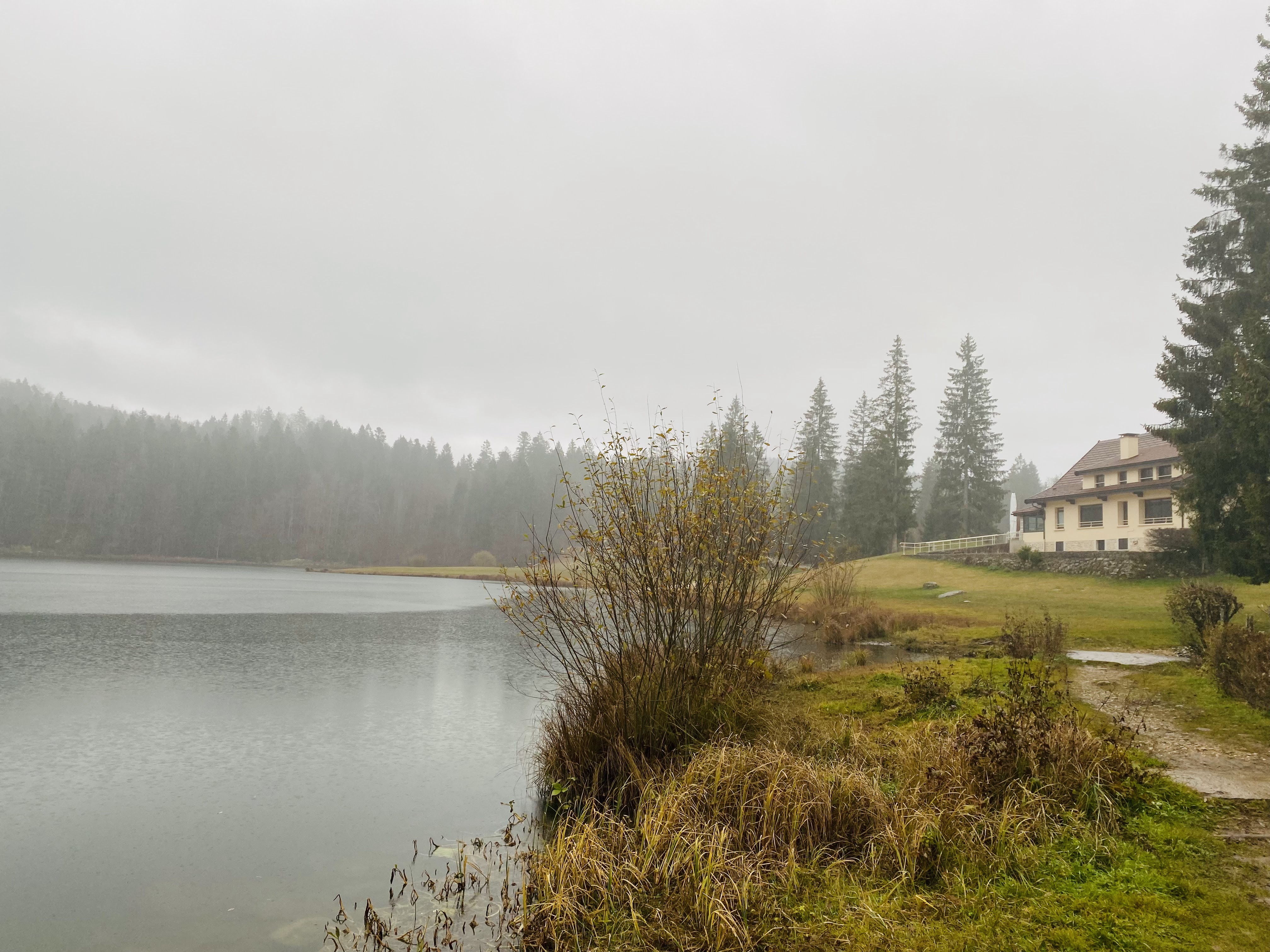
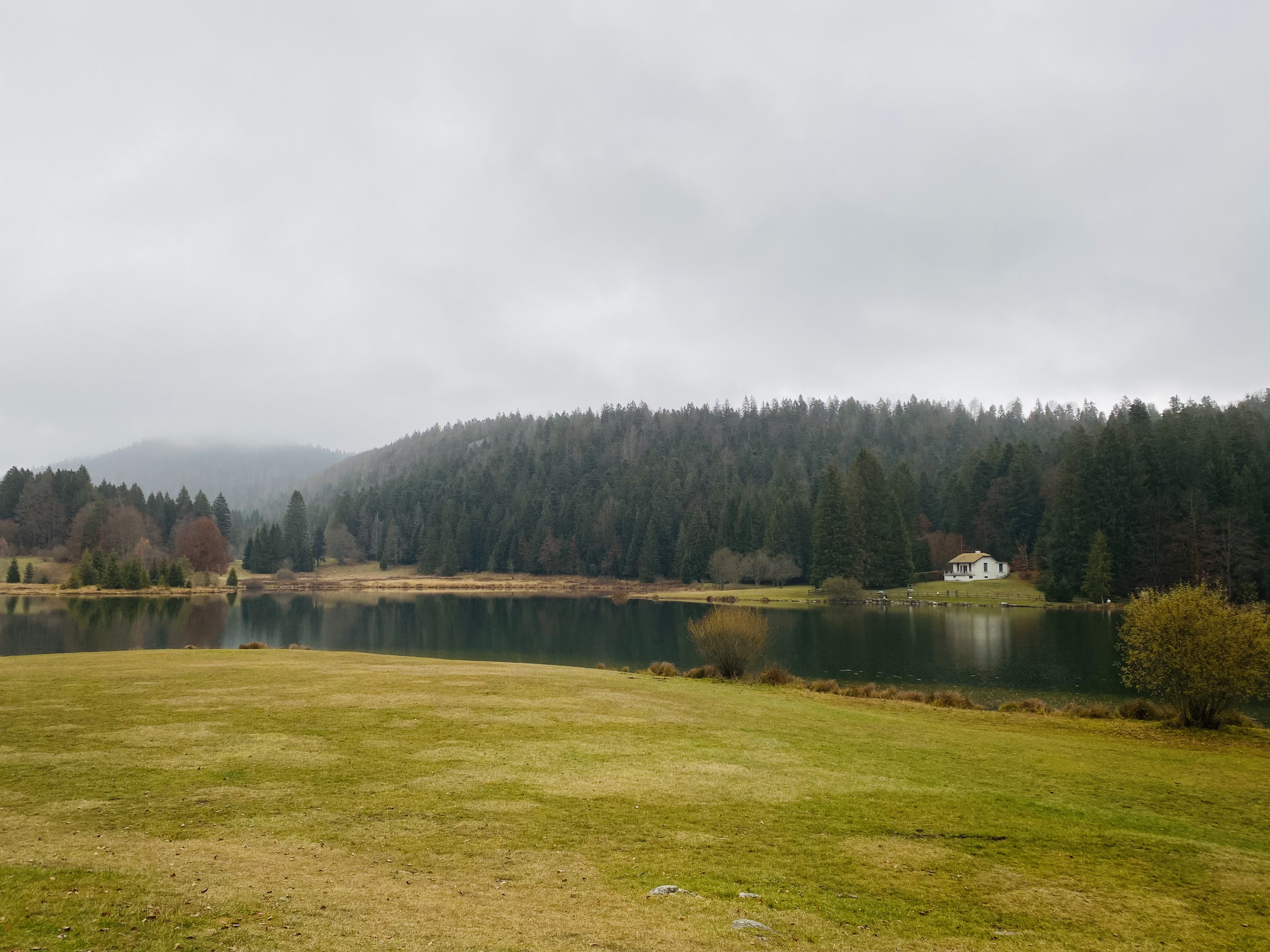
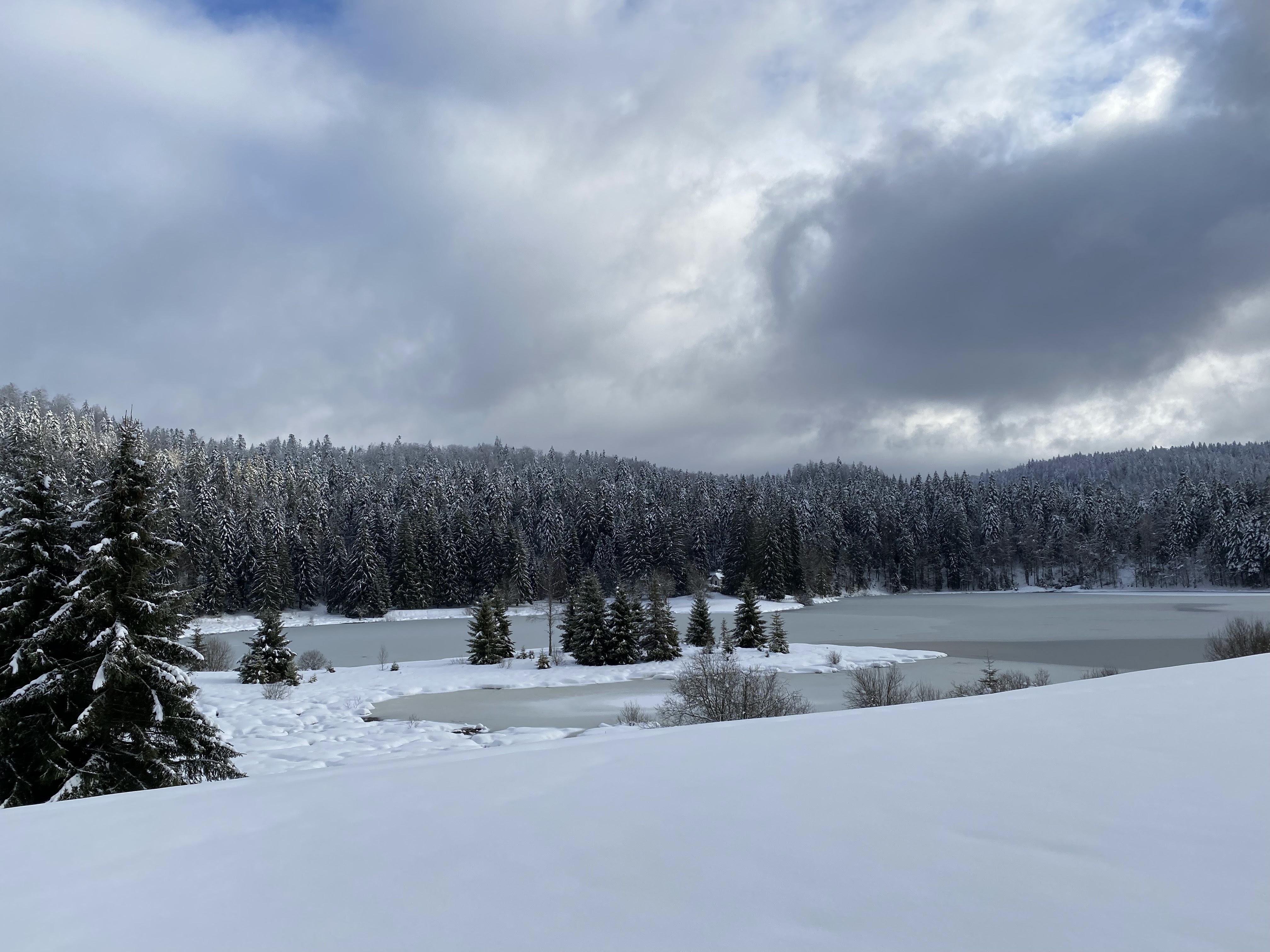
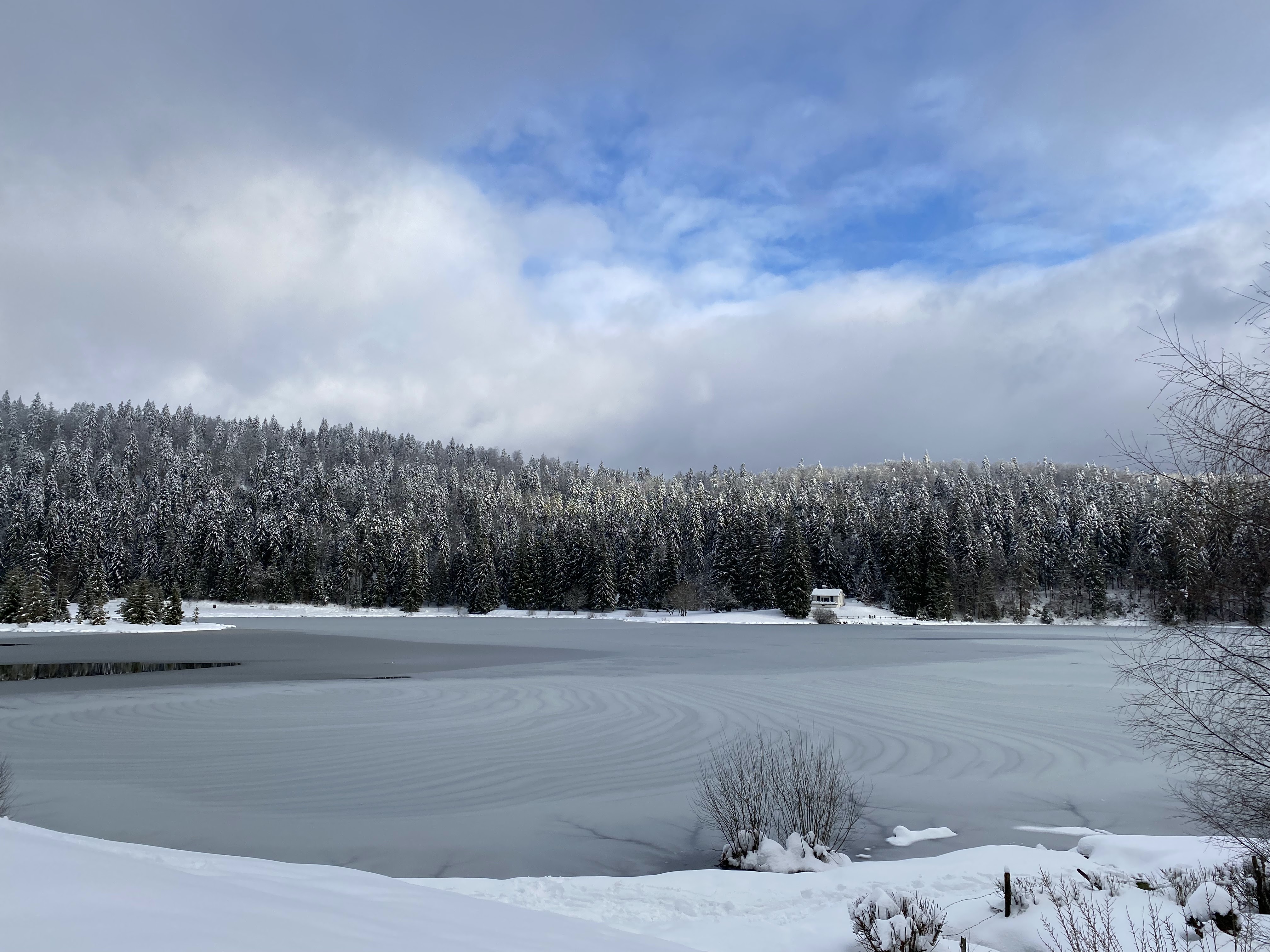
If you have not visited Lake Genin, you should put it on your to-do list. Lake Genin is situated between Bellegarde-sur- Valserine and Nantua. This lake is truly a little gem that I wish someone would have told me about sooner. It is easily accessible from Pays de Gex and Geneva if you have access to a car. It is one of the places that you can visit no matter what season and whatever the weather. In the spring and autumn, it is the perfect place for walking. In the summer you swim in the lake. In the winter you can ice skate, sledge, or go snowshoeing.
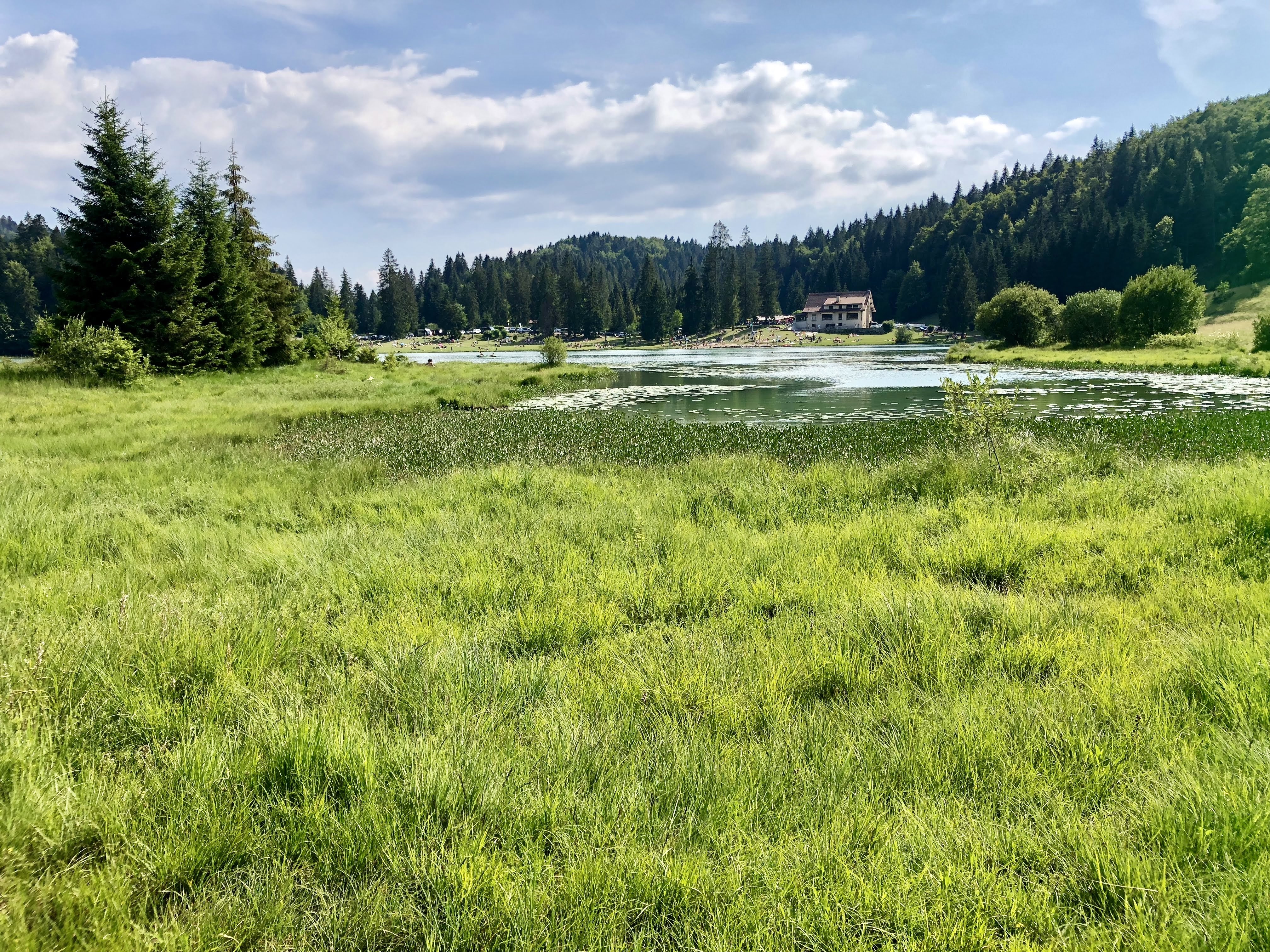
I discovered Lac Genin for the first time a few years ago on a nice and hot summer day. I was equipped with a towel and determent to have a swim, even if the water would be really cold. The water was not that cold, and from what I have since learned the normal temperature is around 20 degrees Celsius in the summer.
The lake itself is not very big. With a length of 380 meters and a width of 330, its size is probably the reason for the nice water temperature in the summer even if the lake gets frozen in the winter.
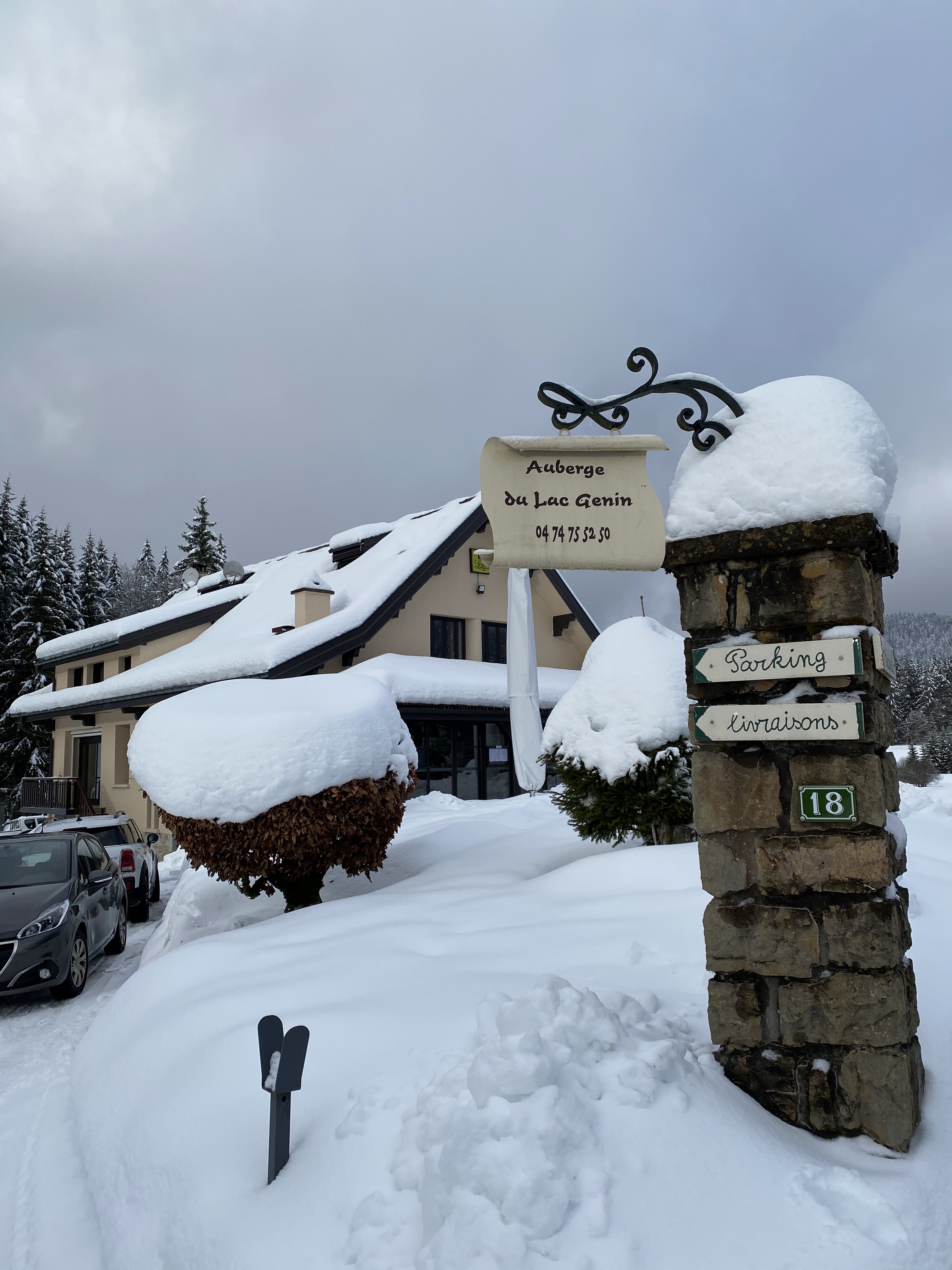
On the nice summer days, you will not be the only one there. The green grass on one side will be full of colourful bathing towels, and both children and adults will be enjoying the sun and the water. In the summer season, you will normally find lifeguards observing and making sure that everybody is safe. You will find a playground, toilets, a snack bar, a restaurant, and a hotel. I have not tested the restaurant myself, but I have heard that the people come from far away to eat there. The specialities are barbeques and local trout.
For an adult to walk around the lake it will take you around 25-30 minutes if you take it relatively slow.
If you think 30 minutes around the lake is not enough exercise and you are not tempted by a swim in the lake, you have the possibility to walk the 11,5 kilometres from Lac Genin to Oyonnax. This walk should take you around 4-4.30 hours to complete. For map and walking instructions in French, click here.
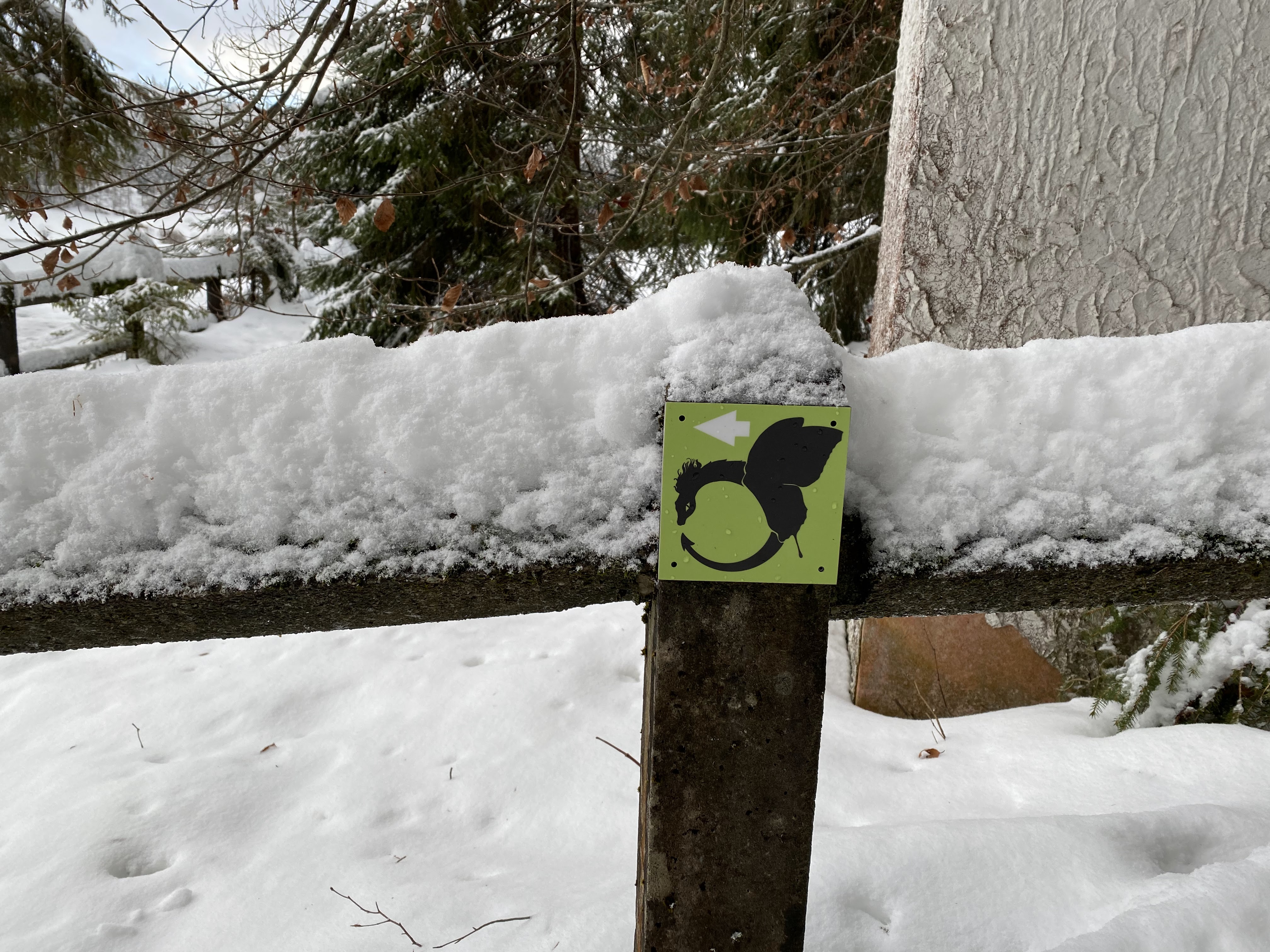
If you need a walk that is a little shorter, but still a little longer than just around the lake you have the option to do De La Vouivre, or in English, the Wyvern walk. This walk is 3,5 kilometres and takes around 1.30 to 2 hours to complete.
The Wyvern is a two-legged dragon with a barbed tail. The possibility to get a glimpse of this monster should be a good motivator for both children and adults.
The Patrimones de Ain have put together an activity book for children in French that can be downloaded. You will also find a map of the walk there.
If you visit Lake Genin in the autumn, you will see that the forest there must be the perfect place to go mushroom hunting. This year I was unprepared, next year I will be ready in September with my basket and mushroom guide.
Lake Genin is often referred to as “Little Canada”. The reason for this is its location in a clearing surrounded by pine forest and the harsh weather in the winter season.
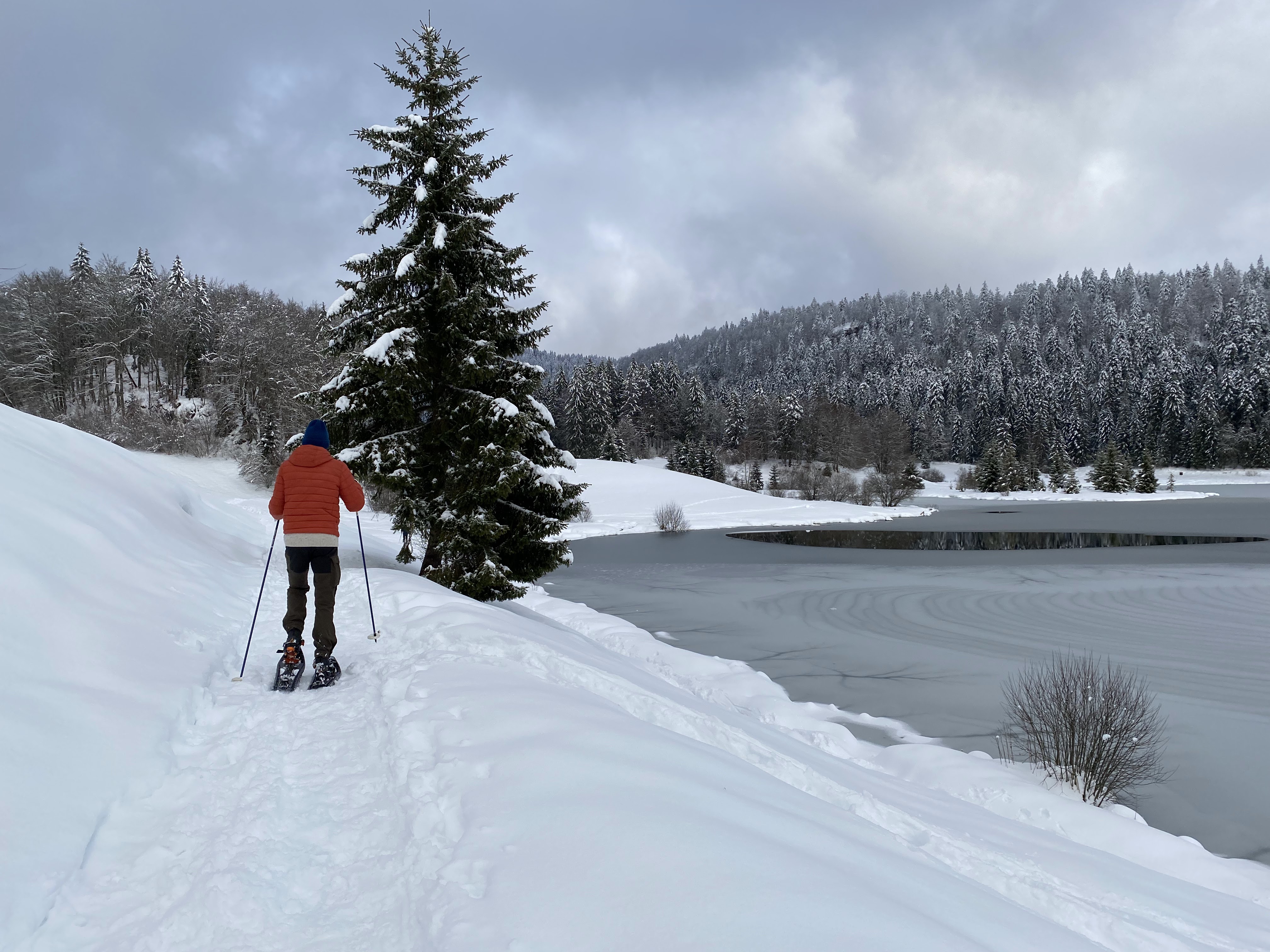
During the winter months and on those cold and crisp mornings it is therefore the perfect starting point for snowshoeing. There should be marked trails, but I did not see specific snowshoe trails when I was there yesterday. I only saw the normal hiking trails, but I think they will work for snowshoes to. We followed the trails made by other snowshoers which guided us around the quiet and peaceful landscape. There were lots of kids (and adults) out enjoying sledging in the slopes around the lake. When the lake is frozen it is possible to enjoy ice skating, but before you do so, always check with the hotel if the ice is thick enough and if it is safe to walk on the ice.
For those of you not equipped with snowshoes, sledges, or ice skates the hotel has a renting-out service. On the nice and sunny winter days, you should check availability before you go so that you are not disappointed if it is all rented out.
There’s adventure to found so close to where we live. Lake Genin is just one of these places that are waiting for you to explore.
I did not know that I could actually visit a cave right here in our little corner of France.
The cave itself cannot be compared with the impressive caves elsewhere where you have to pay an entry fee to visit, but for a short outing, it is impressive enough for me.
A friend took me for a walk around Thoiry some time ago and showed me what they called King Kong cave and the skull on the wall.
I wish I had known about this treasure when my kids were at the right age for fantasy, imagination, and storytelling. I actually think kids all ages will enjoy a visit to Le Grotte de Chazuet, which is just a short walk from Thoiry centre.
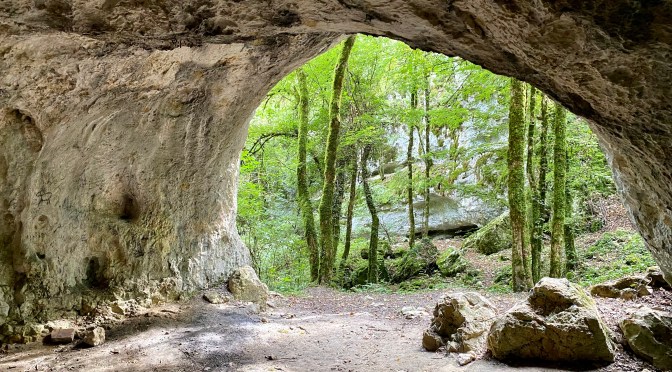
All it takes is a gentle little climb, and just below the road that takes you up to Tiocan this cave appears as if carved into the cliff wall. On your way up to the cave, right next to the pathway, you’ll find the skull carved on the wall.
The cave is big enough to fit several standing adults and is a truly extraordinary place. Even though the cave itself is small, you get the wet and damp cave feeling when inside.
In one of their newsletters from 1963, the Geneva Caving Association mention that archaeologists have found fragments of pottery, bones, and other remains of earlier habitation right here in this cave. The findings show that the cave and the area was used by human beings already during the Bronze age. The newsletter also mentions a megalith a little further up, that was used for religious ceremonies. Today the area around the cave is all quiet and peaceful, but back in the Bronze age the cave and the surroundings were probably bustling with people and voices.
Since I know absolutely nothing about minerals and rocks, I cannot really give a good description of what can be found in the cave. But I am sure somebody with a trained eye can find many interesting rock formations and minerals here.
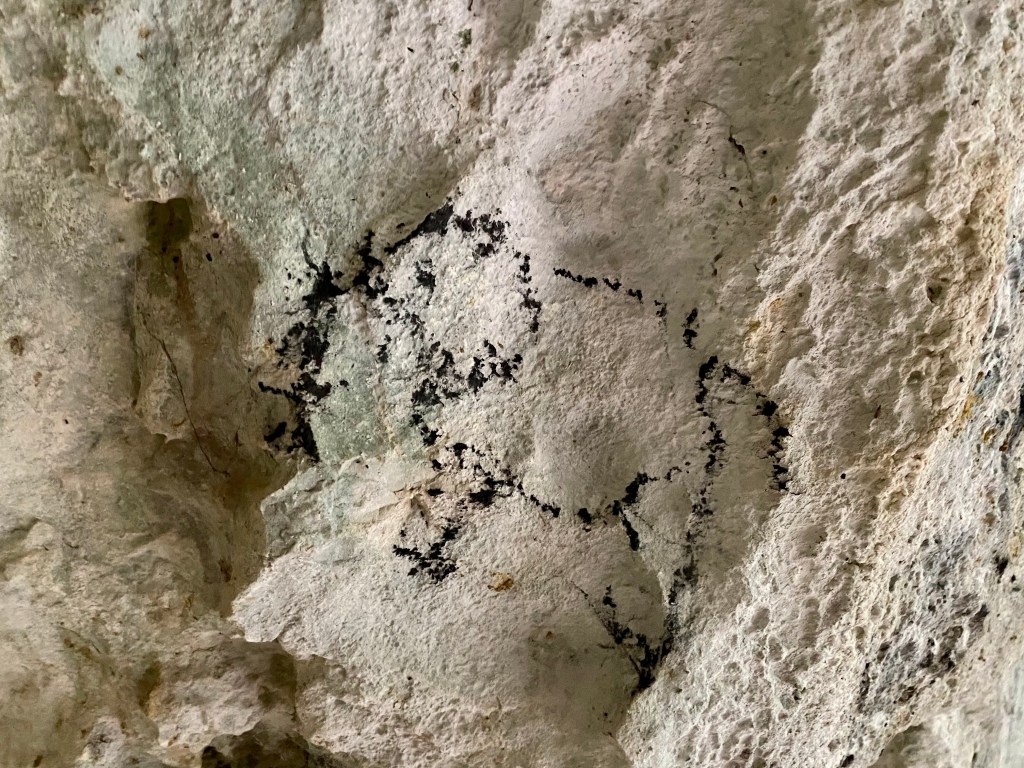
I did find some cave art; however, I am unsure about how far back these “art” pieces date.
Right. Now on to how to find this cave.
If you come by car, the best option will be to park in the centre of Thoiry where parking can be easily found. If you come by bus, the TPG will take you to Thoiry Gare on their route 68 bus. Then walk in direction of Saint-Jean de Gonville along Rue de Fenieres (D89) until you see the big concrete cross. Walk up and you will find the pathway where the road makes a sharp bend to the right. The pathway will take you gently up past the skull wall to the cave.
After you have visited the cave, you can walk back the same way or walk on the road that leads up to Tiocan. I initially thought I’d take the first possible pathway in the direction of Tiocan back, but then I came across a closed gate with a sign saying there might be cows and bulls out grassing and that continuing would be on my own responsibility. I decided to play it safe and instead carried on upwards, taking the next possible pathway down. While on this path I kept to the left and ended up walking back to Thoiry center along Rue Fenieres.
For those of you who do not know Thoiry very well, it might be worthwhile combining this walk with a visit to the local market which takes place along the main street every Sunday morning. This is my preferred market in all of the Pays de Gex since it is big enough to have everything you desire foodwise, yet small enough to not be overcrowded with people.
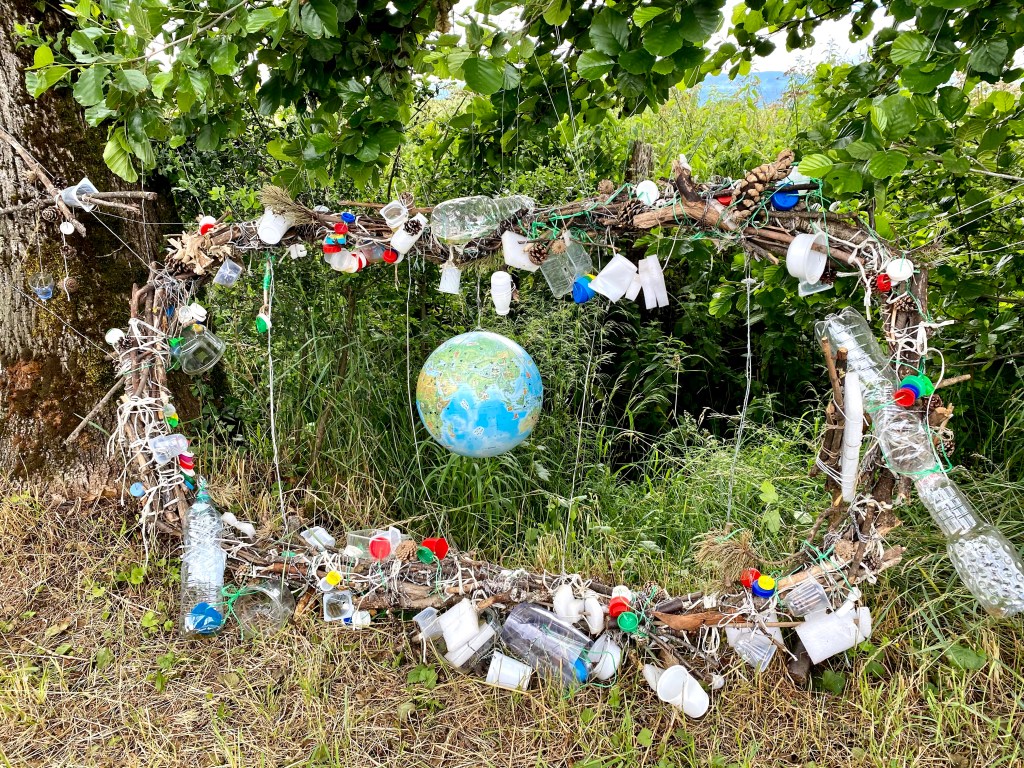
If you are lucky enough to be in Geneva or neighbouring France between the 26th of June and 5th September, you have to experience the Art en Campagne.
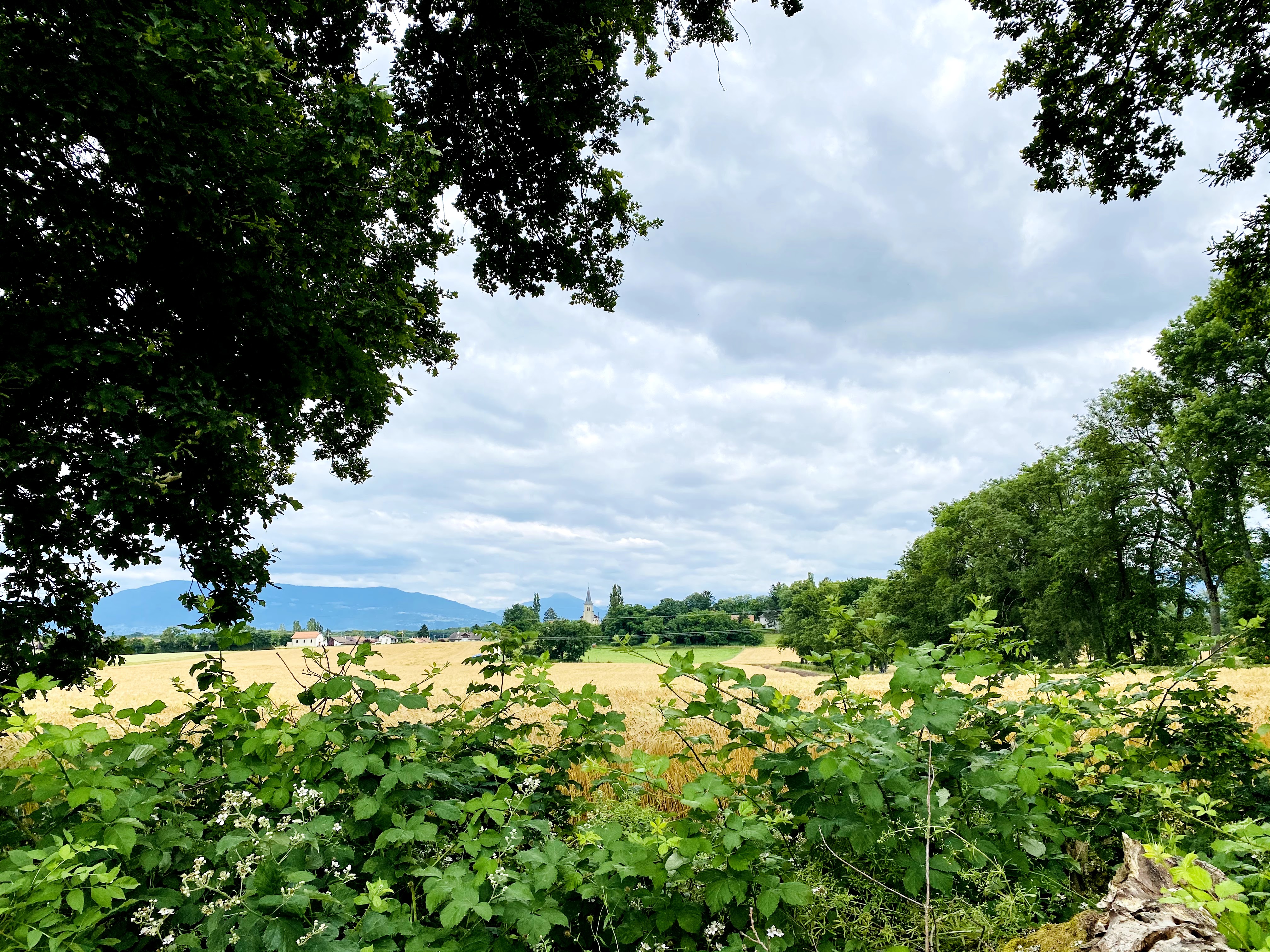
The 4,8-kilometre circular trail takes you across the fields between Ornex in France and Collex-Bossy in Switzerland. For a walk that already offers a beautiful view of Mont Blanc on one side and the more relaxed and greener Jura Mountain on the other side, the art installations just take the walking experience to a new level.
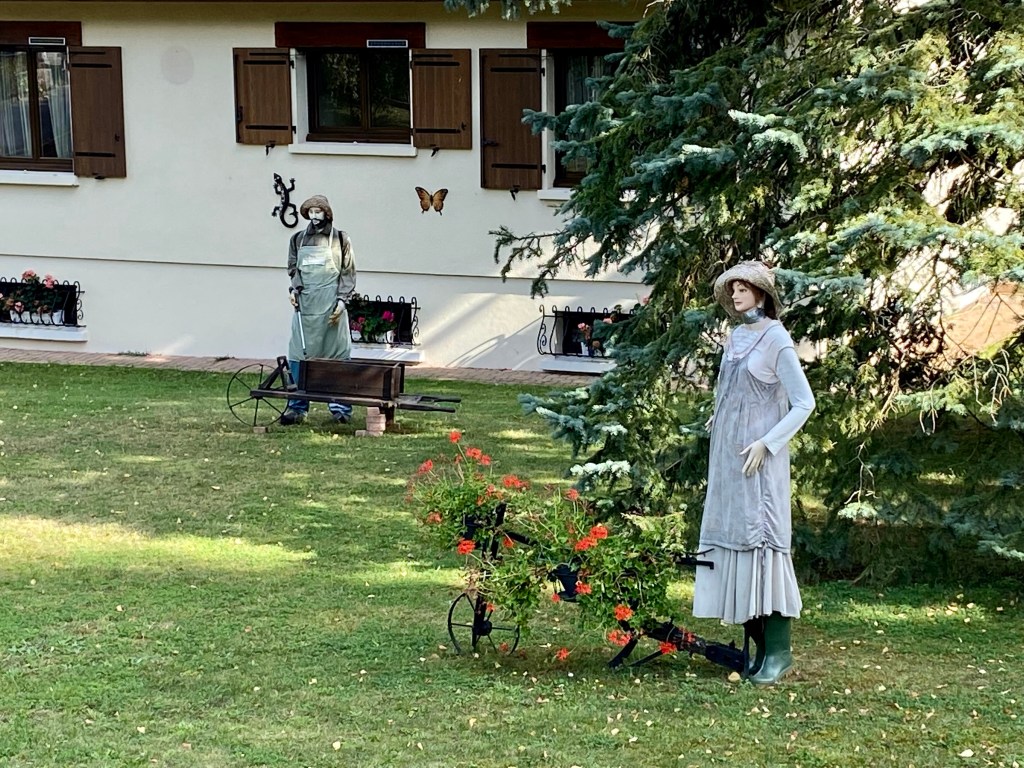
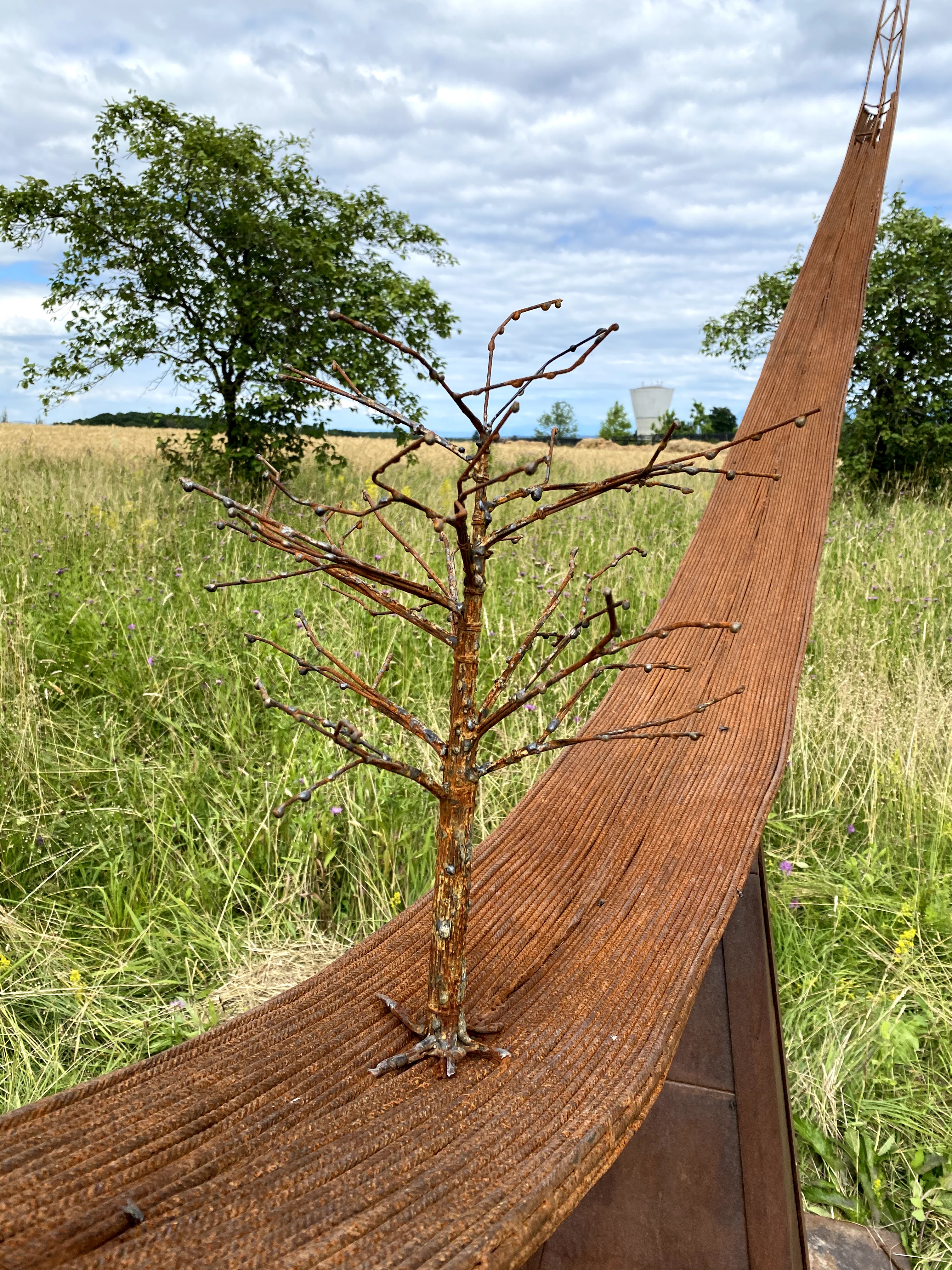
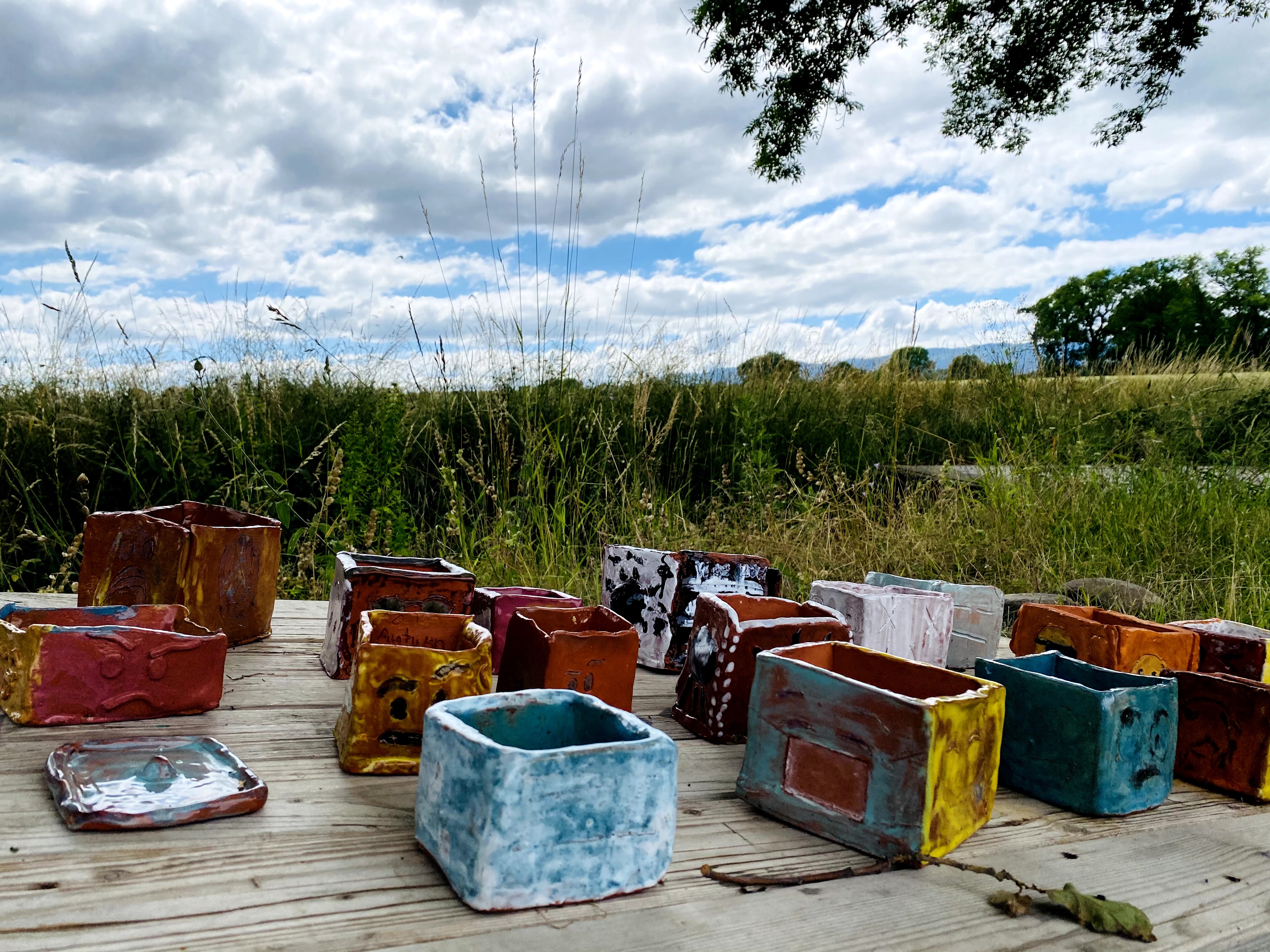
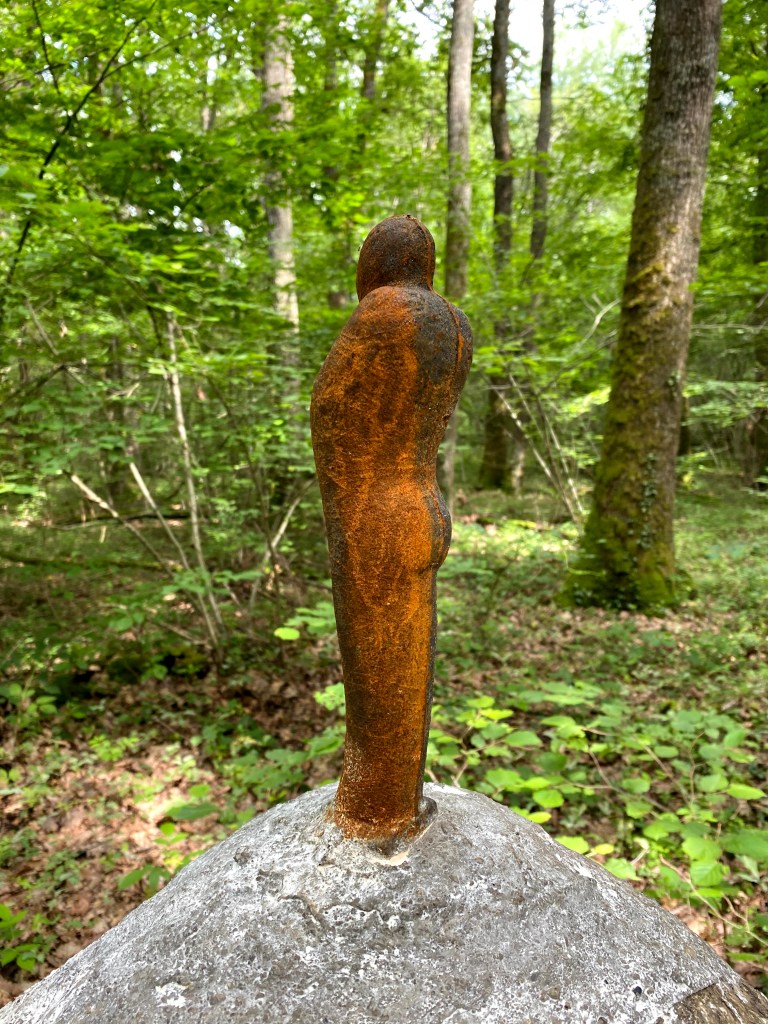
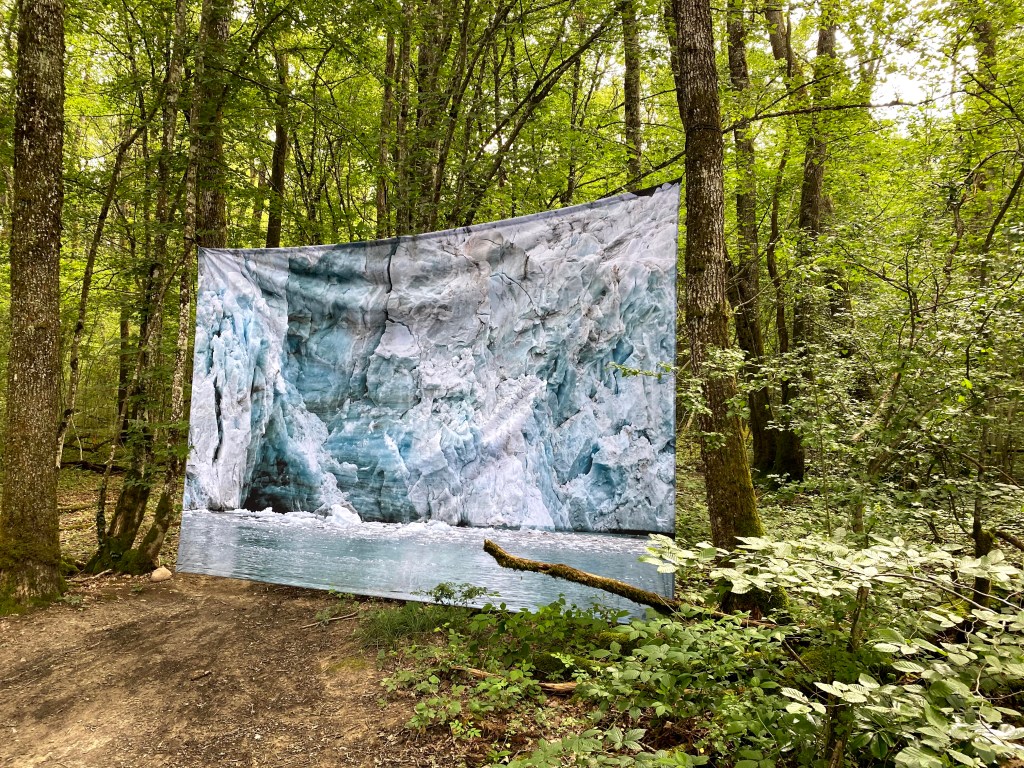
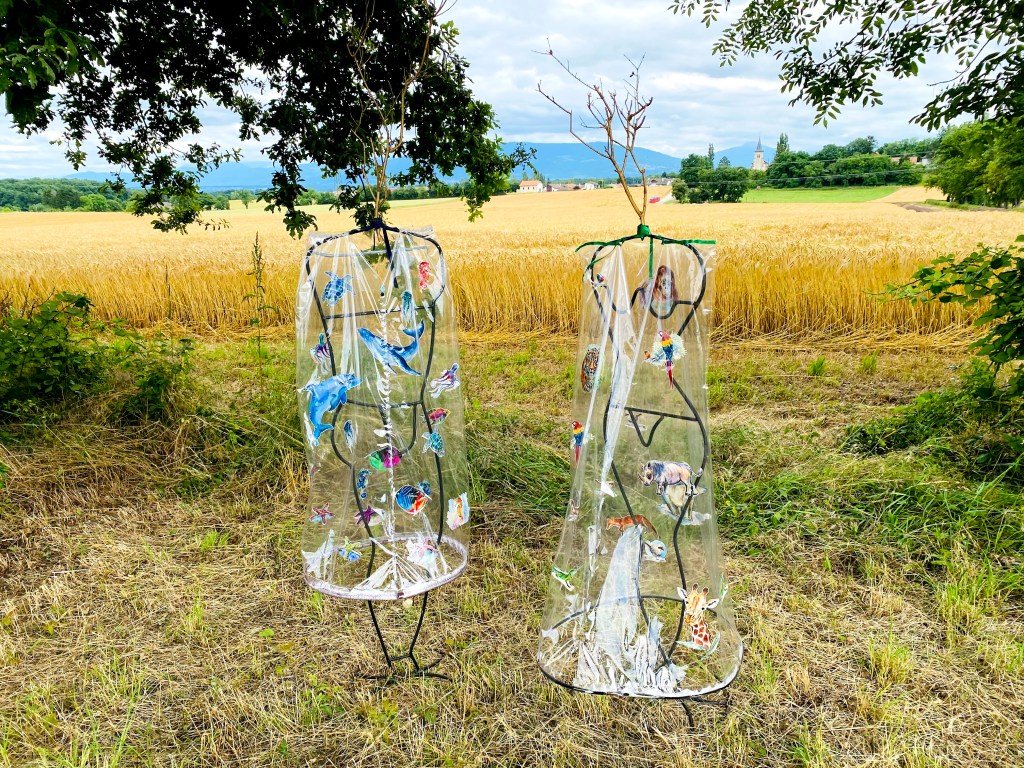
The trail is available and accessible the whole year round but is especially beautiful when you have a multitude of artworks displayed. The majority of the artists live locally but come from all over the world, and have connections to the many arts institutions in the region. In addition, several schools also get to present and display their art creation.
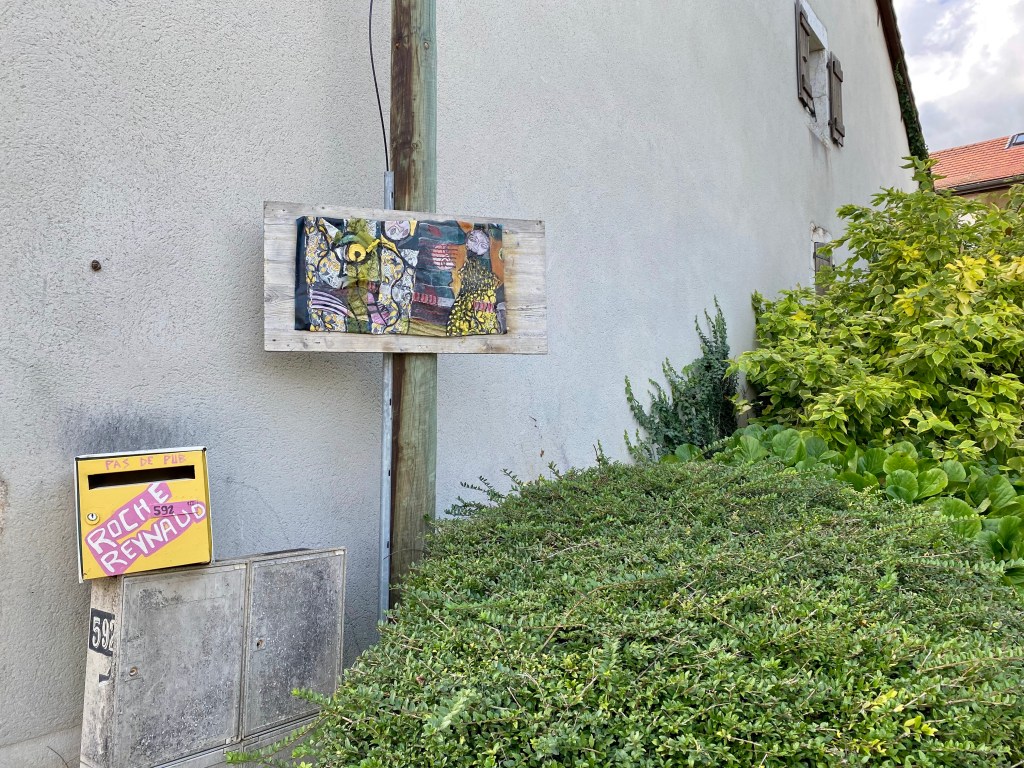
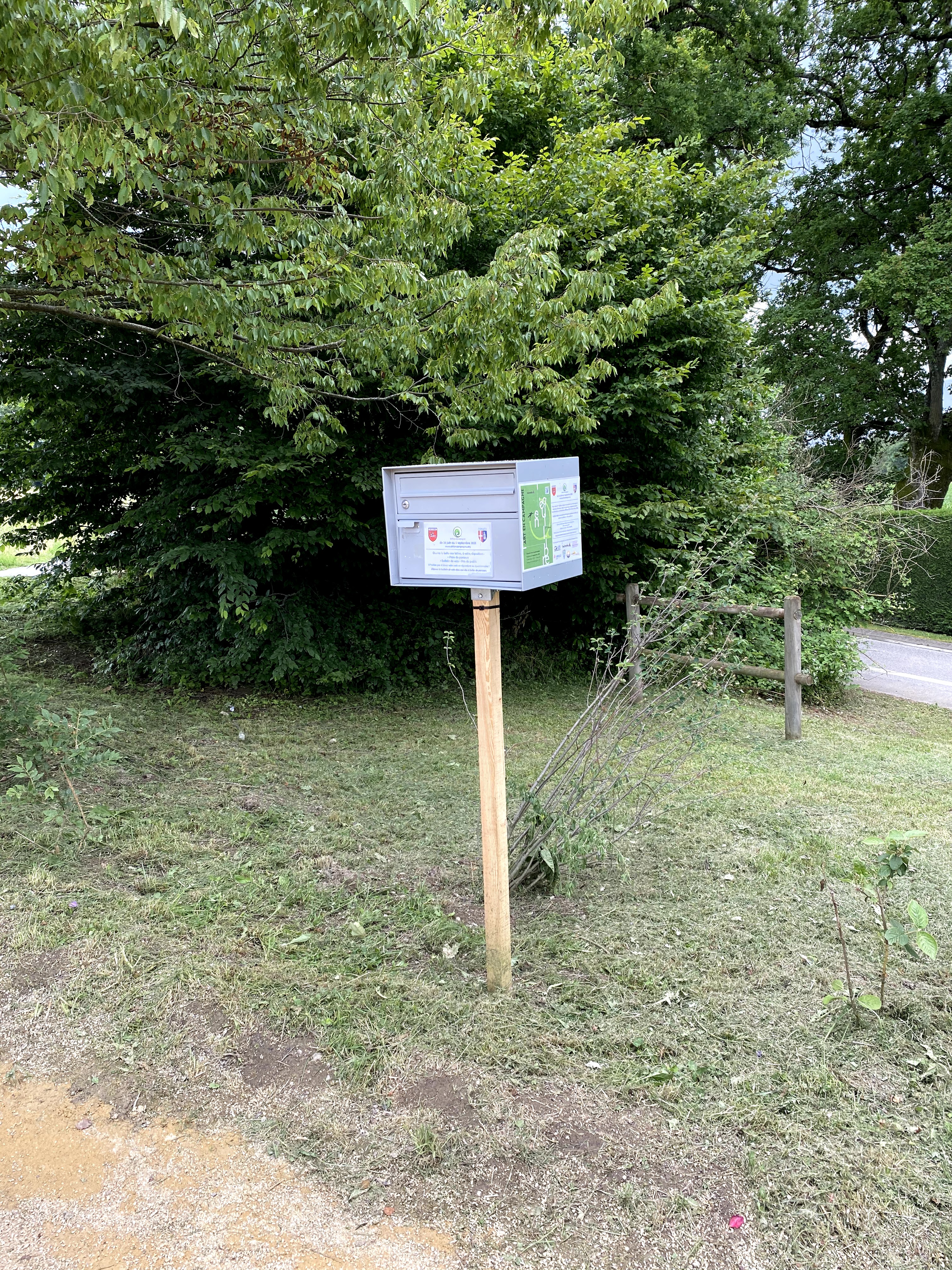
For the 2021 edition, the trail has no less than 47 installations along the short trail. You can pick up a map from one of the many mailboxes that have been put up.
You can also vote for the installation you liked the most. The voting can be done online or by using the sheet you will find in one of the many mailboxes.
The philosopher Jean-Jacques Rousseau famously said, “I can only meditate when I am walking. When I stop, I cease to think; my mind works only with my legs”. I can assure you that on this art trail you will stop. But you will not cease to think. You will look, read, and admire the fantastic installations. The walk will take you around 1 to 1,5 hours to complete, depending on your walking pace and how many stops you make to admire and take photos of the art installations.
The trails are fairly flat and can be enjoyed by old and young. There was a little stretch in the woods that was a little muddy when I did the walk. But I do not think it would be too complicated to pass even if you have a baby in a pram with you.
The walk can be done in both directions, and you can start from anywhere along the trail. There are several parking opportunities on both sides if you come by car. If you come by bus the TPG will take you to Ornex-Prenepla or Ornex-Fruitiere on the French side. From the Suisse side, the 52 bus stops in Collex-Centre and Bossy. All bus stops are just a few minutes away from the trail.
Les Pierres a Cupules will in English translate as Cupstones. A cupstone is a stone or rock surface bearing a cup sculpture. Cupstones are associated with places of worship and is believed to have been used as altar stones in prehistoric European religion. They are usually found close to glacial erratics, viewpoints and dangerous alpine trails.
This walk in the woods of St. Jean de Gonville is one I think many of you may have heard about. However, when people ask for hiking directions, I rarely see it mentioned.
I did this walk many years ago with my family and thought it would be easy to find the way. Coming by car and finding a parking space was really easy. Lots of parking is available around the church of St Jean de Gonville. For those not equipped with their own car, the buss from Divonne to Bellegarde stops in St Jean de Gonville. To check the timetable click here. If you are coming from Geneva, the F bus and the 68 bus from TPG will take you across the border into Pays de Gex.
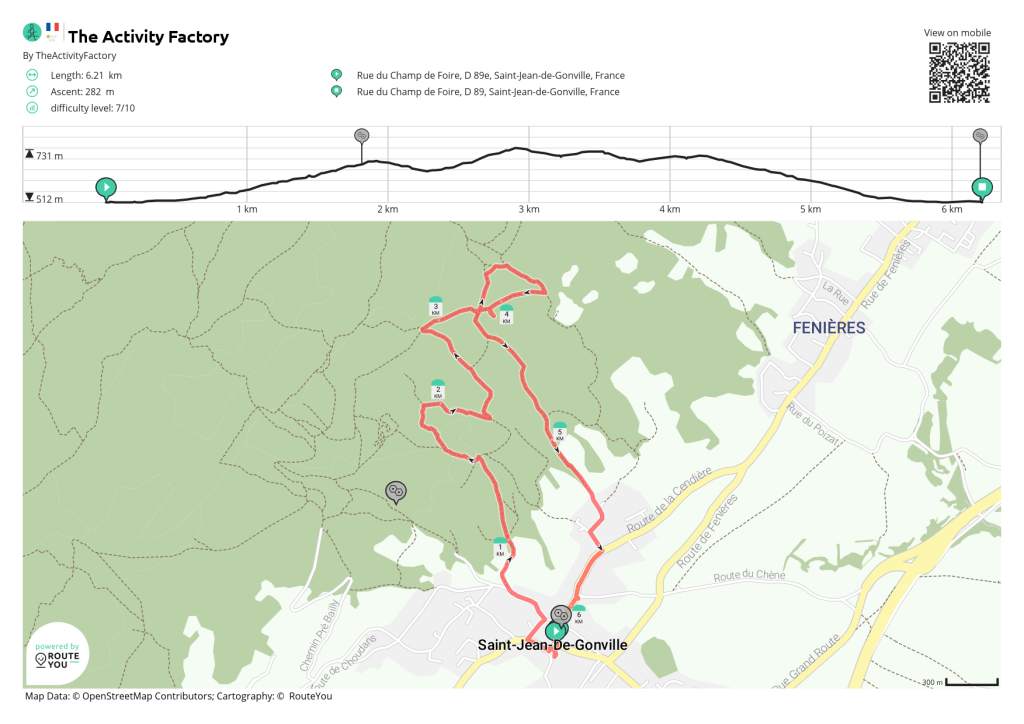
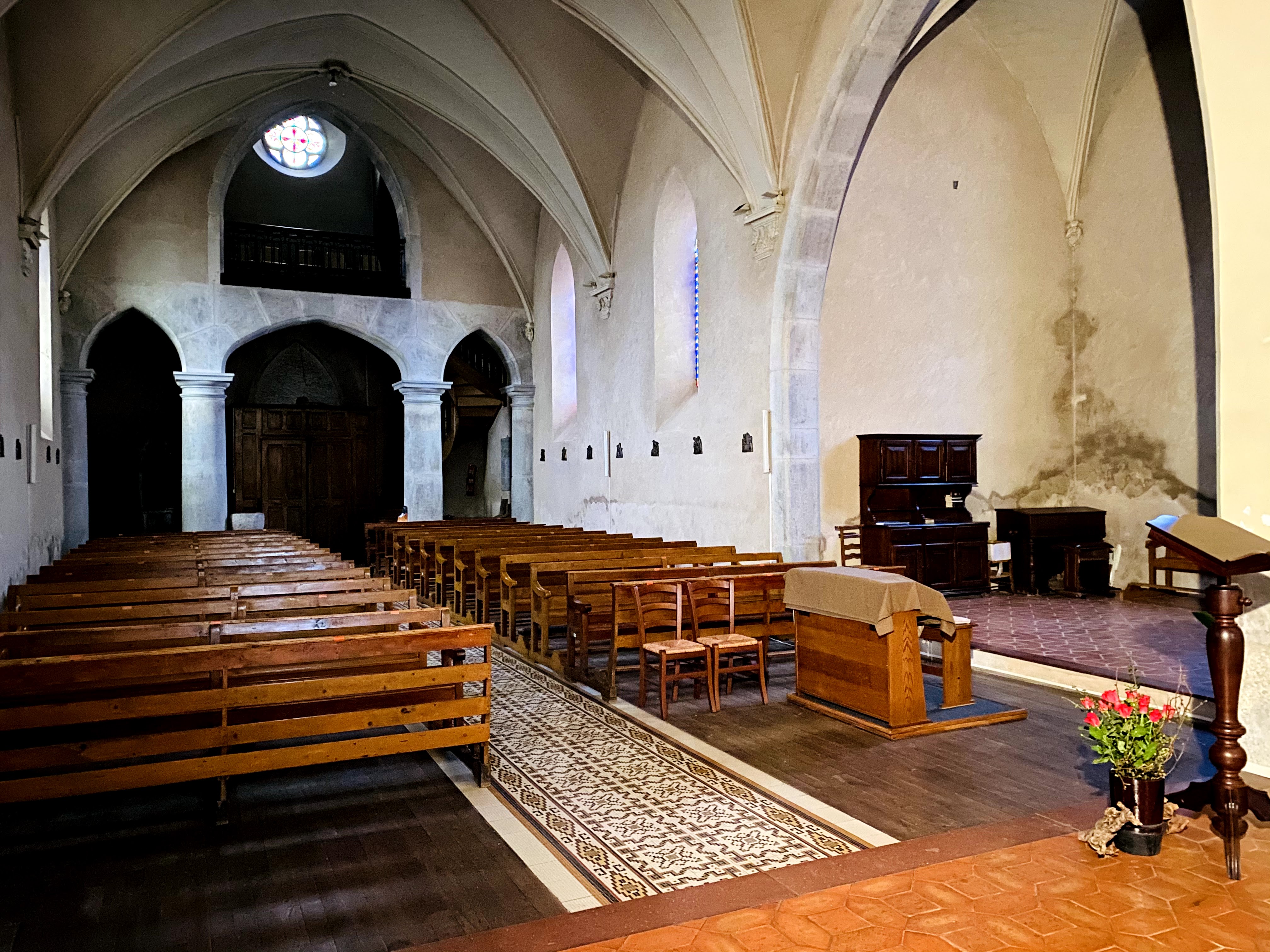
The church was open, so I walked in to have a look (this is the reason for all the doodles on the map). The church was constructed in 1090 on an ancient cemetery by the Clunisien priory of Saint Victor de Geneve. These small parish churches are of cause not as impressive as the cathedrals you will find in big cities, but remain pillars of Christian devotion in their local communities today, same as a thousand years ago. Their simpler architectural lines can be both peaceful and relaxing. If the church is open, I’ll advice you to have a look inside.
OK. Let’s move on to the walk. I would have thought there was a signpost indicating where to find these famous Cupstones. But no, nothing of the sort. At least I could not see any signs in the village indicating the starting point for the walking trail. I personally think that the commune should put a few Euros aside in their next budget to finance some signpost to indicate where this walk starts.
Right. When you have the church right behind you, walk a few meters up Rue de l’Eglise. Turn right on Rue Charriere and then left on Rue Gachet. After you pass a fountain, continue for another 10 meters or so and you will see a path on the right that eventually takes you into the woods.
The path is quite wide, and takes you on a gentle climb up (ignore the side paths and move on uphill). Soon you will have a good view of the area around, including Satigny and Geneva.
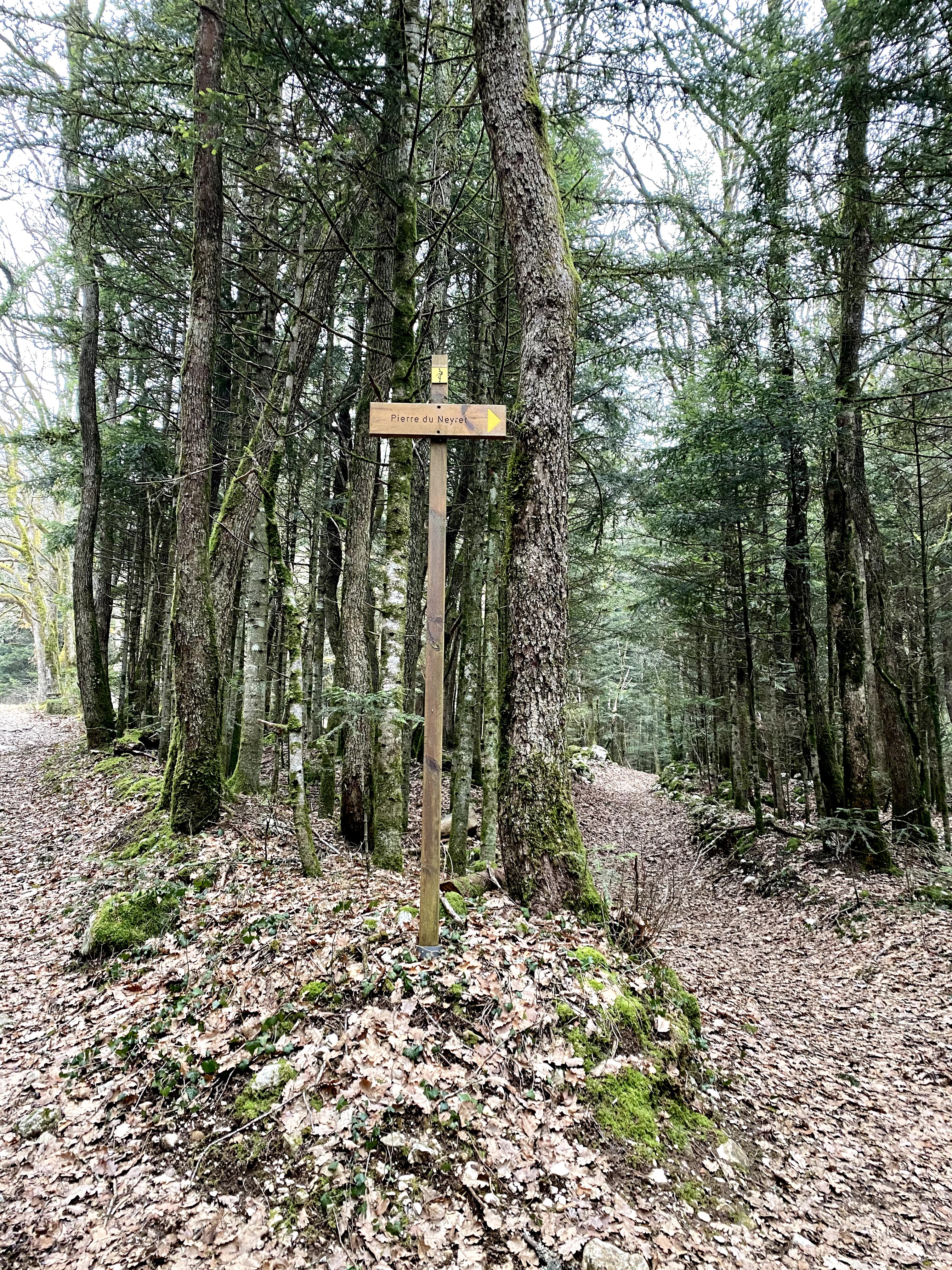
After a few minutes, you will come to the only signpost signalizing that you are on the right pathway to Pierre du Neyret.
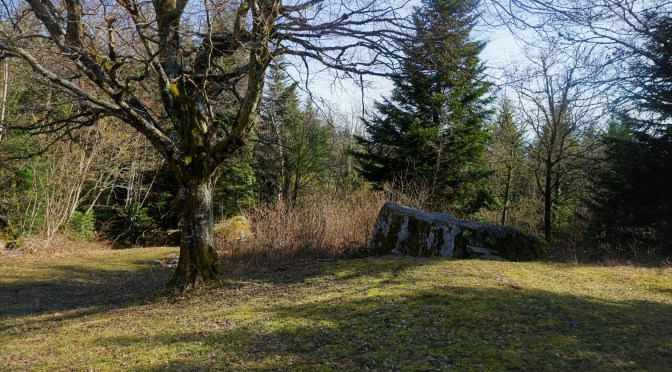
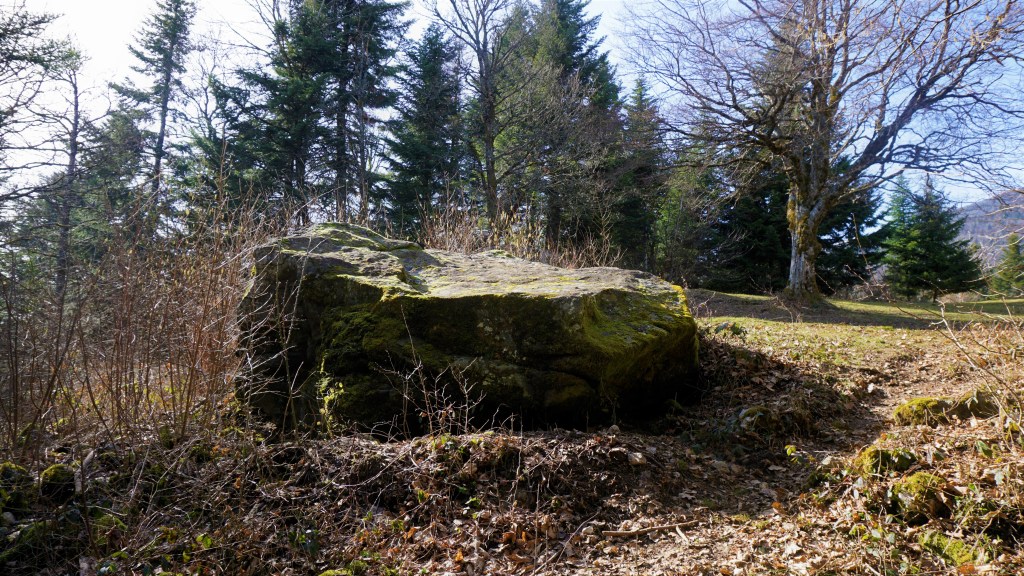
The Pierre du Neyret rock, transported by the glacier from the Alps, is very impressive. In comparison to the Pierres du Parrey it could not have had the same importance because Pierre du Neyret has no engravings. When looking at I can’t help thinking it looks like a giant stranded whale. If you bring children along, ask them what they think this rock resemble. I’d be curious to know.
Walking on and up, you’ll eventually reach a barrier. From here, the path will take you slowly down to meet another path. At this crossroads, or crosspaths, walk to the left. Finally we’re going up again, this time on a path with a nicely built stone fence on either side. (Farmers today should really take the time to build this kind of fence instead of putting up the ubiquitous and dangerous barbed wire).
When you see the Maison Driset on your right side and this sign in front of you, the fastest route to Les Pierres du Parrey is to walk to the right.
On the map below you can see that I continued walking up; this is because once again it was not very clear to me where exactly in the woods I would find these rocks.
After just a few minutes you will come to a clearing in the forest. This clearing is impressive today and I think it must have been even bigger before. Now, the forest is growing freely since there is very little use of the land for agricultural purposes.
Standing in the middle of this field, you’ll have the Jura Mountains behind you, and a stunning view of the Mont Blanc, Geneva and the lake in front of you. This place must be a perfect place for an evening picnic in the summer, when the Covid curfews are history and we’re again allowed to move around after 6pm here in France.
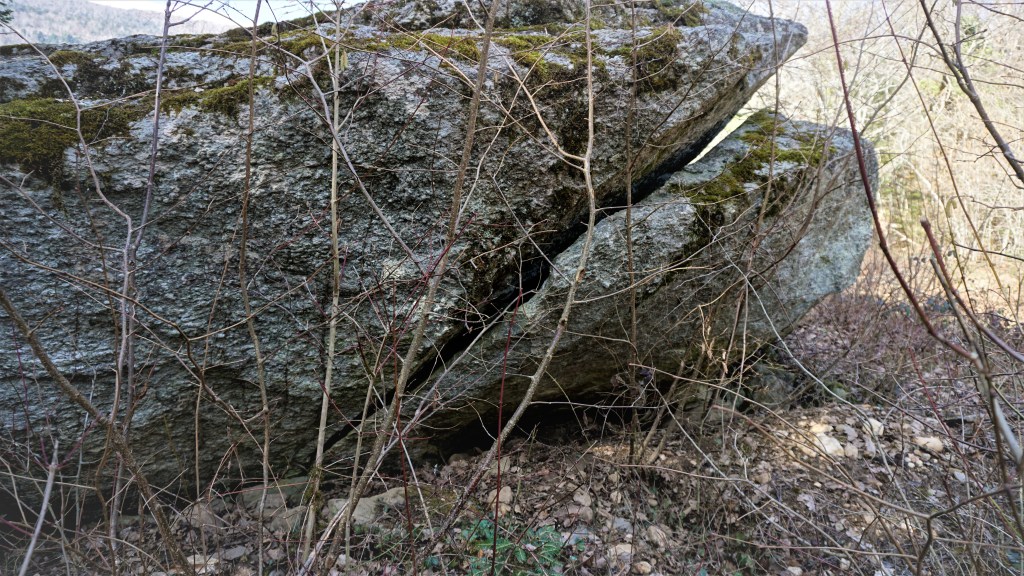
The first of the rocks is made of granite and has a flat surface, which with its more than 5 meters diameter is quite impressive. It rests on a smaller rock, which almost creates a little hut underneath.
The lower rock is made of chlorite shale and has been covered in engravings of crosses and channels.
After you have admired the rocks, you can chose to do a little loop by continuing upwards on the path you walked on coming up to the clearing. On this loop you will be passing the rocks again before you head back down.
To walk back to St Jean de Gonville, find the path that took you up to the clearing, and when you see Maison Driset do not walk to the right but continue straight on down towards the little Hameau de Mornex.
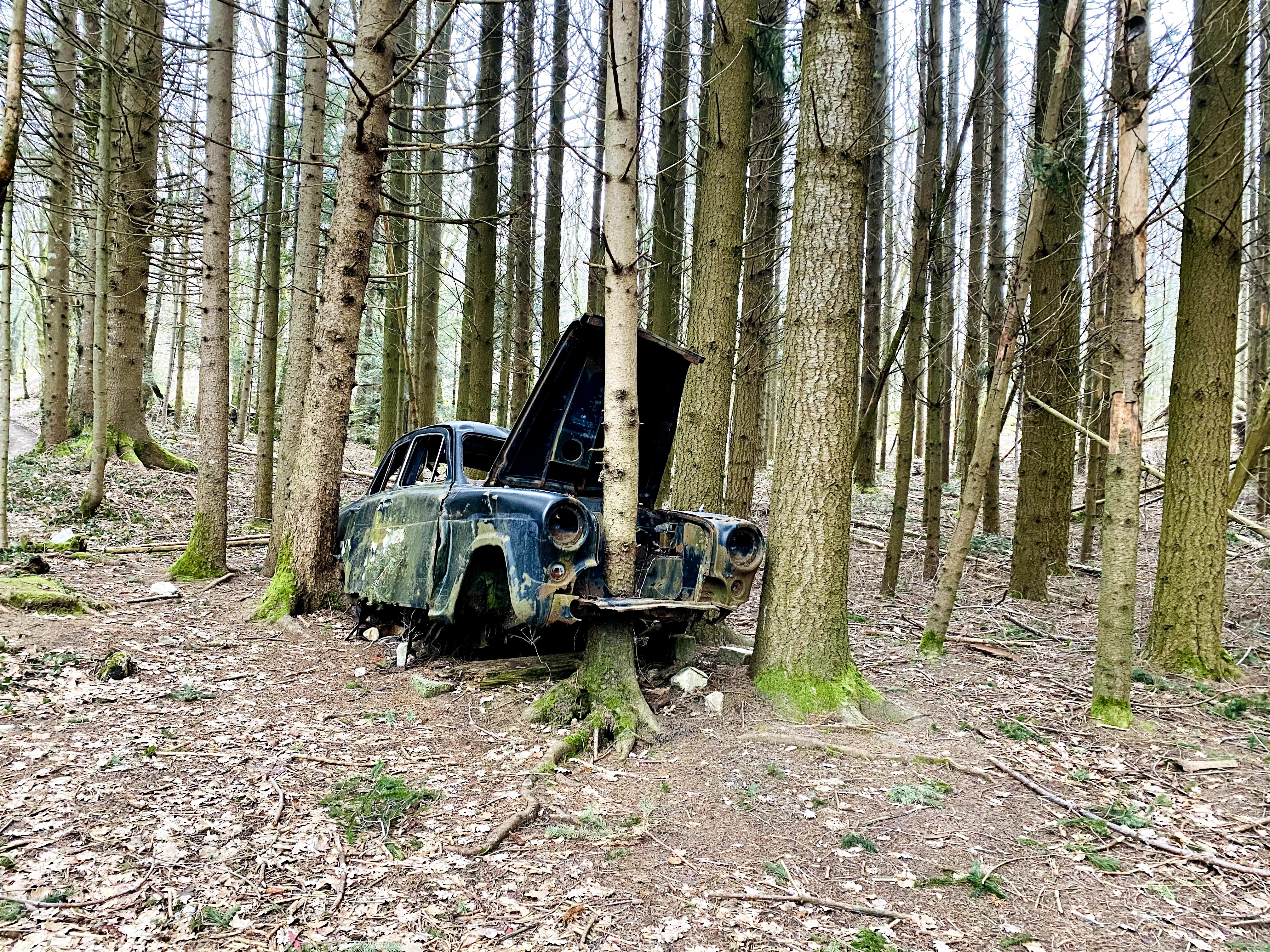
There’s a surprise waiting for you: On your way down you will all of a sudden see the remains of an old British car, deep in the middle of the woods. I really wonder how it ended up exactly here. I have read there are people traveling across Europe documenting old car wrecks found in the most bizarre places; however, I haven’t found any information about this car in particular. If you know the story of how it ended up here in the woods of St Jean de Gonville, please leave a message in the comments. I am sure there are many of us who are curious to know the history.
Passing the old houses in the upper part of Hameau de Mornex, the charm of ancient times is very much present. Walk down to the big road and look for the church tower. The church tower will lead you through the streets of St Jean de Gonville and back to your starting point.





















 The Activity Factory